


The Tokenization Paradox: Why Wall Street’s Digital Future is Stalling at the Finish Line

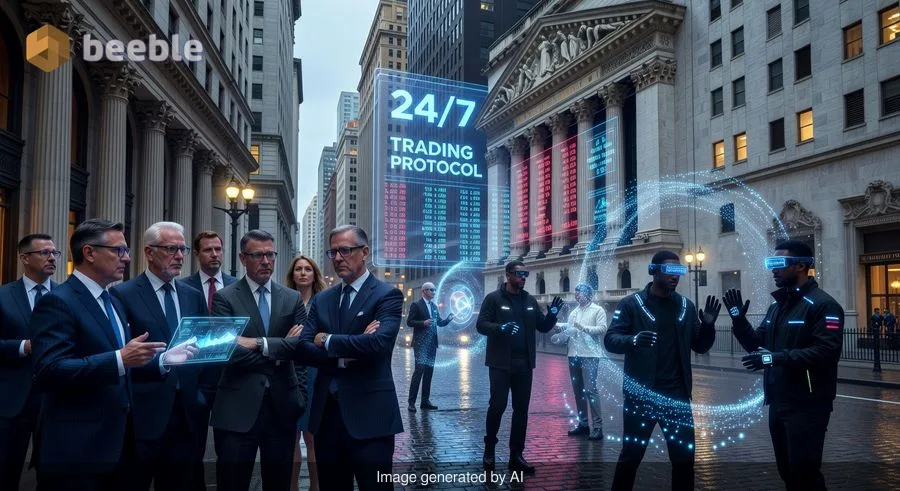
The dream of a frictionless, 24/7 global stock market has been the North Star for financial technologists for over a decade. By 2026, the technical infrastructure to achieve this—blockchain-based tokenization—has largely arrived. Major investment banks and asset managers have successfully moved trillions in money market funds and private credit onto distributed ledgers. Yet, as the industry attempts to migrate the crown jewels of the financial world—public equities—to the blockchain, it has hit an unexpected wall.
Wall Street is ready for the technology, but the institutions that provide the market's lifeblood are not yet ready for the consequences of its efficiency. The primary point of contention is not the security of the blockchain or the regulatory clarity, which has improved significantly, but rather the move toward instant settlement and the end of the traditional trading day.
From T+1 to T-Zero: The Speed Trap
In May 2024, the U.S. markets moved to a T+1 settlement cycle, meaning trades settle one business day after the transaction. Tokenization promises T+0, or "atomic settlement," where the exchange of the asset and the payment happens simultaneously. On paper, this is a massive win for risk reduction. It eliminates the "counterparty risk"—the danger that one side of the trade fails to deliver before the money changes hands.
However, for a large hedge fund or pension fund, T+1 provides a crucial window for liquidity management. Under the current system, firms can sell a stock today and use that time to find the cash to pay for a purchase tomorrow. In an atomic settlement world, that "float" disappears. To trade tokenized stocks instantly, institutions must have their accounts pre-funded. This requires locking up vast amounts of capital that could otherwise be earning interest elsewhere, creating a "liquidity drag" that many CFOs find unacceptable.
The 24/7 Market Fatigue
Beyond the settlement speed, the push for 24/7 trading is meeting cultural and operational resistance. While crypto markets never sleep, traditional equity markets have long relied on the closing bell to provide a definitive "price of record" and to give human traders a chance to reset.
Institutional investors argue that a 24/7 equity market would fragment liquidity. Instead of concentrated trading volume during exchange hours, activity would be spread thin across 168 hours a week. This makes it harder to execute large blocks of shares without moving the price significantly. Furthermore, the human cost is substantial. Moving to a 24/7 model requires tripling the size of compliance, risk, and trading desks to ensure global coverage, a cost that many firms are unwilling to bear in a high-interest-rate environment.
The Benefits and Barriers of Tokenization
To understand why the industry is so divided, it helps to look at what tokenization actually changes compared to the legacy systems that have governed Wall Street since the 1970s.
| Feature | Traditional Equities (Legacy) | Tokenized Equities (Blockchain) |
|---|---|---|
| Settlement Time | T+1 (1 Business Day) | T+0 (Instant/Atomic) |
| Trading Hours | 9:30 AM – 4:00 PM EST | 24/7/365 |
| Asset Fractionality | Limited (Broker-dependent) | High (Buy 0.0001 of a share) |
| Intermediaries | Clearinghouses, Custodians | Smart Contracts, Validators |
| Capital Requirement | Post-funded (Credit-based) | Pre-funded (Cash-on-hand) |
The "Netting" Problem
One of the most overlooked hurdles is the loss of multilateral netting. In the current system, clearinghouses like the DTCC look at all the trades a bank makes in a day. If a bank buys $100 million of Apple and sells $95 million of Apple, they only need to move $5 million at the end of the day.
In a decentralized, tokenized environment, every single trade is often settled individually. Without a sophisticated, blockchain-native netting layer, the sheer volume of capital required to settle trades one-by-one would be astronomical. Institutions are essentially being asked to trade a highly efficient, credit-based system for a technologically superior, but capital-intensive, cash-based system.
Finding the Middle Ground
As of mid-2026, the industry is beginning to pivot toward a "hybrid" approach. Rather than forcing a move to 24/7 instant settlement for all stocks, we are seeing the rise of "optionality."
New platforms are allowing institutions to choose their settlement speed. A firm might choose T+0 for a high-risk trade where they want to eliminate counterparty danger immediately, while sticking to a T+1 or even T+2 cycle for routine rebalancing to preserve their cash flow. This "Settlement-as-a-Service" model appears to be the most viable path forward, providing the benefits of blockchain without the liquidity shocks.
Practical Takeaways for Market Participants
For firms looking to navigate this transition, the following steps are becoming industry standards:
- Audit Liquidity Workflows: Evaluate how much of your daily trading relies on the "float" provided by T+1. If your strategy requires pre-funding, the cost of capital may outweigh the savings from lower transaction fees.
- Invest in Middleware: Look for "orchestration layers" that can bridge legacy databases with blockchain ledgers. These tools allow you to trade tokenized assets while maintaining traditional accounting practices.
- Monitor Regulatory Sandboxes: Keep a close eye on the SEC and FINRA’s stance on "qualified custodians" for digital assets. The rules for who can hold these tokens are still evolving.
- Prioritize Private Markets First: Tokenization is currently seeing the most success in private equity and real estate, where liquidity is already low and the move to T+0 is a massive improvement over the current multi-week settlement times.
The Long Road to Modernization
Wall Street’s hesitation isn't a rejection of the blockchain; it is a rational response to the economic realities of capital management. The plumbing of global finance is being replaced, but the water still needs to flow without causing a flood. We are moving toward a future where stocks are tokens, but the transition will likely be measured in years of incremental shifts rather than a single "Big Bang" moment of digital transformation.
Sources:
- J.P. Morgan Onyx: The Future of Markets
- BlackRock: Institutional Digital Assets Report
- DTCC: Moving to T+1 and Beyond
- SEC: Statement on Tokenization of Real-World Assets



See you on the other side.
Our end-to-end encrypted email and cloud storage solution provides the most powerful means of secure data exchange, ensuring the safety and privacy of your data.
/ Create a free account
