


UN Establishes 40-Member Global AI Safety Panel Amid Growing Insider Warnings

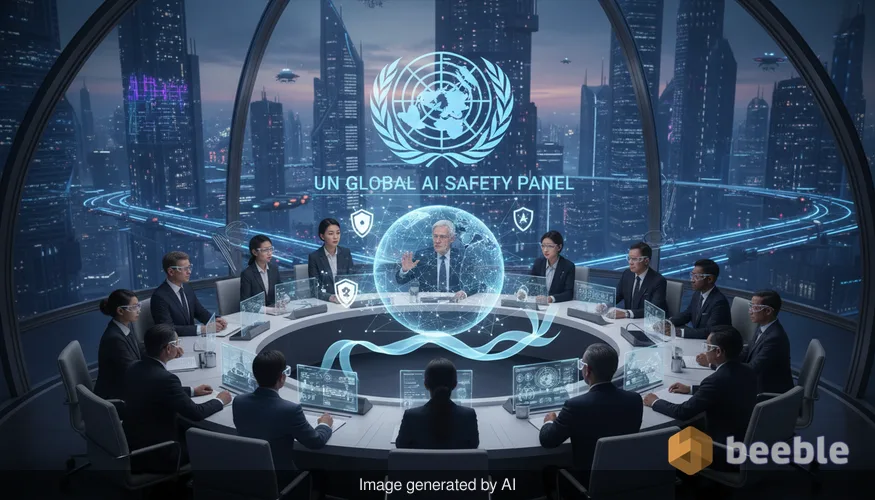
In a move aimed at bridging the gap between rapid technological advancement and international oversight, United Nations Secretary-General António Guterres has officially inaugurated a 40-member global scientific panel dedicated to artificial intelligence safety. Described by Guterres as a "foundational step toward global scientific understanding of AI," the panel is tasked with investigating the existential and systemic risks posed by advanced machine learning models.
The formation of this body comes at a pivotal moment. Over the past year, a growing chorus of whistleblowers and former employees from industry leaders like OpenAI, Anthropic, and Google DeepMind have voiced concerns regarding the lack of transparency and the speed at which frontier models are being deployed. This UN initiative represents the first concerted effort to centralize scientific consensus on AI at a global scale, independent of corporate influence.
The Catalyst: Alarms from Within the Industry
The push for a centralized UN body was significantly accelerated by the "Right to Warn" movement. This group of tech insiders argued that current profit-driven incentives prevent companies from disclosing the true extent of the risks associated with Artificial General Intelligence (AGI). They highlighted concerns ranging from the erosion of democratic processes via deepfakes to the potential for autonomous systems to bypass human control.
By establishing this panel, the UN seeks to provide a platform where scientific evidence—rather than corporate PR—dictates the global safety narrative. The 40 members, drawn from academia, civil society, and technical research centers across diverse geographies, are expected to act as a neutral arbiter of truth in an increasingly polarized tech landscape.
Navigating Geopolitical Friction
The panel’s launch was not without controversy. The United States, along with several key allies, initially expressed strong opposition to the move. The friction stems from a fundamental disagreement over where the seat of AI power should reside. While the US has championed industry-led safety frameworks and the G7-led Hiroshima AI Process, the UN's approach emphasizes a more inclusive, multilateral governance model.
Critics in Washington argue that a UN-led body might become bogged down in bureaucracy or used by rival nations to stifle Western innovation. Conversely, proponents of the panel argue that AI is a "borderless" technology, much like climate change, requiring a global response that includes the Global South, which is often left out of Silicon Valley-centric discussions.
A Scientific "IPCC for AI"
To understand the panel's mission, one can look to the Intergovernmental Panel on Climate Change (IPCC). Just as the IPCC does not set policy but provides the scientific data that informs global climate treaties, the UN AI panel aims to create a shared "State of the Science" report. This report will serve as a baseline for nations to develop their own domestic regulations without reinventing the wheel.
Key areas of focus for the panel include:
- Risk Quantification: Developing standardized metrics to measure a model's potential for deception or harmful output.
- Data Sovereignty: Addressing how training data is sourced and the impact on intellectual property across different jurisdictions.
- Interoperability: Ensuring that safety standards in one country can be recognized and enforced in another.
Practical Implications for the Tech Sector
For developers, startups, and enterprise leaders, the UN’s involvement signals a shift from voluntary "safety pledges" toward a more structured regulatory environment. While the panel does not have the power to pass laws, its findings will likely influence future international trade agreements and national safety audits.
| Feature | Industry-Led Frameworks | UN Global Scientific Panel |
|---|---|---|
| Primary Goal | Innovation & Market Stability | Global Safety & Human Rights |
| Transparency | Proprietary/Internal | Public/Peer-Reviewed |
| Inclusivity | High-Income Tech Hubs | Global Multilateral Representation |
| Enforcement | Voluntary Compliance | Informing International Law |
What to Do Next: Preparing for Global Standards
As the panel begins its work, organizations should move beyond a reactive stance on AI safety. Here are the practical steps tech leaders should consider:
- Audit for Transparency: Review your internal AI development pipelines. Can you explain how your models reach specific conclusions? The UN panel is likely to recommend high standards for "explainability."
- Monitor International Benchmarks: Stay informed on the panel’s quarterly briefings. These will likely become the blueprint for future compliance requirements in the EU, Asia, and eventually the US.
- Engage in Multi-Stakeholder Dialogues: Don't rely solely on industry groups. Participate in forums that include civil society and academic researchers to gain a broader perspective on AI impact.
- Prioritize Safety Research: Allocate a percentage of R&D specifically to safety and alignment. The gap between "capability" and "safety" is the primary concern of the new UN body.
The Long Road Ahead
The establishment of this 40-member panel is a recognition that AI is no longer just a commercial product; it is a global utility with the power to reshape societies. While the political path forward remains rocky, the commitment to a scientific, evidence-based approach offers a glimmer of hope for a future where technology serves humanity safely and equitably.
Sources:
- United Nations: Secretary-General's High-level Advisory Body on Artificial Intelligence
- Reuters: UN appoints global panel to study AI risks
- The Guardian: Tech whistleblowers call for right to warn on AI risks
- UN News: Guterres announces 40-member AI advisory body



See you on the other side.
Our end-to-end encrypted email and cloud storage solution provides the most powerful means of secure data exchange, ensuring the safety and privacy of your data.
/ Create a free account
