


Why a delayed remake explains the industrialization of modern gaming

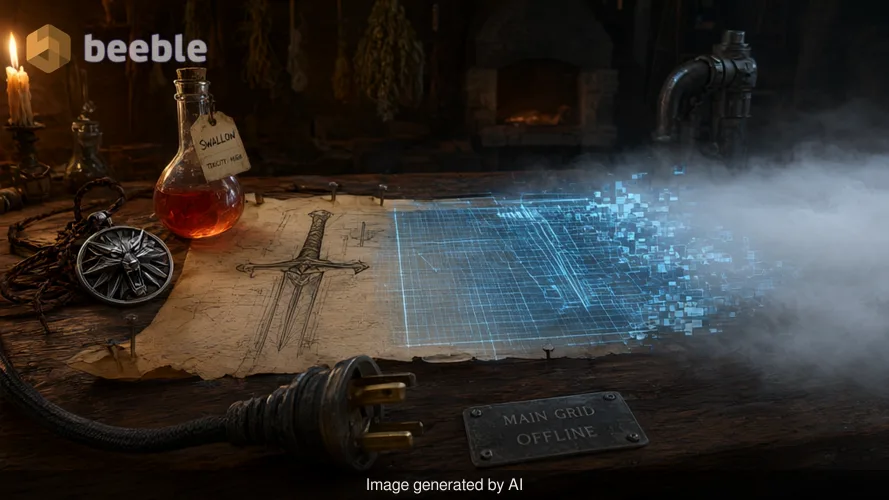
There is a specific, quiet frustration that settles in when a project you anticipated suddenly retreats into the fog of "production dependencies." For fans of Geralt of Rivia, the news that The Witcher Remake is now on the back burner is a familiar sting. We first heard about the reimagining of the 2007 cult classic in 2022. Now, in September 2026, the reality is that the project is tethered to the progress of The Witcher 4. The announcement feels like a withdrawal of a promise, yet it reveals a clinical truth about how the entertainment industry builds worlds today. Games are no longer standalone creative outbursts. They are modules in a vast, interconnected industrial pipeline.
The Polish developer Fool’s Theory is currently occupied with The Witcher 3: Wild Hunt’s Songs of the Past expansion. Meanwhile, CD Projekt joint-CEO Michał Nowakowski confirmed that the remake is waiting for the technological foundation of The Witcher 4. The studio is moving away from its proprietary RED Engine to Unreal Engine. This shift means the remake cannot exist until the master blueprints of the next mainline entry are complete. We are seeing a home renovation project that has been halted because the city first needs to upgrade the entire power grid.
The technical debt of nostalgia
To understand why a remake of a nineteen-year-old game is stuck, one must look at the bones of the software. The original Witcher was a product of its time, built on a modified version of BioWare’s Aurora Engine. It was clunky, idiosyncratic, and charmingly European. Modern audiences expect a seamless experience that matches the fluidity of current blockbusters. However, CD Projekt is currently in the middle of a massive structural migration. The transition to Unreal Engine is a corporate pivot designed to streamline future development, but it creates a bottleneck in the present.
Nowakowski noted that the remake needs assets, tools, and pipelines that The Witcher 4 is currently establishing. In the past, a studio might build a remake as a side project using whatever tools were on the shelf. Today, the cost of high-fidelity production is so great that every asset must be part of a shared library. The rocks, the trees, the way sunlight hits a blade of grass—these are all digital products that the studio must create once and use across the entire franchise. The Witcher Remake is not just a game. It is a tenant in a building that is still under construction.
The content walled garden
This delay highlights a larger shift in how we consume media. We live in an era of the Content Walled Garden. CD Projekt is not just making games; they are managing an ecosystem. Later this month, the studio releases The Witcher 3 Remastered. In 2027, we receive the Songs of the Past expansion. These releases act as maintenance for the existing fan base. They keep the brand visible and the engagement numbers high while the massive heavy lifting of The Witcher 4 continues in the background.
Audiences often feel like they have an infinite digital buffet to choose from, yet the wait for truly new experiences grows longer every year. The time between major entries in a franchise now spans decades rather than years. We saw this with the long gaps in the Grand Theft Auto and Elder Scrolls series. By the time The Witcher 4 arrives in 2028, a whole generation of players will have grown up knowing Geralt only through Netflix or secondary expansions. The remake, which could have been a bridge for these new players, is now a distant destination on a map that is still being drawn.
The factory floor of modern fantasy
When we talk about "pipelines" and "dependencies," we are using the language of manufacturing. This is the industrialization of art. In the early 2000s, a game was often a bespoke piece of craft. Today, a AAA title is an assembly line of thousands of specialized workers. Fool’s Theory is a talented team, but they are currently a support unit. A small part of their team helps with The Witcher 4, while the rest works on the expansion. This distribution of labor is a calculated business move to minimize risk.
Developing a game in Unreal Engine requires a specific set of standardized tools. If Fool’s Theory started the remake today without those tools, they would likely create a product that feels disconnected from the future of the series. They would waste time building systems that The Witcher 4 will eventually render obsolete. The studio chooses to wait for the standard to be set. This efficiency is logical from a shareholder perspective, but it leaves the audience in a state of perpetual anticipation. The wait is the price we pay for the demand for flawless, hyper-realistic worlds — a price that grows steeper with every technological leap.
The illusion of choice in release cycles
As consumers, we often believe that our interest drives the market. We post on forums, we buy the merchandise, and we wait for the trailers. But the reality of the 2026 gaming market is that production schedules are dictated by technical infrastructure. The Witcher Remake is a victim of a paradigm shift. If CD Projekt had stayed with the RED Engine, the remake might be in our hands today. But that engine was a bespoke tool that became too difficult to maintain in a globalized industry. The move to a universal tool like Unreal Engine is a surrender to the reality of modern software development.
This creates a paradox for the fan. We want the best possible version of the game we love. We want the lighting to be perfect and the loading screens to be nonexistent. Yet, to get those things, we must accept that the developer is no longer a group of artists in a room. They are part of a global supply chain. The Witcher Remake will eventually arrive, but it will be a product of the 2028 tech stack. It will look like The Witcher 4 because it is literally built out of the same parts. The unique, jagged identity of the original game will be smoothed out by the requirements of the modern pipeline.
Reclaiming the value of the wait
We are currently in a cycle where the "new" is constantly deferred in favor of the "refined." We get remasters, expansions, and technical updates that keep us busy while the next big thing remains a ghost. The Witcher 3: Songs of the Past will likely be an excellent experience. It will provide hours of comfort in a world we already know. But it is also a distraction from the fact that the franchise’s forward momentum has slowed to a crawl.
Perhaps there is value in this slow-down. In a world of instant gratification and algorithmic curation, a four-year wait for a game forces a different kind of relationship with media. We are forced to sit with what we have. We revisit the old games, we read the books, and we observe the industry’s machinery from the outside. The Witcher Remake is a reminder that even in a world of infinite content, the things we truly want are still subject to the slow, grinding reality of labor and code. The wait for Geralt’s return to Vizima is not just a delay. It is a lesson in how the games we love are actually made.
Sources:
CD Projekt Group Q2 2026 Earnings Report
Michał Nowakowski interview with The Game Business, August 2026
Fool’s Theory Studio Project Roadmap 2026-2028
Gamescom 2026 Opening Night Live coverage



See you on the other side.
Our end-to-end encrypted email and cloud storage solution provides the most powerful means of secure data exchange, ensuring the safety and privacy of your data.
/ Create a free account
