


Why Anthropic's Clash with OpenClaw Could Raise Your AI Tool Costs

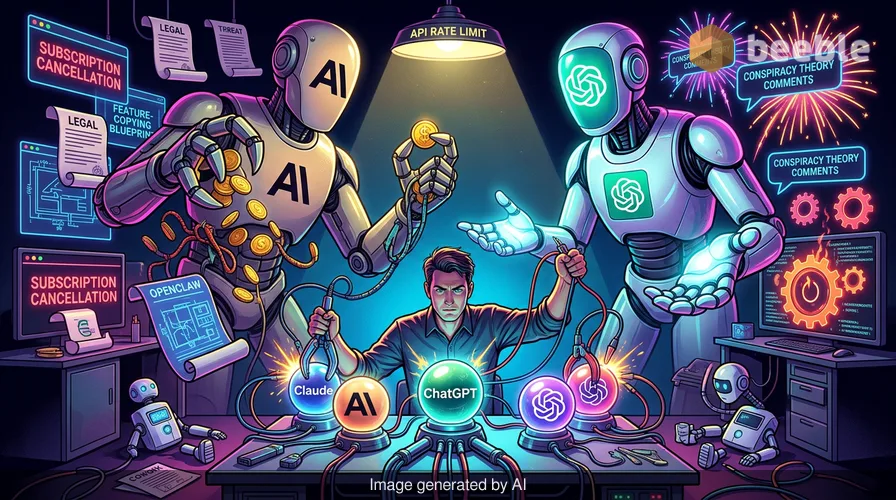
A Sudden Ban Sparks AI Drama
Peter Steinberger, creator of the open-source tool OpenClaw, faced a rude awakening. Early one Friday, Anthropic suspended his account for "suspicious activity." Steinberger shared the notice on X, warning that keeping OpenClaw compatible with Claude models might get tougher. Hours later, after the post blew up, his access returned. An Anthropic engineer even chimed in, denying any ban tied to OpenClaw and offering help. Behind the jargon, this episode reveals tensions in the AI ecosystem that could hit everyday users building custom tools.
What Is OpenClaw, Anyway?
Think of OpenClaw as a user-friendly harness for AI models—like a customizable remote control for your tireless AI intern. It lets developers and hobbyists connect large language models (LLMs) like Claude or ChatGPT to apps, automating tasks such as data analysis or content generation. Unlike rigid, company-built agents, OpenClaw is decentralized and open-source, thriving on community tweaks.
For the average user, it's practical magic. A marketer might use it to loop Claude through email drafting and scheduling without coding from scratch. Steinberger maintains it via the OpenClaw Foundation to work across providers, not just one.
The Pricing Pivot That Lit the Fuse
Anthropic recently shifted gears. Subscriptions to Claude no longer cover third-party tools like OpenClaw. Users must now tap the Claude API, paying per token consumed—essentially a pay-as-you-go model. Anthropic justified this by saying subscriptions can't handle OpenClaw's intensive patterns: continuous loops, retries, and tool integrations that guzzle compute resources.
Practically speaking, if you're running an OpenClaw setup for daily workflows, your bill jumps. A simple script might cost pennies via subscription; through API, heavy use adds up fast. Steinberger claims he followed the rules, using API credits, yet got banned anyway.
Timing Raises Eyebrows
Curiously, this follows Anthropic rolling out Claude Dispatch and enhancements to its own agent, Cowork. Dispatch allows remote task assignment—features echoing OpenClaw's strengths. Steinberger called it out: companies copy open-source ideas, then restrict access. While Anthropic insists the change addresses usage spikes, the sequence fuels skepticism. It's like a coffee shop launching its own beans right before hiking prices on competitors' blends.
On the market side, this protects Anthropic's scalable revenue streams amid rising AI infrastructure costs. But for developers, it disrupts workflows built on Claude's robust performance, which many prefer over alternatives for OpenClaw testing.
Personal Jabs and Broader Rivalries
Steinberger now works at OpenAI, Claude's rival. Online chatter turned conspiratorial: some blamed his job switch, others noted his "one welcomed me, one sent legal threats" retort. He clarifies his dual roles—Foundation work for multi-model support, OpenAI for product strategy. He's even hinting at OpenAI efforts to lure OpenClaw users from Claude.
Zooming out, this underscores AI's volatile landscape. Providers build walled gardens with intuitive agents like Cowork, sidelining open alternatives. Consumers feel it when freewheeling tools get pricier or locked out.
What This Means for Everyday Users
| Scenario | Old Way (Subscription) | New Way (API) | Potential Cost Impact |
|---|---|---|---|
| Light testing (few tasks/week) | Included | ~$0.01–$0.10 | Minimal |
| Daily automation (loops, tools) | Included | $1–$10+/month | Noticeable hike |
| Heavy dev work (continuous runs) | Included | $20–$100+/month | Budget breaker |
For the average user, OpenClaw democratizes AI, turning complex models into streamlined helpers for side hustles or small businesses. But API fees make it less accessible. If you're tinkering with AI agents for recipes, budgeting, or freelance gigs, expect to track usage closely or switch models.
From a consumer standpoint, this pushes toward provider-specific tools. Anthropic's Cowork might suffice for basics, but lacks OpenClaw's flexibility. Ultimately, it fragments the ecosystem, raising barriers for non-corporate tinkerers.
The Bigger Picture: Open vs. Closed AI
AI development mirrors software's historical shift from open collaboration to proprietary platforms. OpenClaw embodies the former—resilient and interconnected. Anthropic's moves prioritize control, opaque to outsiders. Steinberger's saga highlights how personal testing sustains these tools, yet corporate policies can throttle them.
In everyday life, this means fewer free rides on powerful AI. Developers like Steinberger bridge the gap, but rivalries complicate it.
Shift your lens: notice how your AI habits tie into these provider skirmishes. As tools evolve, track multi-model compatibility—it's the unseen backbone keeping innovation user-friendly.



See you on the other side.
Our end-to-end encrypted email and cloud storage solution provides the most powerful means of secure data exchange, ensuring the safety and privacy of your data.
/ Create a free account
