


Why one name missing from the game credits explains the entire future of prestige adaptations
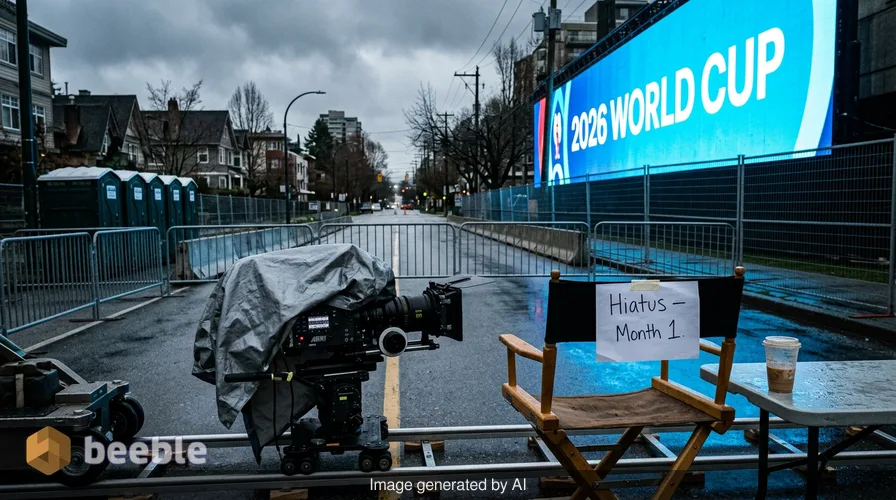
There is a specific, hollow frustration that comes with a sudden pause in a story you have followed for years. It is the narrative equivalent of a power outage during the final act of a film. You are left in the dark, forced to sit with your own expectations while the mechanical gears of the industry grind to a halt elsewhere. For fans of HBO’s The Last of Us, this sensation is now a reality. Production on Season 3 has entered a month-long hiatus because the real world has physically encroached upon the fictional one. Vancouver, the primary filming location for the series, is currently a host city for the 2026 World Cup. The infrastructure of a global sporting event does not easily accommodate the quiet, controlled chaos of a premium television set. Roads are blocked. Security is tight. The logistics of moving a massive crew through a city under international siege by soccer fans proved impossible. Consequently, the cameras are off.
This delay is a reminder that even the most immersive stories are tethered to the physical world. While the audience waits for the next chapter of Ellie and Abby’s journey, the industry is making moves that signal a shift in how we consume adaptations. The news of Peter Sarsgaard joining the cast as a character named Amon is the most prominent example of this evolution. Sarsgaard has a career defined by quiet intensity and an ability to disappear into the background of a scene until the exact moment he needs to dominate it. Yet, the character he plays does not exist in the source material. This choice by HBO highlights a growing trend in the streaming era: the original character as a narrative bridge.
The architecture of the new antagonist
In the original PlayStation game, the Seraphites are a cult-like faction defined more by their whistles and their religious fervor than by any single living leader. The Prophet, the woman who founded the movement, is a ghost in the machine. She is a figure found in murals and hushed whispers, long dead by the time the player arrives in Seattle. By casting Sarsgaard as Amon, a leader of the Seraphites, the show is building a physical pillar where the game left a structural void. This is a calculated expansion of the world-building foundation.
We saw this strategy before with the character of Kathleen, played by Melanie Lynskey in Season 1. Kathleen provided a face and a voice to the revolutionary hunters in Kansas City, a group that was largely anonymous in the original game. In a medium like gaming, the player interacts with groups through mechanics and combat. In a television series, the audience interacts with groups through character and dialogue. A television show requires a human representative to ground the abstract concepts of a faction. Sarsgaard is the perfect choice for this specific type of heavy lifting. His history in projects like Dopesick and Presumed Innocent shows an actor who can carry the weight of complex, morally gray leadership without slipping into the cliches of a cartoon villain.
The Peter Sarsgaard effect on a blank slate
There is a mild irony in casting a veteran actor with over 70 credits to play someone no one has ever heard of. Usually, big-name casting in an adaptation is a way to signal a direct translation of a fan-favorite character. When Kaitlyn Dever was cast as Abby, the internet spent weeks dissecting her physical resemblance to the digital model. With Sarsgaard and Amon, there is no frame of reference. This creates a rare moment of narrative freedom in a franchise that is otherwise under a microscope.
This move suggests that showrunner Craig Mazin is moving away from the rigid mimicry of the source material. Paradoxically, this freedom makes the world feel more resonant. When a show follows a game script too closely, it can feel derivative or clunky, like a cover band trying to hit the exact notes of a famous song. By introducing Amon, the production creates stakes that the most dedicated fans cannot predict. We do not know if Amon survives. We do not know his specific relationship to the series’ protagonists. He is a disruptive element in a familiar machine. This is a business strategy disguised as a creative one. Original characters give the writers room to breathe while keeping the core IP recognizable for the mass audience.
One captain at the helm
Behind the scenes, the structure of the show is also shifting. Neil Druckmann, the creator of the original games, has stepped back from his role as co-showrunner for Season 3. Craig Mazin is now the sole person at the top of the organizational chart. This change is subtle but carries significant weight for the tone of the upcoming episodes. Druckmann is the architect of the lore, the person who knows the DNA of Ellie and Joel better than anyone. Mazin is the translator, the person who understands how to turn that DNA into a prestige drama that appeals to people who have never held a controller.
This shift might explain why the show is leaning harder into original characters and expanded subplots. Without the primary creator in the daily showrunner seat, the production is less likely to feel like a carbon copy of the game. It is becoming a standalone piece of media that happens to share a name with a video game. This is the natural progression of a successful adaptation. The first season proved the concept. The second season, which we are still waiting to see in full, handles the transition. By the third season, a show must stand on its own feet or risk falling into the trap of franchise fatigue. Mazin has a history of streamlining complex histories into gripping narratives, as seen in his work on Chernobyl. He is now applying that same surgical precision to a fictional apocalypse.
The long road to twenty twenty seven
The timeline for Season 3 is a testament to the bloated nature of modern television production. The show is expected to film through the end of 2026, with a premiere date likely in 2027. We are looking at a four-year gap between the seasons of a television show. Historically, this would have been a death sentence for a series’ momentum. In the age of the algorithmic walled garden, however, this has become the standard. High-end productions now take as long to create as the movies they are replacing in the cultural conversation.
This delay is not just about the World Cup in Vancouver. It is about the scale of the production itself. The Last of Us is no longer just a television show; it is a massive industrial undertaking. The hiatus gives the team time to recalibrate, but it also leaves the audience in a state of prolonged anticipation. Bella Ramsey has already hinted at a desire to move toward different types of roles after this series concludes. There is a sense of an ending in the air. If Season 3 is indeed the final season, the stakes for characters like Amon are even higher. Every new addition must justify its existence in a story that is rapidly reaching its conclusion.
Narrative expansion in an era of stagnation
Zooming out to the industry level, the inclusion of actors like Sarsgaard in non-canonical roles is a response to the problem of predictable storytelling. When every plot point is documented on a wiki page years in advance, the emotional impact of a show can feel muted. The industry is currently obsessed with "pre-sold" audiences—people who show up because they already like the brand. The danger of this model is that it often leads to safe, stagnant television.
By inventing Amon, the creators are fighting back against this stagnation. They are asking the audience to engage with a new human element rather than just checking off boxes on a list of game references. This approach respects the viewer's intelligence. It assumes we want a story that surprises us, not just a story that confirms what we already know. Through this audience lens, the wait until 2027 feels slightly more manageable. We are not just waiting for a replay of a game we have already finished. We are waiting for a new piece of a larger puzzle.
Ultimately, the news of production delays and mystery casting reflects our current media reality. Our entertainment is massive, expensive, and increasingly disconnected from the fast-paced schedule of the past. We are living in an era where a soccer tournament in Canada can derail the most popular show on television. Paradoxically, these delays and expansions might be exactly what the series needs to avoid becoming another forgettable piece of IP. By slowing down and adding depth where there was once only a blank space, HBO is trying to ensure that the eventual end of the story feels as profound as the beginning. The goal is to move beyond the screen and leave a mark on the culture that lasts longer than a single season’s hype cycle.
As you sit through the next few years of waiting, consider your own relationship with these stories. We often treat media as a digital buffet, a series of boxes to be checked and forgotten. But the best stories are the ones that force us to wait, to wonder, and to accept that the world we are visiting is larger than the one we saw on the game disk. Amon is not just a character; he is a symbol of a story that is still growing, even when the cameras are off.
Sources
- Deadline: Production on Season 3 of The Last of Us enters hiatus due to Vancouver World Cup logistics.
- HBO: Casting announcement for Peter Sarsgaard as Amon.
- Naughty Dog: Internal shifts regarding Neil Druckmann and Craig Mazin roles for the television series.
- Variety: Discussion on the impact of the 2026 World Cup on Canadian film production hubs.



See you on the other side.
Our end-to-end encrypted email and cloud storage solution provides the most powerful means of secure data exchange, ensuring the safety and privacy of your data.
/ Create a free account
