


Why the Steam Rising from a Digital Hot Pot Signals the End of the Western AAA Monopoly

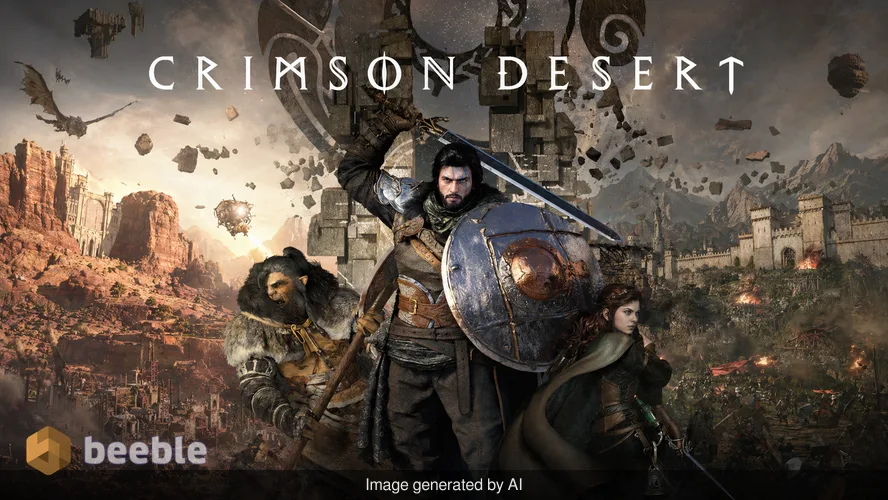
The sizzle is unmistakable. As the protagonist of Crimson Desert crouches over a crackling campfire, the light catches the moisture on a sliced radish, the grain of the wooden bowl, and the steam rising from a bubbling pot of what looks remarkably like kimchi-jjigae. To most players, this is a minor gameplay loop, a brief pause to replenish stamina before the next encounter with a mythological beast. But for an industry that has long looked toward the West or Japan for its blockbuster blueprints, this bowl of stew is a manifesto. It represents a meticulous, almost stubborn insistence on cultural specificity in a medium that often defaults to a generic, Eurocentric 'high fantasy' aesthetic.
At its core, the act of cooking in Crimson Desert serves as a tactile bridge between the player and a world that feels lived-in rather than merely rendered. It is an intimate moment of preparation that anchors the high-octane violence of its combat. Yet, as we zoom out from this microscopic detail, we find that the steam from that digital pot is part of a much larger atmospheric shift. This isn't just a successful game; it is the crest of a wave that has been building within the South Korean development scene for decades, finally crashing onto the shores of the global console market with enough force to capture the attention of a nation’s highest office.
South Korean Prime Minister Kim Min-seok’s recent public commendation of Pearl Abyss and Crimson Desert is not merely a polite gesture toward a successful export. It is a declaration of a new economic and cultural era. By selling 5 million copies in less than a month, Crimson Desert has done more than just break sales records; it has effectively validated a risky, multi-year pivot from the lucrative, familiar waters of mobile and PC-based MMORPGs into the prestigious, high-stakes arena of single-player console adventures. For years, the South Korean industry was viewed by Western audiences as a fragmented landscape of 'gacha' mechanics and endless grinding. Now, that perception is being dismantled, one meticulously choreographed Taekwondo kick at a time.
The Great Engine Divorce
Historically, the barrier to entry for high-end console development has been technological as much as creative. Most studios outside the 'Big Three' (Sony, Microsoft, Nintendo) or the established Western giants rely on third-party engines like Unreal or Unity. These tools are powerful, but they come with a certain 'feel'—a standardized way that light hits surfaces or physics interact that can sometimes make disparate games feel cousins of the same digital lineage. Pearl Abyss made the defiant choice to build Crimson Desert on their proprietary Black Space Engine.
Behind the scenes, this decision is the equivalent of a filmmaker grinding their own lenses and inventing their own film stock. It allows for a level of photorealism that feels distinct from the glossy, often over-saturated look of contemporary Western blockbusters. This technological sovereignty is what the Prime Minister highlighted when he noted the game was 'crafted entirely with their own technology.' In industry terms, this is about more than just aesthetics; it is about future-proofing. By owning the engine, Pearl Abyss isn't just selling a game; they are selling a vision of what the next decade of K-Content looks like, unburdened by the licensing fees or technical limitations of foreign software.
Consequently, the world of Crimson Desert feels remarkably seamless. The transition from the rugged, wind-swept plains to the intricate interiors of a tavern happens without the jarring 'seams' that often break immersion in massive open-world titles. This technical fluidity mirrors the game’s narrative ambition, weaving together a gritty mercenary tale with elements of traditional Korean folklore that, until now, rarely saw the light of day in a hundred-million-dollar production.
The Migration from the Mobile Gilded Cage
To understand why 5 million copies is a 'crucial turning point,' we must look at the domestic landscape of the South Korean gaming industry. For the last fifteen years, it has been a powerhouse of mobile and online PC gaming. Titles like Lineage and MapleStory generated staggering revenue, but they often existed within a 'content walled garden.' They were immensely popular in Asia but struggled to gain the same critical prestige or mainstream console presence in the West as franchises like The Witcher or God of War.
Through this audience lens, we see a demographic of players who have grown tired of the 'digital buffet' of mobile games—those experiences that offer infinite content but often feel hollow, designed more to extract microtransactions than to deliver a resonant story. Paradoxically, the success of Crimson Desert proves that there is a massive appetite for the 'one-and-done' premium experience. Players are willing to pay a premium price upfront for a journey that has a beginning, a middle, and a definitive, impactful end.
This shift isn't occurring in a vacuum. We saw the first tremors with Neowiz’s Lies of P, which took the notoriously difficult 'Soulslike' genre and infused it with a uniquely polished, Belle Époque sensibility. Then came Shift Up’s Stellar Blade, which proved that South Korean developers could master the high-speed action-combat mechanics perfected by Japanese studios like PlatinumGames. But Crimson Desert is the behemoth. It is the proof of concept that a South Korean studio can build an open world that rivals—and in some technical aspects, surpasses—the giants of the genre.
Taekwondo and the Soft Power of the Controller
There is a specific kind of pride in the Prime Minister's mention of Taekwondo and Korean cuisine. For decades, the global 'K-Wave' (Hallyu) was defined by K-Pop and K-Dramas. We watched the world fall in love with BTS and Squid Game, but gaming, despite being South Korea's largest cultural export by dollar value, often felt invisible in these cultural conversations. It was viewed as a 'clunky' commodity rather than an art form.
Crimson Desert changes that by integrating cultural identity into the core mechanics. When your character executes a grapple or a high kick, the animations are rooted in the specific geometry of Taekwondo. It isn't just 'martial arts'; it is a specific kinetic language. Narratively speaking, this is where the game finds its soul. It avoids the trap of being a derivative copy of Western fantasy. It doesn't try to be Skyrim; it tries to be a mythic version of the Pyewon continent, where the weight of the armor and the spice of the food are distinctly, unapologetically local.
This is the 'new chapter' Kim Min-seok referred to. The government’s promise to provide 'active support' suggests that we are about to see a massive influx of state-backed infrastructure for console development. Just as the South Korean government supported the music industry in the late 90s, they are now positioning the gaming industry as a pillar of their global soft power. They have realized that a single-player game can be a more effective cultural ambassador than a thousand tourism brochures.
The Illusion of Choice vs. The Depth of Experience
In our current era of 'fragmented' media, where we often spend more time scrolling through menus than actually engaging with content, Crimson Desert offers a refreshing rebuttal. It doesn't rely on the 'bloated' map-clearing checklists that have become the bane of many Western open-world games. Instead, it focuses on the texture of the world.
From a creator's standpoint, the challenge is to make a world that feels vast without feeling empty. Crimson Desert achieves this through a conversation between the player and the environment. You aren't just a cursor moving across a map; you are a body in a space. Whether you are shivering in the cold of the northern reaches or sweating in the humid lowlands, the game uses its proprietary tech to make those environmental factors matter. It’s a sophisticated form of immersion that goes beyond resolution or frame rates; it’s about the sensory details that make a digital space feel like a place.
Reclaiming the Joy of the Single-Player Journey
As we look toward the future, the success of Crimson Desert serves as an 'emotional autopsy' of the current state of AAA gaming. For years, industry analysts claimed that the single-player console game was a dying breed, soon to be replaced by 'games as a service' and live-ops models. They were wrong. The global audience is starving for focused, high-quality, culturally rich experiences that respect their time and their intelligence.
Ultimately, Crimson Desert is a reminder that the best media consumption isn't about passive absorption; it’s about the thrill of discovery. It’s the feeling of stepping into a world that feels familiar enough to navigate but foreign enough to fascinate. It urges us to look beyond the dominant Western narratives and recognize that some of the most exciting world-building is currently happening in studios thousands of miles away from the traditional hubs of development.
Next time you find yourself in a digital kitchen in Pyewon, watching the steam rise from a bowl of hot pot, take a moment to appreciate the complexity behind that simple visual. It’s not just a health buff. It’s the sound of a new superpower in the entertainment world finding its voice, and it’s a sign that the global cultural landscape is becoming far more diverse, and far more delicious, than we ever imagined.
Sources
- Ministry of Culture, Sports and Tourism (South Korea) Annual Export Reports
- Pearl Abyss Investor Relations - Q1 2026 Financial Results
- X (formerly Twitter) official statement from Prime Minister Kim Min-seok
- Game Developer Interview: The Black Space Engine and Proprietary Tech (2025)
- Global Console Market Analysis - NPD Group & GfK Data (2026)



See you on the other side.
Our end-to-end encrypted email and cloud storage solution provides the most powerful means of secure data exchange, ensuring the safety and privacy of your data.
/ Create a free account
