


Your Pension Fund’s New AI Intern Is Working Without a Supervisor

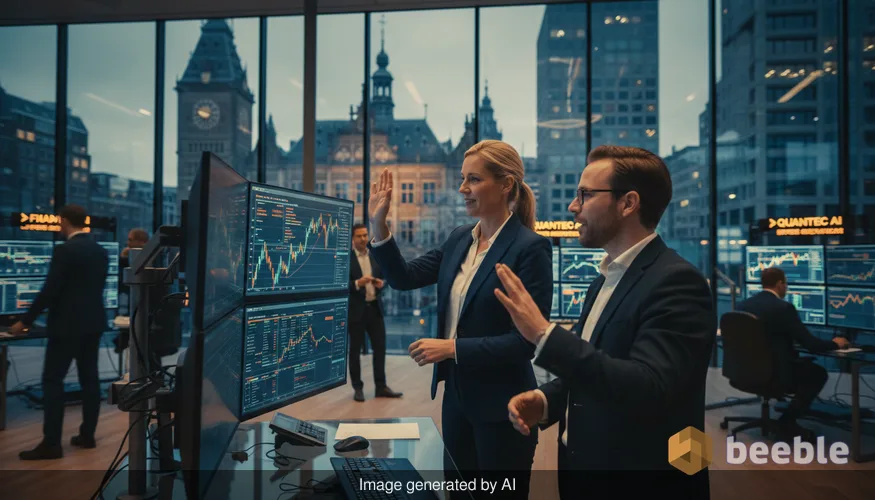
While the glossy marketing brochures for investment funds often promise "AI-driven alpha" and "machine-learning precision," the reality inside the Dutch financial sector is far more chaotic. We are often told that artificial intelligence is a sophisticated pilot steering our savings toward safer harbors. However, the latest report from the Dutch Authority for the Financial Markets (AFM) suggests that for many firms, AI is less of a seasoned captain and more of a powerful engine bolted onto a rickety chassis.
In the world of high finance, there is a persistent narrative that more technology automatically equals better results. The AFM’s findings challenge this comfortable assumption. Looking at the big picture, Dutch asset managers are indeed sprinting to integrate AI into their trading strategies and price forecasting. But as they rush to keep up with the digital arms race, they are leaving the boring, foundational stuff—like oversight, data quality, and ethical guidelines—in the dust.
The Tireless Intern with a Short Memory
To understand what is happening under the hood, think of AI in asset management as a tireless intern. This intern can read a million pages of financial data in a second and spot patterns that a human would miss in a lifetime. It is incredibly fast and never sleeps. However, this intern also has a tendency to hallucinate, lacks common sense, and occasionally follows bad instructions to a disastrous conclusion because it doesn't actually understand the world—it only understands the math.
Practically speaking, Dutch asset managers are using these digital interns for everything from sentiment analysis on social media to executing complex trades. The problem identified by the AFM is that the human supervisors often don't know how to manage their new digital staff. There is a tangible gap in knowledge; the people at the top understand the markets, but they don't always understand the code. When the AI makes a decision, it can be opaque, leaving the firm unable to explain why a specific trade was made or why a certain risk was ignored.
The Infrastructure Lag
One might assume that billion-euro investment firms have the most robust technology stacks on the planet. Curiously, the AFM report points to a significant infrastructure lag. While the algorithms themselves are disruptive and cutting-edge, the systems supporting them are often insufficient.
| AI Component | Current Status in Dutch Asset Management | The Risk Involved |
|---|---|---|
| Data Quality | Often inconsistent or unverified | "Garbage in, garbage out" leading to bad trades |
| Explainability | Low; many models are "black boxes" | Regulators and clients can't trace the logic |
| Policy & Ethics | Frequently missing or underdeveloped | Algorithmic bias and unfair market advantages |
| Vendor Reliance | High dependence on a few tech giants | Systemic risk if a provider like AWS or Azure fails |
Behind the jargon, what this means is that many firms are building skyscrapers on sand. They are deploying scalable AI solutions without first ensuring that the data feeding those models is clean. If an AI learns to predict stock prices based on flawed historical data, it doesn't just make a mistake; it scales that mistake across an entire portfolio.
The Hidden Danger of the "Black Box"
For the average user, the most concerning part of this development is the lack of explainability. In a traditional setting, if your pension fund lost a significant amount of money, an analyst could point to a specific geopolitical event or a corporate bankruptcy as the cause. With AI, we are entering an era where the answer might simply be, "the model felt it was the right move."
This lack of transparency creates a systemic risk. If multiple asset managers use similar AI models provided by the same small group of tech vendors, they might all decide to sell the same asset at the exact same microsecond. In a volatile market, this could lead to a flash crash—a digital stampede where the exit is too small for everyone to fit through at once.
Why This Matters for Your Wallet
From a consumer standpoint, you might feel removed from the technicalities of Dutch regulatory reports. However, if you have a pension, a savings account, or a retail investment portfolio in the Netherlands, you are an indirect participant in this experiment.
Essentially, your financial security is being tied to algorithms that are currently operating in a bit of a Wild West environment. The AFM found that many institutions lack clear ethical guidelines. This isn't just about being "nice"; it’s about preventing bias. If an AI decides that a certain demographic is a "risk" based on flawed historical data, it could lead to unfair pricing or exclusion from certain financial products without any human ever realizing why it happened.
Furthermore, the reliance on a few overarching technology providers means that the financial sector is becoming increasingly interconnected with the tech sector. If a major cloud provider has an outage, it’s no longer just your emails that are offline—it’s the engine running your retirement fund.
Looking Ahead: The Path to Resilience
Ultimately, the AFM isn't saying that AI is the enemy. On the market side, the potential for AI to create more efficient, streamlined markets is unprecedented. But the regulator is sending a clear signal: the honeymoon phase of "move fast and break things" in finance is over.
To put it another way, the AFM is asking asset managers to show their work. They are calling for robust policies that ensure high data quality and, more importantly, human accountability. We need to move toward a model where the AI is a tool used by experts, rather than a replacement for them.
As a consumer, you should start asking more pointed questions of your financial providers. Don't be dazzled by the word "AI." Instead, ask how they vet their algorithms, how they ensure their data is unbiased, and what their backup plan is when the digital intern decides to go rogue. The future of finance is undoubtedly automated, but it only works if there is a human hand firmly on the emergency brake.
Sources:
- AFM (Netherlands Authority for the Financial Markets) Sector Study on AI in Asset Management, 2024-2026.
- European Securities and Markets Authority (ESMA) Guidelines on Algorithmic Trading.
- Dutch Central Bank (DNB) Reports on Financial Technology and Stability.



See you on the other side.
Our end-to-end encrypted email and cloud storage solution provides the most powerful means of secure data exchange, ensuring the safety and privacy of your data.
/ Create a free account
