


Apple’s Top Hardware Architect Is Moving to OpenAI to Build a Physical Home for AI

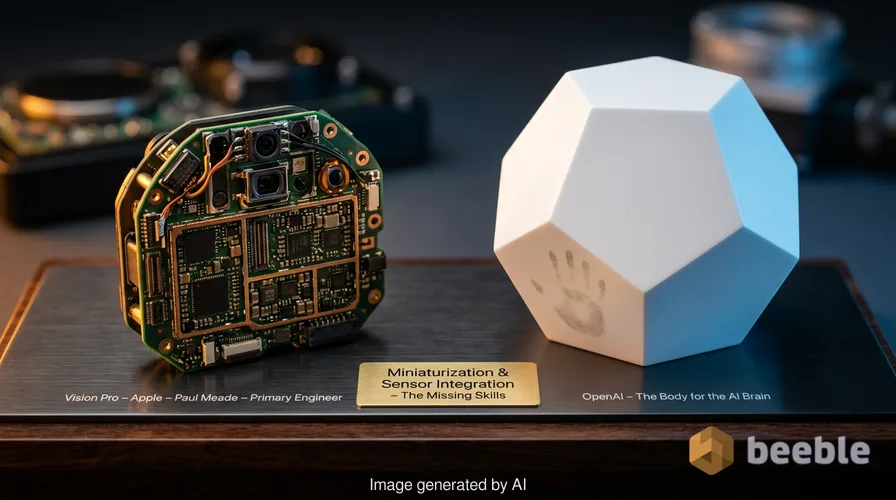
Why is the person who built Apple's most ambitious hardware leaving for a software company?
Paul Meade has spent the last few years as the primary engineer behind the Vision Pro, Apple’s most complex piece of hardware since the original iPhone. Now, reports indicate he is moving to OpenAI. This departure occurs at a moment when Apple is trying to figure out how to shrink a massive headset into a pair of lightweight, everyday glasses. For the average user, this executive shuffle is more than just corporate musical chairs. It marks a shift in where the best hardware talent wants to work.
Hardware is the physical body for an AI brain. For years, OpenAI has had the brain but no body. By hiring Meade, the company is signaling that it is ready to stop being just an app on your phone and start being the phone itself. Meade is a specialist in miniaturization and sensor integration. These are the exact skills needed to make AI feel like a natural part of physical life. Looking at the big picture, this move suggests that the next generation of gadgets will not come from the usual giants alone.
The internal friction behind the hardware shake-up
Mark Gurman at Bloomberg reports that Meade’s exit is partly a result of internal politics at Apple. John Ternus is currently the frontrunner to replace Tim Cook as CEO. As Ternus prepares for this elevation, he is reorganizing the hardware engineering team. This reshuffle has left several high-ranking vice presidents feeling as though their roles are smaller than before. When talented engineers feel their influence is shrinking, they often look for new challenges.
Apple is a massive machine. It is resilient, but it is also slow. In contrast, OpenAI is still in its high-growth phase. For an engineer like Meade, the chance to build a device from scratch is often more appealing than maintaining a legacy product line. Practically speaking, Apple’s loss is a massive gain for OpenAI’s hardware ambitions. Meade understands how to navigate the complex supply chains required to build millions of devices. He knows how to make a battery last all day while powering high-resolution displays. These are foundational skills for any company that wants to compete with the iPhone.
From heavy headsets to invisible glasses
Before he left, Meade was reportedly leading the development of Apple’s next big project: AI-powered smart glasses. These glasses are intended to succeed where the Vision Pro failed. The Vision Pro is a technical marvel, but it is too heavy and too expensive for most people. It is a niche product for enthusiasts. The smart glasses, expected to launch next year, aim to be transparent and user-friendly.
| Feature | Apple Vision Pro | Predicted Apple Smart Glasses |
|---|---|---|
| Primary Use | Immersive VR/Computing | Daily AR Overlay/AI Assistant |
| Weight | ~600-650 grams | ~50-100 grams |
| Battery Life | 2 Hours (External Pack) | All-Day Target |
| Price Point | $3,499 | $500 - $1,000 |
| User Intent | Deep Work/Entertainment | Casual Assistance/Navigation |
In everyday life, most users do not want to strap a computer to their face for eight hours. They want a device that helps them remember names, translates signs in real-time, or gives them directions without them looking at a screen. Meade was the architect of this transition. His move to OpenAI suggests that Sam Altman’s company is chasing the same goal. They want to move away from the glowing rectangle in your pocket and toward something more intuitive.
OpenAI wants to build a physical home for its models
OpenAI has been working with Jony Ive, Apple’s former chief design officer, on a mystery device. Sam Altman has described this project as something that will be more peaceful than an iPhone. The goal is to reduce the constant dopamine loops of social media and replace them with a calm, helpful AI assistant. Curiously, reports from late last year indicated that OpenAI was struggling to get the hardware details right. Engineering a new device is hard. It involves thermal management, material science, and regulatory hurdles.
Meade is the missing piece of this puzzle. While Ive provides the aesthetic vision, Meade provides the engineering muscle. To put it another way, Ive designs the car’s body, but Meade builds the engine. OpenAI already has the software that millions of people use every day. If they can put that software into a device that people actually want to wear, they could disrupt the entire mobile industry. The bottom line is that OpenAI is no longer content being a guest on Apple’s operating system. They want to own the hardware that the software lives on.
How these leadership shifts change the devices in your pocket
For the consumer, this competition is a win. When a single company like Apple dominates the market, innovation often becomes cyclical and predictable. You get a slightly better camera every September. But when a disruptive player like OpenAI enters the hardware space with top-tier talent, it forces everyone to move faster.
We are seeing a shift from "mobile first" to "AI first." A mobile-first device, like the iPhone, is built around apps and touchscreens. An AI-first device is built around voice, vision, and context. It knows where you are and what you are looking at. It does not wait for you to open an app; it provides information as you need it. This requires a systemic change in how hardware is built. Sensors must be always-on without draining the battery. Microphones must be sensitive but private. Meade’s experience with the Vision Pro’s sensor array makes him uniquely qualified to solve these problems.
Practical takeaways for your next gadget purchase
As a journalist who has watched dozens of these executive migrations, I see a clear pattern. Talent follows the most interesting problems. Right now, the most interesting problem is not the next iPhone. It is the device that replaces the iPhone. From a consumer standpoint, this move tells us a few things about the near future.
First, do not expect the current version of the Vision Pro to become a mainstream hit. The person who built it is gone, and Apple is already pivoting toward cheaper glasses. If you are on the fence about buying an expensive VR headset, it might be wise to wait. The next two years will see a wave of more practical, lightweight wearables.
Second, keep an eye on OpenAI’s hardware announcements. They are no longer a group of researchers in a lab. They are building a robust team of hardware veterans. This suggests their upcoming device will be a serious consumer product, not just a tech demo. It will likely be designed to work seamlessly with the AI models we already use for work and creative tasks.
Ultimately, the departure of Paul Meade is a signal that the hardware industry is becoming volatile and exciting again. We are moving out of the era of the smartphone and into an era of ambient computing. Your next major tech purchase might not have a screen at all. It might just be a pair of glasses that whispers the answer to your questions before you even finish asking them.
Sources:
Bloomberg News (Mark Gurman)
Apple Corporate Leadership Directory
OpenAI Product Strategy Briefs
Supply Chain Reports on Spatial Computing Components



See you on the other side.
Our end-to-end encrypted email and cloud storage solution provides the most powerful means of secure data exchange, ensuring the safety and privacy of your data.
/ Create a free account
