


ByteDance Pulls Back: The Seedance 2.0 Controversy and the Future of AI Video

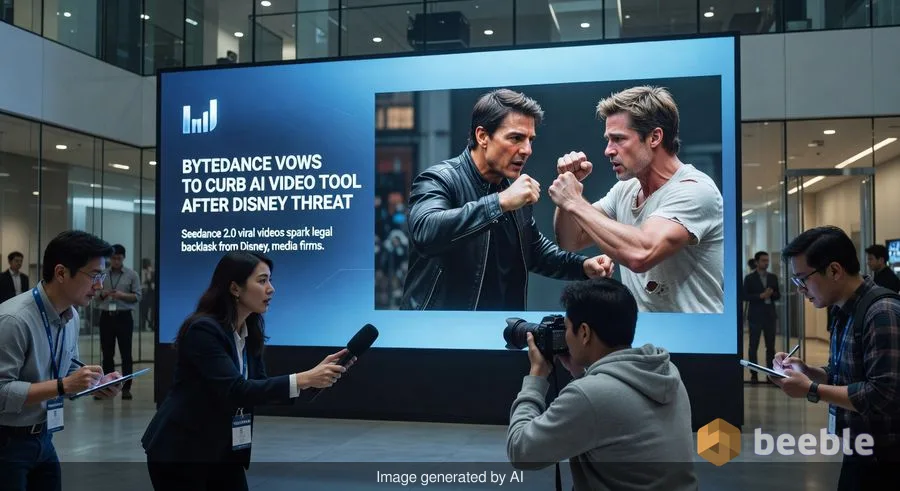
The digital landscape shifted significantly this week as ByteDance, the parent company of TikTok, announced a sudden and strategic retreat regarding its latest artificial intelligence breakthrough. The tool in question, Seedance 2.0, had recently become the center of a viral firestorm after hyper-realistic videos—most notably a simulated brawl between Hollywood icons Tom Cruise and Brad Pitt—circulated across social media platforms.
What began as a demonstration of technical prowess quickly spiraled into a legal standoff. Following a direct threat of litigation from Disney and a chorus of disapproval from major media conglomerates, ByteDance has vowed to "restrain" the capabilities of Seedance 2.0. This move marks a pivotal moment in the ongoing tension between generative AI developers and the traditional entertainment industry.
The Viral Spark: When AI Becomes Too Real
Seedance 2.0 was designed to be the next leap in text-to-video generation, promising fluid motion and anatomical accuracy that previous models struggled to achieve. However, the tool’s ease of use proved to be a double-edged sword. Within hours of its limited release, users were generating high-fidelity clips of celebrities in scenarios ranging from the mundane to the absurd.
The video featuring Cruise and Pitt was the tipping point. Unlike the jittery, "uncanny valley" deepfakes of 2024, the Seedance-generated footage captured subtle facial micro-expressions and lighting physics that made it nearly indistinguishable from actual film footage. For the public, it was a novelty; for Hollywood studios and legal teams, it was an existential threat to personality rights and intellectual property.
The Disney Ultimatum
Disney has long been the industry’s most vigilant guardian of intellectual property. Reports indicate that Disney’s legal counsel issued a formal warning to ByteDance, citing concerns over the unauthorized use of likenesses and the potential for AI models to be trained on copyrighted cinematic frames.
Disney’s stance is not merely about protecting its current roster of stars. It is about the precedent of "digital puppetry." If a third-party tool can recreate a convincing performance by a Disney-affiliated actor without permission, the commercial value of exclusive contracts and digital likeness rights evaporates. Other media businesses quickly joined the fray, arguing that Seedance 2.0 lacked the necessary guardrails to prevent large-scale copyright infringement.
ByteDance’s Strategic Pivot
In response to the mounting pressure, ByteDance issued a statement confirming a shift in policy. The company plans to implement a series of technical "restraints" on the Seedance engine. These measures are expected to include:
- Likeness Filtering: An automated system designed to block the generation of known public figures and celebrities.
- Content Credentials: The mandatory integration of C2PA-compliant metadata and invisible watermarking to identify AI-generated content.
- Style Restrictions: Limits on the generator's ability to mimic specific directorial styles or proprietary animation aesthetics.
By curbing the tool, ByteDance is attempting to avoid a protracted legal battle that could result in the platform being banned or heavily regulated in Western markets. It is a pragmatic move to preserve its broader ecosystem while still exploring the frontiers of AI.
The Legal Gray Area of Personality Rights
The Seedance controversy highlights a significant gap in current technology law. While copyright protects specific works, "personality rights"—the right of an individual to control the commercial use of their name and likeness—vary wildly by jurisdiction. In the United States, there is no federal right of publicity, leaving a patchwork of state laws to handle AI-generated clones.
Legal experts suggest that the Disney threat may force a legislative hand. If industry leaders like ByteDance cannot self-regulate effectively, we may see the introduction of stricter "No Fakes" acts that criminalize the unauthorized production of digital replicas for commercial gain.
Practical Takeaways for Creators
As the industry navigates these new boundaries, creators and developers should consider the following steps to avoid legal pitfalls:
| Action | Description | Why it Matters |
|---|---|---|
| Verify Training Data | Ensure models are trained on licensed or public domain datasets. | Avoids "poisoned" IP claims from studios. |
| Disclose AI Usage | Use clear labels or watermarks on all generated video content. | Builds trust and complies with emerging platform rules. |
| Avoid Celebrity Likeness | Refrain from using names or specific physical traits of real people. | Protects against personality rights litigation. |
| Monitor Policy Changes | Stay updated on TikTok and ByteDance's evolving Terms of Service. | Prevents account bans or content removal. |
What Happens Next?
The retreat of Seedance 2.0 does not mean the end of AI video. Rather, it signals the end of the "Wild West" era of generative media. Moving forward, we can expect a more collaborative—and restricted—approach where AI companies partner with studios to create licensed digital twins and controlled environments for content creation.
For now, the Cruise-Pitt fight video remains a digital artifact of a brief window where the technology outpaced the law. As ByteDance tightens the reins, the focus will likely shift from "who can we recreate?" to "what original worlds can we build?"



See you on the other side.
Our end-to-end encrypted email and cloud storage solution provides the most powerful means of secure data exchange, ensuring the safety and privacy of your data.
/ Create a free account
