


Europe wants 25,000 robotaxis but you still cannot hail one today

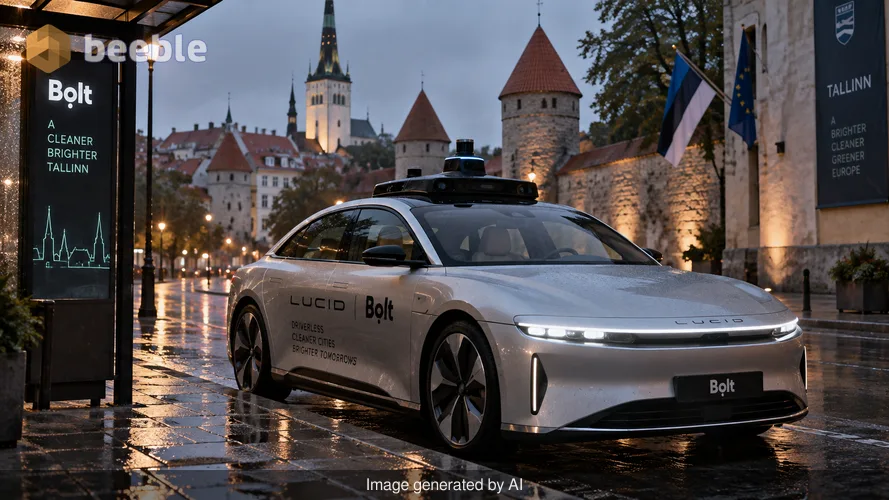
A sleek, silver sedan pulls up to a curb in a rainy corner of Tallinn. Inside, the passenger seat is empty, and the steering wheel does not exist. This vehicle is the tangible result of a new partnership between Lucid, an American luxury electric car maker, and Bolt, the European ride-hailing giant. The two companies plan to put 25,000 of these autonomous vehicles on European streets over the next decade. While the image of a driverless fleet is easy to visualize, the path from a press release to a functional taxi service involves a long chain of hardware, software, and financial shifts.
To understand this deal, one must look at the vehicle itself. The robotaxi uses Lucid's new midsize platform, a set of mechanical parts and batteries designed to be cheaper than the company's high-end luxury sedans. This platform serves as the foundation for the car. Beneath the metal, the vehicle relies on the NVIDIA Hyperion architecture. This system is the digital brain of the car. It uses a suite of sensors and high-powered processors to navigate city streets without human intervention. The companies describe this as Level 4 automation. In simple terms, this means the car operates entirely on its own, but only within specific, pre-mapped geographic boundaries. It is a tireless intern that knows every inch of its assigned neighborhood but gets lost if it crosses the city line.
The architecture of a driverless future
The hardware journey starts with silicon. NVIDIA's Hyperion platform acts as the nervous system for the Lucid robotaxi. It processes massive amounts of data from cameras, radar, and lidar sensors in real time. This technology is the digital crude oil of the autonomous age. Without these chips, the car is just an expensive battery on wheels. By choosing a standardized architecture like Hyperion, Lucid avoids the cost of building its own self-driving stack from scratch. This decision is practical because Lucid is currently in a defensive financial position.
Looking at the big picture, the partnership provides Bolt with the physical tools it needs to survive a shifting market. Bolt operates in over 500 cities and faces pressure to lower costs. Drivers are the largest expense for any ride-hailing company. By removing the driver, Bolt transforms its business model from a service platform into a fleet operator. The company wants 100,000 autonomous vehicles on its platform by 2035. This goal is ambitious, but it starts with this first batch of 25,000 Lucid vehicles. Bolt plans to own and operate these cars directly, which is a departure from its current model of using independent contractors who own their own cars.
Financial friction and production delays
Tracing the money back to Lucid reveals a more complicated story. Lucid is a company that has struggled to move from a niche luxury brand to a mass-market manufacturer. Earlier this year, the automaker laid off 18 percent of its workforce to save cash. It also delayed the launch of its Cosmos SUV until early 2027. This vehicle is the first consumer car that uses the same midsize platform as the Bolt robotaxis. If Lucid cannot get the Cosmos to market on time, the production of robotaxis for Bolt will likely face similar bottlenecks.
For the average user, these delays are more than just corporate headlines. They represent a slow leak in the tire of the electric vehicle revolution. When a manufacturer struggles to scale its production, the cost of the technology remains high. Lucid needs these high-volume partnerships with companies like Bolt and Uber to justify the cost of its factories. In the United States, Lucid has a similar deal to provide 35,000 vehicles to Uber. These partnerships act as a financial safety net. They guarantee that Lucid has a buyer for its cars even if individual consumers are hesitant to buy an expensive electric sedan in a volatile economy.
The European regulatory maze
On the market side, Europe presents a unique set of hurdles for robotaxis. Unlike the United States, where cities like Phoenix and San Francisco have relatively loose rules for testing, European regulators are cautious. Each country has different requirements for insurance, liability, and safety data. Practically speaking, this means the rollout will be cyclical and slow. Bolt will likely deploy cars in small batches in cities with favorable laws before expanding to the rest of the continent.
Historically, transportation shifts take decades to finalize. The transition from horses to cars did not happen overnight, and the transition from human drivers to software will follow a similar path. The Lucid-Bolt partnership is a foundational step in this process. However, the companies have not yet provided a specific date for when the first passenger can book a ride. This lack of a timeline suggests that the software is not yet ready for the complexities of European urban traffic, which includes narrow streets and high densities of cyclists.
What this means for your daily commute
From a consumer standpoint, the arrival of 25,000 robotaxis could eventually lower the price of a ride. Without a human driver to pay, the cost per mile drops significantly. In everyday life, this might make ride-hailing a viable alternative to owning a private car or using public transit. But this reality is years away. For now, the Lucid-Bolt deal is a signal to investors that both companies are preparing for a future where transportation is a utility rather than a product you own.
| Feature | Lucid/Bolt Robotaxi | Standard Lucid Air Sedan |
|---|---|---|
| Automation level | Level 4 (Geofenced) | Level 2 (Driver assistance) |
| Interior design | No steering wheel/pedals | Traditional driver cockpit |
| Ownership model | Fleet owned by Bolt | Privately owned by consumer |
| Primary platform | Midsize platform | Luxury platform |
| Target region | Europe | Global |
Under the hood, this deal is about survival through scale. Lucid needs to prove it can build cars in high volumes, and Bolt needs to prove it can operate without the rising costs of human labor. As a result, the success of this partnership depends entirely on whether Lucid can fix its production issues and whether NVIDIA's chips can handle the chaos of city driving. The bottom line is that the technology is emerging, but the industrial backbone required to support it is still under construction.
Ultimately, the robotaxi is less of a car and more of a mobile computer. The materials used to build it — lithium, cobalt, and silicon — are the same materials that power your phone and laptop. By tracing the project from the streets of Europe back to the factories in Arizona and the chip designers in California, it becomes clear that the robotaxi is the next stage of the consumer electronics industry. It is a large, expensive gadget that happens to move people from place to place.
As you watch this industry develop, observe how your own habits change. You might not see a driverless Lucid on your street tomorrow, but the infrastructure for that day is being built now. The next time you book a ride on an app, notice the price and the wait time. These are the metrics that robotaxis aim to disrupt. Whether they succeed depends on more than just software. It depends on the resilience of the global supply chain and the ability of companies like Lucid to turn a prototype into a mass-produced reality.
Sources: Lucid Motors Press Office, Bolt Corporate Communications, NVIDIA Automotive News, Market Watch Data Services.



See you on the other side.
Our end-to-end encrypted email and cloud storage solution provides the most powerful means of secure data exchange, ensuring the safety and privacy of your data.
/ Create a free account
