


Inside the High-Stakes Standoff Between India’s Watchdog and the iPhone Maker

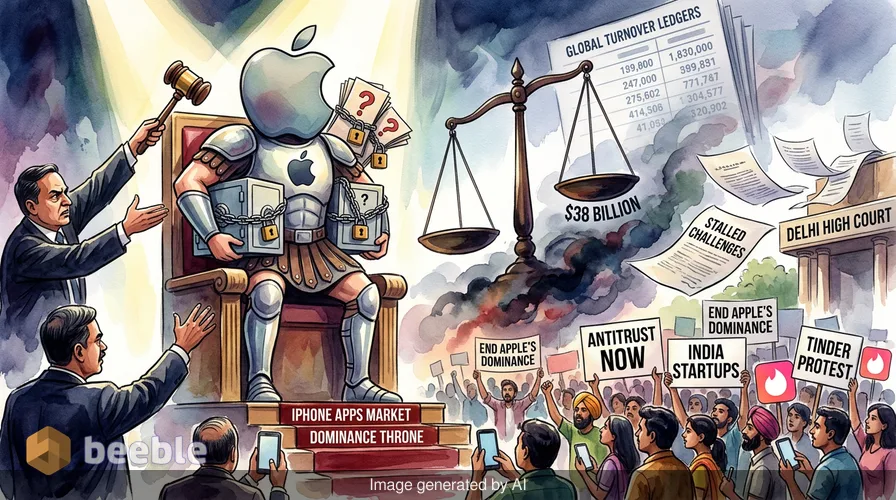
When a multi-trillion dollar company goes head-to-head with a government regulator, the real battle isn't always fought over a judge’s bench. Often, the most intense skirmishes happen over spreadsheets and data points that stay hidden from the public eye. In the world of corporate law, information is more than just power; it is the primary currency of defense and prosecution. Currently, a high-stakes chess match is unfolding in New Delhi between Apple Inc. and the Competition Commission of India (CCI), and the outcome could reshape how you use your smartphone.
At the heart of the matter is an antitrust investigation. Antitrust laws are essentially the referee’s whistle in a free market, designed to ensure that no single company becomes so powerful that it can unfairly squash its competitors. In this instance, the CCI believes Apple has been playing too rough in the iPhone app market. However, the case has hit a significant roadblock: Apple has reportedly stopped sharing the financial data the watchdog needs to finish its homework.
The "Toll Booth" Problem: What Apple is Accused Of
To understand why the CCI is so focused on Apple, we have to look at the digital plumbing of the iPhone. For years, Apple has mandated that app developers use its proprietary in-app purchase system. If you buy a subscription or a digital sword in a game, Apple takes a cut—usually between 15% and 30%.
In the eyes of the law, specifically the Competition Act of 2002, this looks like an abuse of a dominant position. Think of it like this: imagine if a city owned all the roads and then forced every delivery truck to use only the city’s own expensive gas stations, forbidding them from filling up anywhere else. While Apple argues that this system ensures security and a smooth user experience, regulators see it as a mandatory toll booth that stifles innovation and keeps prices high for consumers.
The investigation, which began in 2021 following complaints from non-profits and companies like Match Group (the owner of Tinder), reached a boiling point earlier this year. Investigators concluded that Apple had indeed exploited its position. Now, the watchdog is moving toward the penalty phase, which is where things get complicated.
The Shell Game: Why Financial Transparency Matters
In a typical regulatory context, once a company is found to have broken the rules, the next step is determining the "quantum of penalty"—or the actual dollar amount of the fine. To do this fairly, the CCI needs to see the company’s books. They require financial information supported by an auditor's certificate to ensure the numbers are accurate.
According to an order from April 8, 2024, Apple has been hesitant to provide these details since October of the previous year. Instead of handing over the ledger, Apple has pointed toward a separate legal battle it is fighting in the Delhi High Court. By withholding this data, Apple is essentially telling the regulator, "We don’t think you have the right to ask for this yet."
From a legal standpoint, this is a precarious strategy. If a company fails to provide the requested financial data, the regulator isn't forced to just give up. Instead, they can calculate the fine based on the best information they have available, which often results in a much harsher outcome for the corporation. By refusing to engage on the financial details, Apple’s arguments on the size of the fine will be constrained accordingly once the final hearing begins.
A Bold Defense: Challenging the Rulebook
Apple’s primary defense is not just about its business practices; it is about the law itself. The company has challenged India’s entire antitrust penalty law in the Delhi High Court. This is what we call a systemic challenge. Rather than just arguing that they didn't break the rule, Apple is arguing that the rule shouldn't exist in its current form.
Specifically, Apple is worried about a recent shift in Indian law that allows the CCI to calculate fines based on a company's global turnover. In the past, fines were often linked only to the revenue generated within India. Apple, which currently holds about a 9% market share in India, fears that if the CCI looks at its worldwide earnings, the fine could skyrocket to a staggering $38 billion.
Apple recently requested that the CCI put the antitrust proceedings in "abeyance"—a legal term for putting a case on ice or pausing it—until the High Court decides on the validity of the penalty law. The CCI rejected this demand, viewing it as a tactic to stall the case and prevent a final ruling. Consequently, the watchdog has set a final hearing date for May 21, signaling that its patience has worn thin.
The Global Ripple Effect: Why This Matters for You
While this sounds like a battle between giants, the consequences trickle down to the average consumer. If the CCI succeeds in forcing Apple to open its ecosystem, it could mean lower prices for apps and subscriptions. It might also lead to a more multifaceted app market where developers can offer different payment methods, much like how you can choose to pay with cash, credit, or a digital wallet at a physical store.
This case is not an isolated incident. Apple is facing similar litigation and regulatory pressure in the European Union, the United States, and Japan. India is a key battleground because it is one of the world's fastest-growing smartphone markets. Just two years ago, the iPhone’s market share in India was only 4%; today, it has more than doubled. As Apple becomes more dominant in the region, the jurisdiction of the CCI becomes increasingly relevant to every iPhone user in the country.
What Happens Next? The May 21 Showdown
The setting of a final hearing date is a significant milestone. It suggests that the CCI is ready to move toward a binding decision, regardless of whether Apple provides the sought-after data. In practice, this means the "discovery" phase—the period where both sides exchange evidence—is effectively over.
During the hearing on May 21, we can expect Apple’s lawyers to argue that they are a small player in India compared to the dominance of Google’s Android system. They will likely lean on the argument that their proprietary system is a fundamental part of the "iPhone experience." On the other side, the CCI will likely argue that Apple's control over its software creates a "walled garden" that prevents fair competition.
Ultimately, the CCI wants to ensure that the digital economy remains an open road rather than a private driveway. Whether they can achieve this through a massive fine or by forcing a change in Apple’s business model remains to be seen.
Key Takeaways for Developers and Consumers
While we wait for the May 21 hearing, here is what you should keep in mind about the evolving legal landscape:
- For Developers: Keep a close eye on the CCI’s final order. If the watchdog rules against Apple, it may create a precedent that allows you to bypass the 30% commission, though implementing such changes will likely require waiting through the inevitable appeals process.
- For Consumers: Understand that the price of your Netflix or Spotify subscription on an iPhone is often higher specifically because of these "in-app purchase" rules. A victory for the CCI could eventually lead to cheaper digital services.
- For Everyone: This case highlights that "standard contracts" or terms of service are not set in stone. Even the world's largest companies are subject to local statutory laws that prioritize consumer protection and market fairness.
- Watch the High Court: The Delhi High Court’s decision on the penalty law will be just as important as the CCI’s hearing. If the court agrees with Apple that global turnover shouldn't be used, the potential fine will shrink dramatically.
Sources
- Competition Act, 2002 (India)
- Competition (Amendment) Act, 2023
- CCI Investigation Report on Apple Inc. (2024)
- Delhi High Court Filings: Apple Inc. vs. Union of India
- Counterpoint Research Smartphone Market Share Data (2024-2026)
Disclaimer: This article is provided for informational and educational purposes only. It is intended to simplify complex legal news and does not constitute formal legal advice. If you are a developer or business owner affected by antitrust issues, please consult with a qualified attorney in your jurisdiction to discuss your specific legal rights and obligations.



See you on the other side.
Our end-to-end encrypted email and cloud storage solution provides the most powerful means of secure data exchange, ensuring the safety and privacy of your data.
/ Create a free account
