


Inside the New San Jose Lab Where Heavy Metal Meets Digital Brains

For over a century, Kawasaki Heavy Industries has functioned as part of the invisible backbone of modern life. They are the names behind the massive tankers that transport liquified natural gas across oceans, the aerodynamic Shinkansen trains slicing through the Japanese countryside, and the high-performance motorcycles that dominate world championships. However, even the most established industrial giants eventually hit a ceiling where hardware alone is no longer enough. To move into the next era of automation, they need more than just steel and hydraulics; they need a digital nervous system.
That transition became tangible this week as reports surfaced that Kawasaki Heavy is partnering with Nvidia to establish a joint robotics development center in the heart of Silicon Valley. Located in San Jose, California, this hub represents a strategic pivot toward physical artificial intelligence. By teaming up with Nvidia, along with tech heavyweights like Microsoft, Analog Devices, and Fujitsu, Kawasaki is signaling that the future of heavy industry is shifting away from the shipyard and toward the server room. Looking at the big picture, this isn't just a corporate partnership; it is an admission that the next leap in robotics will be won through simulation and software rather than just mechanical engineering.
The Rise of Physical AI: Teaching Robots to Feel
When most of us think about artificial intelligence, we think of large language models like the ones that write emails or summarize articles. These are essentially digital brains living in a vacuum. Physical AI, however, is a much more difficult beast to tame. It is the science of giving a machine the ability to perceive, reason, and act within a three-dimensional world governed by the unforgiving laws of physics.
Under the hood, the San Jose center will utilize Nvidia’s simulation technology to train robots in virtual environments before they ever touch a concrete floor. In the past, if you wanted to teach a robot how to navigate a flight of stairs or assist a surgeon in a hospital, you had to physically build the prototype and risk expensive hardware failures during the learning process. Historically, this made R&D both slow and incredibly volatile in terms of cost.
By using Nvidia’s Omniverse—a platform that acts like a hyper-realistic video game engine for engineers—Kawasaki can run thousands of simulations simultaneously. They can simulate different gravity levels, varying surfaces, and even mechanical wear and tear. This allows the AI to learn from its mistakes at warp speed. In simple terms, it is like giving a robot a thousand lifetimes of experience in a single afternoon.
Corleo and the Quest for Personal Mobility
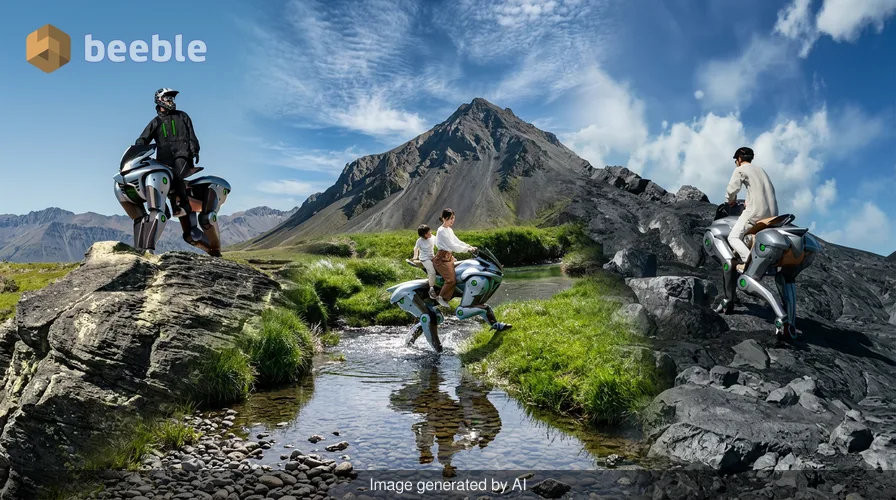
One of the most intriguing aspects of this collaboration involves Corleo, a four-legged personal mobility robot currently under development by Kawasaki. While we have seen quadruped robots before—usually performing backflips or inspection rounds in oil refineries—Corleo is being designed with a more human-centric focus. The goal is to apply Nvidia’s simulation prowess to make Corleo a reliable companion for medical and mobility fields.
For the average user, this might sound like science fiction, but the practical implications are grounded in the reality of a rapidly aging global population. A robot like Corleo could eventually serve as a stable, intelligent mobility aid for those who struggle with traditional wheelchairs or walkers. Because it has four legs instead of wheels, it can traverse uneven terrain, climb steps, and navigate the cluttered environments of a typical home. To put it another way, Kawasaki is trying to build a mechanical horse that doesn't need hay and won't get spooked by a passing car.
The Silicon Valley Syndicate: Why the Neighbors Matter
Kawasaki isn't moving into San Jose just for the sunny weather. The choice to include Microsoft, Analog Devices, and Fujitsu in this ecosystem is a masterclass in supply chain integration. Each partner brings a foundational piece of the puzzle:
- Nvidia: Provides the GPU power and the simulation software (the "brain" and the "dream world" where it learns).
- Microsoft: Offers the Azure cloud infrastructure, allowing these massive simulations to be scalable and accessible globally.
- Analog Devices: Specializes in the high-precision sensors that act as the robot's eyes and ears, translating physical touch and light into digital data.
- Fujitsu: Brings expertise in high-performance computing and system integration, ensuring all these moving parts talk to each other without lag.
From a market side, this collaboration highlights a shifting trend where traditional Japanese hardware expertise is being fused with American software agility. Kawasaki recognizes that while they are world-class at building the "body" of the robot, the "soul" of the machine is currently being written in California.
What This Means for You: From Factories to Front Porches
It is easy to dismiss this as another high-level corporate deal that won't affect daily life for years. However, the democratization of robotics is often a systemic process that happens faster than we expect. As these industrial giants streamline the way they build and train machines, the cost of high-end robotics begins to drop, making them more resilient and user-friendly for consumer applications.
| Feature | Traditional Robotics | AI-Integrated Robotics (New Hub Focus) |
|---|---|---|
| Development Speed | Years of physical prototyping | Months of virtual simulation |
| Adaptability | Programmed for specific, repetitive tasks | Learns to navigate unpredictable environments |
| Human Interaction | Safety cages required for humans | Built for collaborative and close-proximity work |
| Maintenance | Reactive (fix it when it breaks) | Predictive (AI identifies wear before failure) |
For the consumer, this could eventually lead to more sophisticated medical assistance. Imagine a world where robotic surgical arms are not just tools steered by a doctor, but intelligent partners that can compensate for a surgeon's minor hand tremors in real-time. Or, closer to home, imagine delivery robots that don't get stuck on a curb because they've already "practiced" that exact scenario ten million times in a digital twin of your neighborhood.
The Bottom Line: Moving Beyond the Hype
Ultimately, the Kawasaki-Nvidia partnership is a reminder that the most disruptive changes usually happen behind the scenes in heavy industry before they ever reach the shelves of a Best Buy. While the tech world often obsesses over the latest smartphone or social media app, the real work of the future is being done by these mechanical titans trying to figure out how to navigate the physical world with the same ease that we browse the internet.
Curiously, this move also serves as a reality check for the robotics industry. It proves that despite the hype, building a truly useful robot is still an interconnected challenge that requires the world’s best hardware, software, and sensors to work in perfect harmony. No single company can do it alone.
As we look toward the end of the decade, it’s worth shifting your perspective on the machines around you. The next time you see a sleek new medical device or an automated delivery vehicle, remember that it likely spent its "childhood" in a virtual simulation in San Jose. We are moving toward a future where the line between the digital and the physical is becoming increasingly opaque, and the results will be tangible in the way we move, heal, and work.
Sources:
- Nikkei Asia: Kawasaki Heavy to set up Silicon Valley AI robotics center with Nvidia.
- Nvidia Corporate Blog: NVIDIA Isaac platform and the future of generative AI in robotics.
- Kawasaki Heavy Industries: Annual Investor Report and Robotics Division Roadmap.
- Reuters: Industrial partnerships in the age of Physical AI.



See you on the other side.
Our end-to-end encrypted email and cloud storage solution provides the most powerful means of secure data exchange, ensuring the safety and privacy of your data.
/ Create a free account
