


Tesla is Turning the Dream of Car Ownership into a Full-Time Job

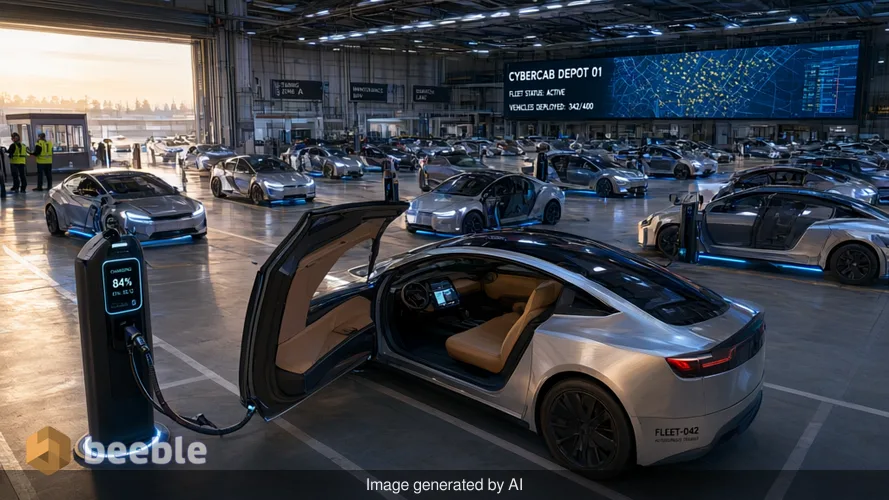
Have you ever looked at the car sitting in your driveway and wondered why it spends 95% of its life doing absolutely nothing? For a decade, Tesla owners were told that their vehicles would eventually fix this inefficiency by moonlighting as autonomous taxis while their owners slept. The promise was simple: your car would go out, earn money, and return home in time for the morning commute. But a new form published by Tesla suggests the company has moved past the individual hobbyist. Tesla is now asking businesses if they want to buy entire fleets of Cybercabs and build the infrastructure to support them.
This shift suggests that the era of the casual robotaxi owner might be over before it even began. Instead of a side hustle for the average suburbanite, autonomous transport is becoming a capital-heavy industrial play. Tesla wants partners who can manage dozens or hundreds of vehicles at once. This isn't just about selling a car. It is about selling a franchise. To understand why this matters to you, we have to look under the hood of how a robotaxi actually functions in the real world.
The transition from personal cars to managed fleets
Historically, the dream of the Tesla Network relied on the Model 3 or Model Y. These were cars people bought to drive themselves, with the added bonus of future software updates that would turn them into autonomous money-makers. However, the Cybercab is a different animal. It has no steering wheel, no pedals, and no charging port. It uses inductive charging, which means it has to park over a special pad to refuel. These design choices make it a poor fit for the average person who needs a car for grocery runs or school drop-offs.
The interest form Tesla recently released asks prospective buyers to categorize themselves. Options include fleet purchasing, mobility hubs, and infrastructure development. Essentially, Tesla is looking for the digital version of a landlord. They need people who are willing to own the physical assets—the cars and the garages—while Tesla provides the brains of the operation through its software.
For the average user, this means the next time you ride in a Tesla, you might not be hiring an individual owner’s car. You will likely be using a vehicle owned by a local fleet operator who managed the purchase of 50 Cybercabs at once. This change in strategy reflects a practical reality: scaling a global taxi service is a massive logistical burden that no single company wants to carry alone.
Why scaling a robotaxi network is an operational nightmare
Imagine a fleet of one hundred driverless cars operating in a major city. On paper, it is a clean, efficient system of digital crude oil flowing through the streets. In reality, it is a messy business of physical maintenance. Cars get flat tires. They get covered in road salt and grime. Most importantly, passengers are not always polite. A robotaxi does not have a human driver to tell a passenger not to smoke or to clean up a spilled coffee.
Tesla is realizing that it does not want to be in the business of vacuuming carpets and scrubbing sensor glass at 3:00 AM. By inviting third-party fleet operators, Tesla offloads the "boots on the ground" work. The fleet operator is responsible for the physical health of the cars, while Tesla takes a cut of every mile driven for providing the software and the branding.
In everyday life, this is similar to how a franchise like McDonald's works. The corporation provides the system and the brand, but an individual owner is responsible for the building, the staff, and the daily headaches. Tesla wants to be the franchisor of the future of transport. This allows them to grow much faster than if they had to build their own service centers and cleaning hubs in every city on earth.
The rise of the autonomous middleman
There is a growing group of companies already positioning themselves as the managers of this new industry. Take Moove, for example. This startup recently raised $250 million to expand its fleet management business. They are already working with Waymo in cities like Phoenix and Las Vegas. They don't build the self-driving software, and they don't design the cars. They manage the assets.
Larger, more traditional giants like Avis and Hertz are also looking at this space. They already have the parking lots, the cleaning crews, and the maintenance bays. For these companies, a robotaxi is just a rental car that delivers itself to the customer. The entry of these players changes the market dynamics for the consumer.
If you were hoping to buy one Cybercab and let it pay off your mortgage, you are now competing with professional operators who have economies of scale. These businesses can negotiate lower insurance rates, cheaper electricity for charging, and faster repair times. The "little guy" in the robotaxi market is facing the same pressure that small independent retailers faced when big-box stores arrived.
The physical realities of a driverless world
One of the biggest hurdles for autonomous fleets is infrastructure. The Cybercab requires inductive charging pads. You cannot just plug it into a standard wall outlet in your garage and expect it to work efficiently for a high-intensity taxi service. The interest form specifically asks about "mobility hubs and infrastructure," which is corporate code for parking lots with massive power upgrades.
Building these hubs is expensive and time-consuming. It involves working with local power companies to ensure the grid can handle dozens of cars fast-charging at once. It also requires real estate in dense urban centers where parking is already a premium. By asking for partners now, Tesla is trying to solve the "chicken and egg" problem. They cannot sell the cars if there is nowhere to charge them, and nobody will build the chargers if the cars don't exist yet.
From a consumer standpoint, this means you will start seeing these mobility hubs appearing in your city. They might look like sleek, high-tech parking garages or repurposed gas stations. These will be the hives where the robotaxi fleet rests, recharges, and gets cleaned before heading back out into the streets. The physical footprint of our cities will have to change to accommodate a vehicle that never needs a human to touch it.
What this means for your next vehicle purchase
If you are waiting for the day when your car becomes a passive income stream, you might want to adjust your expectations. The move toward fleet operators suggests that the most profitable way to run these vehicles is at scale. For the individual, the Cybercab might be less of a personal vehicle and more of a specialized tool for a small business owner.
Practically speaking, we are seeing the end of the all-in-one car. For decades, we bought cars that could do everything: commute to work, take the family on vacation, and haul groceries. The Cybercab is a specialized tool designed for a single task: moving two people from point A to point B as cheaply as possible. It is a vending machine on wheels.
Looking at the big picture, this shift is part of a broader trend toward "transportation as a service." As these fleets grow, the necessity of owning a car in a city will continue to drop. But the ownership of the fleet itself is becoming a game for professional players rather than the average driver. The bottom line is that Tesla is building a new layer of the economy, and they are looking for investors who are ready to get their hands dirty with the logistics of a driverless world.
Practical takeaways for the consumer
- Rethink the side hustle: If you planned on buying a single robotaxi to earn extra cash, be aware that you will be competing against professional fleet managers with lower operating costs.
- Watch the infrastructure: The arrival of "mobility hubs" in your neighborhood will be the first real signal that robotaxis are ready for prime time in your specific area.
- Ownership is changing: The Cybercab is not a replacement for your family SUV. It is a purpose-built commercial vehicle, and its lack of traditional controls makes it a poor choice for a primary personal car.
- The cost of convenience: While robotaxi rides might eventually be cheaper than an Uber, the profits will likely flow to large-scale operators rather than individual car owners.
Sources: Tesla Business Development filings, Waymo partnership announcements, and industry analysis of autonomous fleet management trends.



See you on the other side.
Our end-to-end encrypted email and cloud storage solution provides the most powerful means of secure data exchange, ensuring the safety and privacy of your data.
/ Create a free account
