


The 18 billion dollar price tag for teenage social media addiction

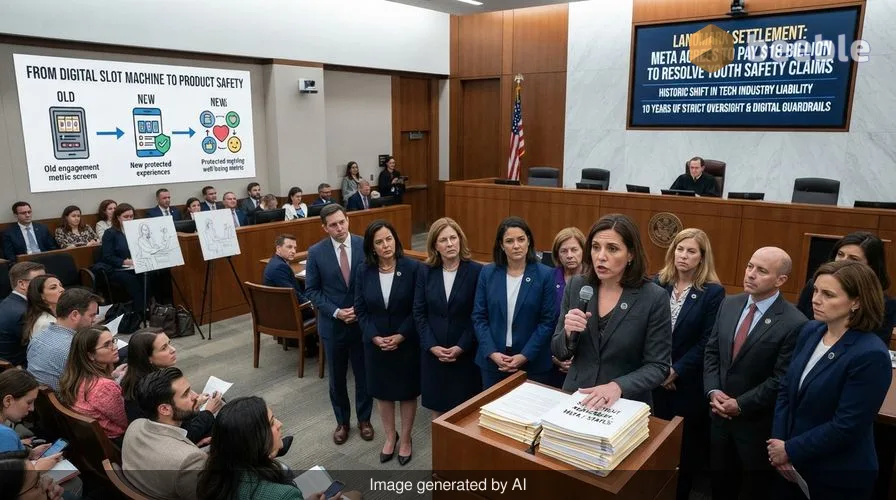
Meta agreed to pay $18 billion to resolve a massive legal battle over how its platforms affect children. This amount is roughly equivalent to the annual budget of a small nation. The settlement marks the end of a federal trial that examined whether Facebook and Instagram were designed to hook young users. For years, parents and educators have compared social media to a digital slot machine. This settlement is the first time the law has treated those claims with such a heavy financial penalty.
The agreement involves nearly every state in the U.S. and represents a shift in the legal responsibility of tech companies. For a long time, these companies argued they were merely tools. The law is now beginning to view them as manufacturers of products that must be safe for the public. While Meta denied any wrongdoing, the company is now bound by a decade of strict oversight and massive payouts. This case acts as a digital guardrail that prevents the company from prioritizing engagement metrics over the health of its youngest users.
Breaking down the eighteen billion dollar payout
The total sum of the settlement is a complex mixture of guaranteed payments and incentives. Meta will pay $12.7 billion to 48 states, Washington, D.C., and several U.S. territories. California is set to receive $2.2 billion, while New York and Texas are each eligible for over $1 billion. These funds are designated as civil penalties. A civil penalty is a fine that a company pays to the government for violating specific rules or laws rather than money paid directly to individual victims.
Some states plan to deposit this money into their general treasury accounts. Other states intend to use these funds specifically for mental health services and school programs. Beyond the $12.7 billion, there is an additional $5 billion on the table. This portion is contingent on whether Meta’s competitors, such as TikTok, Snapchat, and YouTube, adopt similar safety measures. This creates a legal incentive for Meta to lobby for industry-wide changes. If the other platforms do not follow suit, Meta might keep that extra $5 billion.
The settlement also resolves a separate legal headache for the company. Meta will pay $459 million to settle claims related to the Cambridge Analytica scandal. This older dispute involved a consulting firm that collected personal data from millions of Facebook users without their permission. While the addiction claims are the main focus today, this privacy payout closes a long and expensive chapter in the company's history.
New time limits and a digital curfew for teenagers
The most visible change for everyday families is the new set of restrictions for users under the age of 18. Meta has agreed to limit teenage usage of Facebook and Instagram to two hours per day. Once a teen hits that two-hour mark, the app will block access unless a parent provides explicit consent to continue.
A mandatory digital curfew is also part of the deal. The platforms will block all usage for teenagers between midnight and 6 a.m. This is an attempt to address concerns that late-night scrolling contributes to sleep deprivation and poor mental health. Furthermore, Meta will disable push notifications for teenage users during school hours, specifically from 8 a.m. to 3 p.m. This change aims to reduce the constant buzz of distractions that teachers and administrators have complained about for years.
These restrictions are not permanent if the rest of the industry remains unregulated. The agreement allows these limits to be adjusted if platforms like TikTok and Snapchat do not adopt similar rules. However, for at least the next ten years, Meta is legally obligated to enforce these safety settings. The company must also improve its methods for verifying the age of its users. Many children currently bypass age gates by simply lying about their birth year. Meta must now use more sophisticated measures to prevent this behavior.
What the settlement does not change
It is important to understand what this settlement excludes. Meta did not agree to change its core business model. The company will still use personalized recommendations and targeted advertising. These algorithms determine what a user sees based on their past behavior. Critics argue that these algorithms are the primary cause of addiction. Because the settlement does not force Meta to abandon them, the fundamental way the apps function remains the same.
Meta also avoided a legal admission of guilt. In the eyes of the law, the company is not "liable" for causing addiction. Liability is a legal term that means a person or company is legally responsible for a specific harm. By settling, Meta avoids a formal court judgment that could have set a precedent for thousands of other lawsuits. A precedent is a court decision that serves as an example or a rule for future similar cases.
Instead, Meta framed the settlement as a way to work with parents. The company stated that ensuring a safe experience for teens is an imperative. The payout represents about three to four months of profit for Meta. For a corporation of this size, $18 billion is a manageable expense that allows them to continue their operations without a total overhaul of their systems.
The legal battle is not over for everyone
While most states signed onto this deal, a few decided to stay in the courtroom. Florida is the most notable holdout. Florida’s Attorney General argued that the settlement amount is too small compared to the harm caused to children. Florida intends to take Meta to trial to seek higher penalties and more drastic changes. New Mexico also remains outside of this specific settlement, though it recently won its own separate legal victory against the company.
Earlier this year, a jury in New Mexico found Meta misled consumers about platform safety. A judge ordered the company to pay nearly $1 billion in that case. In a different case in Los Angeles, a jury found both Meta and Google negligent. Negligent behavior occurs when a company fails to take reasonable care to avoid causing harm to others. The jury awarded $6 million to a young woman who claimed she became addicted to social media as a child.
These individual and state-specific lawsuits will continue to move through the courts. The $18 billion settlement provides a template for how other tech companies might resolve their own legal troubles. It acts as a paved road that other companies like ByteDance (TikTok) and Alphabet (Google) might choose to follow to avoid the uncertainty of a jury trial.
A global shift in social media regulation
The U.S. settlement is part of a larger international movement to restrict how children use the internet. Australia recently announced a plan to ban social media entirely for children under the age of 16. The European Union has also implemented the Digital Services Act, which requires tech companies to assess and mitigate the risks their platforms pose to minors.
These global efforts suggest that the era of self-regulation for social media is over. In the past, the law treated internet companies with a light touch to encourage innovation. Now, governments are treating these platforms like other heavily regulated industries, such as tobacco or pharmaceuticals. The focus has shifted from protecting the growth of the company to protecting the health of the consumer.
Practical steps for parents and guardians
This settlement provides new tools for parents, but the responsibility of monitoring digital health still largely falls on the family. Parents should take specific actions to ensure their children are protected by these new rules.
- Review account settings: Ensure your child's birth date is accurate on their profile. The new protections only apply if the system knows the user is a minor.
- Set up parental supervision: Use the built-in "Supervision" tools on Instagram and Facebook to monitor how much time your teen spends online.
- Discuss the curfew: Talk to your children about the midnight to 6 a.m. block. Explain that these rules are now a legal requirement for the company and not just a household rule.
- Watch for notification changes: Check if the apps are actually silencing notifications during school hours. If your child's school has specific phone policies, these app-level blocks can serve as a second layer of defense.
- Document issues: If you believe the platform is failing to enforce these new limits, keep a record. Government agencies often rely on consumer complaints to ensure companies are following their settlement agreements.
Ultimately, the law is a shield that can protect citizens from corporate overreach. This settlement is a significant piece of that shield. While it does not fix every problem associated with social media, it forces one of the world's most powerful companies to change its behavior. The legal system has sent a clear message: the well-being of the next generation has a specific, multi-billion dollar value.
Sources
- Children's Online Privacy Protection Act (COPPA)
- Federal Trade Commission (FTC) Consumer Protection Guidelines
- California Consumer Privacy Act (CCPA)
- Official Press Release from the Colorado Attorney General’s Office (August 2026)
- U.S. District Court for the Northern District of California Case Filings
Disclaimer: This article is for informational and educational purposes only and does not constitute formal legal advice. Laws regarding social media and consumer protection vary by state and are subject to change. Please consult a qualified attorney in your jurisdiction for specific legal issues or concerns.



See you on the other side.
Our end-to-end encrypted email and cloud storage solution provides the most powerful means of secure data exchange, ensuring the safety and privacy of your data.
/ Create a free account
