


The Silicon Shaman’s Gamble: The Paradox of Seeking Ancient Certainty in a Digital Algorithm

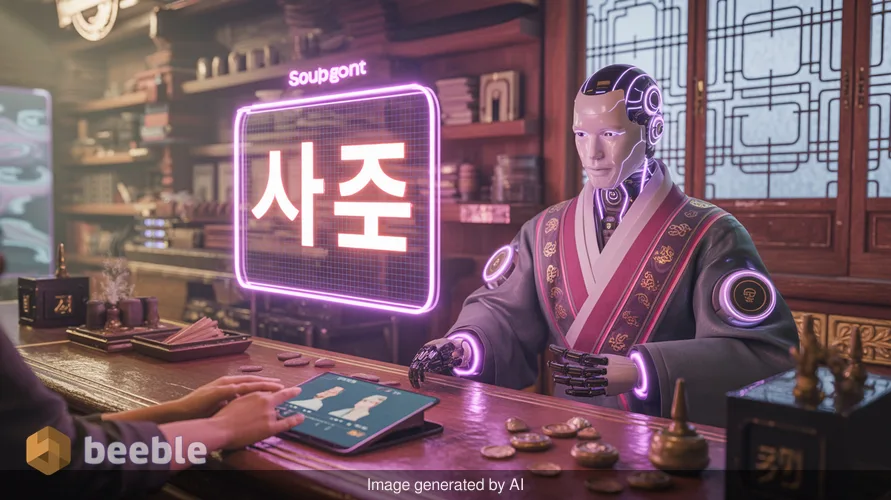
In a narrow, neon-lit alleyway in Seoul’s Hongdae district, the air usually smells of fried tteokbokki and expensive cologne. But inside a small, minimalist storefront, the sensory experience shifts. There is no pungent scent of incense, no rhythmic clanging of brass bells, and no traditional shaman dressed in the vibrant, multi-colored robes of a mudang. Instead, a sleek tablet glows on a white pedestal, its interface inviting passersby to input the exact hour, day, month, and year of their birth. A small thermal printer sits beside it, waiting to spit out a narrow ribbon of paper—a receipt of destiny. Watching a young office worker tap her details into the screen with a mixture of practiced cynicism and quiet desperation, one notices the subtle tremor in her fingers. This is the new face of saju, the centuries-old Korean practice of Four Pillars fortune-telling, now stripped of its human vessel and reborn as a digital avatar.
The interaction is clinical, swift, and remarkably quiet. On an individual level, this transaction represents a peculiar modern compromise: the outsourcing of existential anxiety to a machine. The user doesn’t have to engage in the heavy, often emotionally taxing performance of a traditional shamanic consultation. There is no one to judge her for her secret hopes about a promotion or her fears about a crumbling relationship. The algorithm simply processes the data, cross-referencing her birth details with the cosmic alignments defined by the Sexagenary cycle, and produces a paragraph of text. To put it another way, the ancient art of destiny-reading has been processed into a fast-food diet of spiritual guidance—quick, accessible, and designed for immediate consumption in a city that never stops moving.
Zooming out from this single booth, we find that this phenomenon is not merely a tech curiosity but a symptom of a much larger, systemic shift in how we navigate the uncertainty of the twenty-first century. South Korea, often cited as a laboratory for the future, is currently experiencing a profound sense of atomization. In a society where the traditional structures of family and community have become increasingly fragmented, the individual is left to navigate a hyper-competitive landscape alone. Historically, a shaman served as a communal pivot point, someone who mediated between the mundane and the spiritual to help a family or a village find balance. Now, the modern city functions more like an archipelago—an collection of people living in dense proximity yet remaining completely isolated within their own digital bubbles.
Culturally speaking, the rise of the AI shaman is a logical evolution of what sociologist Zygmunt Bauman called "liquid modernity." In a world where nothing is fixed—not jobs, not relationships, not even our own identities—the desire for a fixed point, even a mathematical one, becomes pervasive. Paradoxically, as we move further away from traditional religious adherence, our appetite for prophecy only seems to grow. We have replaced the divine with the data-driven, yet the underlying emotional need remains the same: a visceral craving for a narrative that makes sense of the chaos. By turning saju into an algorithm, the practice is rendered transparent and objective, at least in the eyes of a generation that trusts code more than they trust the fallible, often expensive, human intuition of a traditional fortuneteller.
Linguistically speaking, the transition from human to AI shaman also alters the very discourse of fate. In a traditional setting, the language of saju is nuanced and metaphorical, often requiring a skilled interpreter to bridge the gap between ancient symbols and modern life. The shaman’s role was philological in nature; they were translators of a cosmic text. When a machine takes over, the language becomes more clinical and prescriptive. The nuanced “energies” of fire or water are translated into data points. This shift reveals a deeper archaeological layer of our current culture: we are increasingly comfortable viewing our lives as a series of programmable variables. We no longer ask what the gods want from us; we ask what our data predicts for us.
Behind the scenes of this trend lies the reality of the attention economy. In the high-pressure environment of Seoul, where the “Hell Joseon” narrative of limited social mobility still resonates among the youth, the future is often viewed as a threat rather than a promise. The AI shaman offers a low-cost coping mechanism—a way to reclaim a sense of agency in a world that feels increasingly rigged. Curiously, the anonymity of the digital interface acts as a psychological buffer. It allows for a moment of reflection that is unburdened by social etiquette or the “habitus” of traditional hierarchies. In the booth, for a few minutes and a few thousand won, the individual can confront their own fragility without having to perform a social role.
From a societal standpoint, we must ask what is lost when we automate the sacred. While the AI shaman provides clarity and efficiency, it lacks the capacity for true empathy—the kind that comes from another human being looking into your eyes and acknowledging your pain. The digital oracle can tell you that the stars are aligned for a career move, but it cannot understand the weight of your exhaustion. Essentially, we are witnessing the emergence of a new kind of secular ritual, one that prioritizes the output over the process. If the traditional shamanic ritual was a deep-sea dive into the collective unconscious, the AI version is a brisk walk along the surface of a digital lake.
Ultimately, the AI shaman is less about predicting the future and more about managing the present. It serves as an anchor amidst systemic chaos, providing a temporary sense of order to people who feel adrift in the rapid currents of technological and economic change. As I watched the young woman leave the booth, her printed fortune tucked into her pocket, she didn't look transformed, but she did look settled. She walked back into the crowd, another inhabitant of the urban archipelago, carrying a small piece of paper that promised her the one thing the modern world rarely offers: a reason to believe that things might turn out okay.
Food for Thought
- The Comfort of Code: Why do we often find it easier to share our deepest anxieties with a faceless algorithm than with a living person?
- The Commodification of Fate: When spirituality is reduced to an automated service, does it lose its power to provide genuine meaning, or does it simply become more democratic?
- The Predictability Trap: If we rely on algorithms to tell us what our "path" is, do we inadvertently limit our own agency to change that path?
- Digital Rituals: How can we create space for meaningful human connection in a world where the functions of community are being replaced by high-efficiency digital tools?
Sources
- Bauman, Z. (2000). Liquid Modernity. A sociological study on the transience of modern life and the breakdown of traditional structures.
- Bourdieu, P. (1977). Outline of a Theory of Practice. On the concept of 'habitus' and how social environments shape our dispositions.
- Korean Statistical Information Service (KOSIS). Recent data on social isolation and the rise of single-person households in Seoul.
- Journal of Ethnic and Migration Studies. Analysis of the persistence of traditional folk beliefs in hyper-modern urban environments.



See you on the other side.
Our end-to-end encrypted email and cloud storage solution provides the most powerful means of secure data exchange, ensuring the safety and privacy of your data.
/ Create a free account
