
Why a five gigabyte space explorer explains the new reality of hardware-agnostic gaming

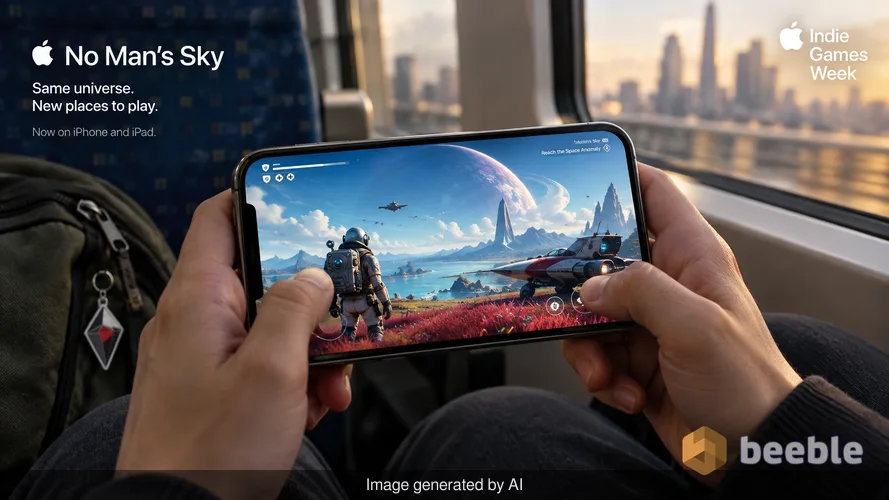
We used to define our gaming identities by the hardware sitting under our televisions. Now we define them by the accounts we carry across every screen we own. We used to accept that a trip away from a desktop meant a temporary exile from deep, immersive worlds. Now we expect those worlds to follow us into the elevator, onto the train, and into the quiet minutes before a meeting. The announcement that No Man's Sky is arriving on iPhone and iPad as part of Apple’s Indie Games Week is the latest evidence of this shift. It is a moment where the physical constraints of the past vanish behind a pane of glass that fits in a pocket.
Historically, the transition from console to mobile required a heavy tax on the player experience. Developers would strip away mechanics, simplify graphics, or turn a sprawling narrative into a series of menu-based micro-transactions. Hello Games chooses a different path with this port. They provide a version of the game that supports the same universe players have explored for a decade. This move represents a transition from mobile gaming as a separate, lesser category to mobile as a legitimate extension of the primary hobby. The technical achievement here is not merely that the game runs, but that it runs on hardware as old as the iPhone 11.
The vanishing line between dedicated consoles and pocket devices
We used to believe that procedural generation on this scale required a high-end processor and a loud cooling fan. Now we see an entire galaxy compressed into less than five gigabytes of storage. This storage size is an anomaly in an era where blockbuster titles often demand over one hundred gigabytes of space. To put this in perspective, many modern mobile games that offer far less freedom take up significantly more room on a device. The optimization required to fit eighteen quintillion planets into a five-gigabyte footprint suggests a massive shift in how developers approach code efficiency.
Behind the scenes, the studio rebuilt touch controls to accommodate the lack of physical buttons. They included support for external controllers and mouse-and-keyboard inputs for iPad users. This flexibility is a direct response to the fragmented way we consume media today. Some players want the tactile feedback of a DualSense controller while others are content to swipe their way through a nebula while waiting for a coffee. By supporting both, the developer acknowledges that the environment of the player is as variable as the planets within the game.
| Feature | iPhone / iPad Version | PC / Console Version |
|---|---|---|
| Storage Size | Under 5 GB | 15 GB - 20 GB |
| Multiplayer | No (at launch) | Yes |
| Settlements | No (at launch) | Yes |
| Touch Controls | Native / Rebuilt | Not Available |
| Cross-Save | Expected via Account | Standard |
| Device Support | iPhone 11 / iPad Air 3+ | Dedicated Hardware |
The strategic utility of the indie developer
We used to look to massive corporate publishers to lead the way in technical innovation. Now we look to independent studios to take the risks that define the next decade of play. Apple’s decision to center their Indie Games Week around a title like No Man's Sky is a calculated move. It uses the prestige of a well-known indie success to prove that their silicon is capable of more than just social media and productivity apps. Through this audience lens, we see a company trying to shed the image of a casual gaming platform to become a serious contender in the high-end market.
Other titles in this event reinforce this strategy. Sifu brings a high-precision martial arts experience to the iPhone 16. The game demands frame-perfect reactions, a feat that was impossible on mobile hardware only a few years ago. Vampire Crawlers and Dome Keeper provide different types of engagement, focusing on strategic depth rather than graphical intensity. These games serve as a counter-argument to the idea that mobile gaming is synonymous with derivative puzzles or aggressive monetization. They are complete experiences that happen to exist on a portable screen.
Missing features and the cost of portability
We used to demand every feature at launch or we would call a game a failure. Now we view software as a living document that grows over time. The iOS version of No Man's Sky arrives without multiplayer or settlements. This is a repeat of the strategy used for the Nintendo Switch port. While some critics might find this disappointing, it reflects a pragmatic understanding of the mobile user. Most mobile sessions are shorter and more isolated than console sessions. A player on a bus is less likely to engage in a complex multiplayer raid than a player sitting at a dedicated desk.
Hello Games co-founder Sean Murray indicates that support for these features depends on player feedback and adoption numbers. This approach is a conversation between player and developer. It allows the studio to stabilize the core exploration loop before introducing the heavy network demands of a shared universe. Paradoxically, the lack of multiplayer returns the game to its original 2016 state, where the universe felt vast, indifferent, and beautifully lonely. For some, this return to the quiet roots of the game is a feature rather than a bug.
Optimization as the new frontier of development
We used to solve technical problems by throwing more hardware at them. Now we solve them through creative engineering and smarter assets. The fact that a game this large can run on a 3rd generation iPad Air is a rebuke to the current trend of bloated software. Many PC games are poorly optimized, relying on the sheer power of modern graphics cards to hide inefficient code. Hello Games proves that a focus on optimization can expand the potential audience by millions of users who do not own a gaming PC or a PlayStation 5.
This trend is essential for the long-term health of the industry. As the cost of high-end hardware continues to rise, more players will look to the devices they already own for their entertainment. The iPhone is ubiquitous. By making a flagship title playable on older models, the developer bypasses the gatekeeping of expensive consoles. They turn a general-purpose tool into a specialized gaming machine. This democratizes the experience of high-end gaming for a global audience.
Reclaiming the quiet moments of exploration
We used to set aside entire weekends for a deep dive into a new game. Now we reclaim small pockets of time throughout the day to sustain our hobbies. The arrival of these indie titles on the App Store allows us to transform a dull commute into a journey through a neon-soaked city in Sifu or a trek across a frozen moon in No Man's Sky. This change in how we access our media is profound. It shifts the power from the platform holder to the consumer, allowing us to choose the context of our leisure.
However, this convenience comes with a responsibility to notice how our habits change. When a whole universe is available at any second, the mystery of that universe can begin to feel mundane. We risk turning a profound creative work into just another icon to tap when we are bored. The challenge for the modern player is to maintain a sense of wonder even when the experience is sandwiched between a text message and a calendar notification. We must choose to be present in these digital worlds even as the physical world competes for our attention on the same device.
Essentially, the success of Indie Games Week on the App Store is not measured by download numbers alone. It is measured by how effectively these games bridge the gap between high-fidelity art and daily life. As we move toward a future where the specific hardware matters less than the software we love, we must decide what kind of players we want to be. We can be passive consumers of fragmented content, or we can be intentional explorers of the vast, portable galaxies now resting in our hands.
Sources:
- Apple App Store Official Press Release for Indie Games Week
- Hello Games Development Update Blog
- Sean Murray Public Statements on iOS Port Development
- Technical Hardware Compatibility Documentation for App Store Indie Titles



See you on the other side.
Our end-to-end encrypted email and cloud storage solution provides the most powerful means of secure data exchange, ensuring the safety and privacy of your data.
/ Create a free account