


Why the Most Successful Humanoid Robot Company is Not the One You Think

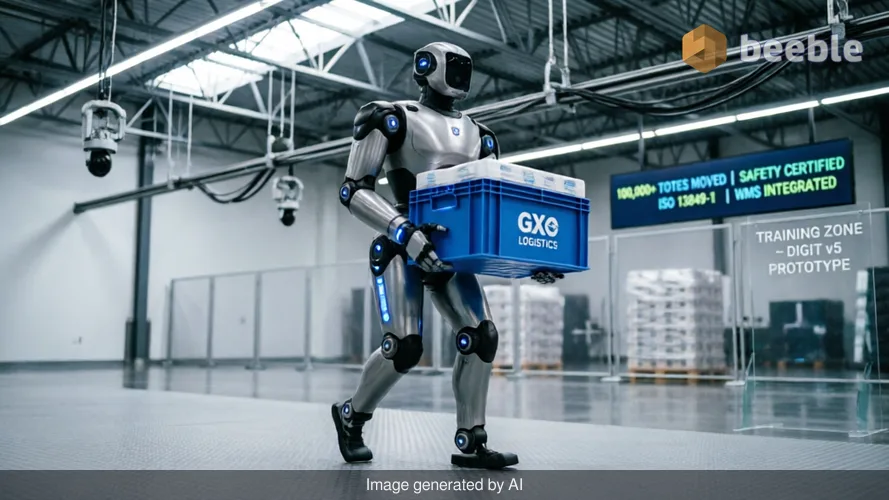
The general public believes Elon Musk is currently leading the race to put a humanoid robot in every home. While Tesla captures the imagination with futuristic demonstrations of Optimus, a quieter company is actually putting metal on the floor and collecting checks from the world's largest retailers. Agility Robotics is not waiting for the future to happen. It is building it inside a 60,000-square-foot facility in Fremont, California. This new plant sits just a short drive from the Tesla factory where Optimus is expected to begin production.
Looking at the big picture, this is more than a simple real estate move. It is a direct challenge to the narrative that flashy tech demos equal market dominance. Agility has already secured $300 million in contract orders for its flagship robot, Digit. This machine does not flip burgers or dance for social media. It moves plastic bins and totes in warehouses for companies like Amazon, GXO, and Toyota. While others talk about what robots might do next year, Agility has robots that are already generating revenue today.
A new neighbor for the world's most famous factory
Fremont is the industrial heart of the Silicon Valley region. By opening a major training and deployment center here, Agility is positioning itself to poach talent and tap into the same supply chain that feeds Tesla. The proximity is intentional. CEO Peggy Johnson says it is good to have others in the humanoid space because it validates the industry. However, the differences between the two neighbors are stark. Tesla is a consumer tech giant trying to build a general-purpose assistant. Agility is a specialized hardware firm that treats its robots as industrial tools.
In simple terms, Agility is focusing on the boring work that keeps the world running. Its new facility is a playground for robots to learn how to navigate the messy, unpredictable environments of modern logistics. These robots are not learning to be human. They are learning to be the tireless interns of the warehouse floor. They practice walking on uneven surfaces and plugging into existing warehouse management systems. This practical approach has allowed the company to bypass the hype cycle and move straight into commercialization.
The safety stack and the danger of creative AI
There is a lot of noise regarding generative AI and how it will give robots human-like brains. Agility takes a more cautious stance on this technology. When a 150-pound robot moves near human workers, creativity is the last thing a factory manager wants. Co-founder Damion Shelton explains that while AI is great for high-level tasks, the core safety systems must remain rigid and predictable. You do not want a robot to get creative with its braking system or its balance controllers.
Behind the jargon, this means Agility uses a hybrid approach. They use large language models and transformer networks to help the robot understand complex instructions, such as picking up a specific box and moving it to a new location. But the actual physical movement, the part that prevents the robot from falling over or hitting a person, is controlled by traditional, rock-solid engineering. This distinction is what allows Digit to meet the strict safety and regulatory bars required to work in an Amazon fulfillment center.
Practically speaking, this approach solves the scale problem. In the past, every new task for a robot required an engineer to write thousands of lines of code. Now, generative AI acts as a bridge. It allows the robot to interpret natural language and translate it into physical actions. This reduces the number of engineers needed to deploy a fleet of robots, making the technology much more scalable for large businesses.
Moving 100,000 boxes at a time
On the market side, Agility is preparing for a massive transition. The company is currently moving through a reverse-merger. This financial move will make it the first pure-play humanoid robot company to hit the public stock markets. For investors, this is a tangible alternative to the volatile promises of the EV sector. Agility has already proven its tech works at scale. In one deployment at a GXO logistics facility, Digits moved over 100,000 totes without major incident.
Historically, robotics companies have struggled to move past the pilot phase. They often get stuck in a loop of constant testing without ever reaching a finished product. Agility broke this cycle by focusing on a single, high-demand task: moving bins. This specific niche is the foundation of the trillion-dollar logistics industry. By mastering the bin, the company has created a resilient business model that does not rely on the whims of consumer tech trends.
Why the consumer should care about warehouse robots
For the average user, the arrival of Digit might seem like an invisible industrial change. However, the impact on your daily life is direct. The logistics industry is facing a systemic labor shortage. There are more boxes to move than there are people willing to move them. This labor gap is a primary driver of inflation in shipping costs. When a company like Amazon or GXO uses robots to handle the heavy lifting, it keeps the supply chain moving and helps stabilize the prices you pay for two-day delivery.
| Feature | Agility Digit (v5) | Tesla Optimus (Current Gen) |
|---|---|---|
| Current Use | Revenue-generating warehouse work | Internal testing and R&D |
| Market Strategy | Industrial B2B contracts | General purpose/Consumer vision |
| Safety Approach | Hard-coded safety with AI tasking | End-to-end neural network focus |
| Facility Focus | Training for specific logistics tasks | Manufacturing scale-up |
| Public Status | Expected pure-play public listing | Part of Tesla (TSLA) |
From a consumer standpoint, the most important development is the upcoming Digit version 5. This new model will have the ability to sense humans in its immediate vicinity. Currently, most industrial robots must stay in caged-off areas for safety. Digit v5 will be able to walk alongside human coworkers. This shift from robot-only zones to collaborative spaces is the first step toward robots entering our broader public lives. While Agility has no plans to put a robot in your kitchen yet, the lessons learned in the warehouse will eventually make consumer robots safer and more affordable.
The bottom line on the humanoid race
Essentially, Agility is winning by being the tortoise in a race full of hares. It is not chasing the dream of a robot that can do everything. It is building a robot that can do one thing exceptionally well and safely. This strategy has given them a multi-year lead over newer startups like Figure or 1X. They have already cleared the regulatory hurdles that stop most hardware companies in their tracks. They know how to plug into an IT infrastructure and how to satisfy a corporate safety officer.
Ultimately, the factory in Tesla’s backyard is a symbol of a maturing industry. We are moving past the era of science fiction and into the era of industrial utility. Agility is proving that humanoid robots are not just a high-tech curiosity for the wealthy. They are a foundational part of the modern economy. As the company goes public and ramps up production, the sight of a two-legged robot moving boxes will become as common as the forklifts and conveyor belts we see today.
For the reader, this is a prompt to look at the invisible mechanics of the world. The next time you receive a package, consider the journey it took. There is a high probability that, in the very near future, a humanoid robot played a role in getting that box to your door. This is not a revolution that will happen overnight. It is a slow, steady integration of machines into the roles that humans no longer want to fill.
Sources:
- Agility Robotics Official Press Release on Fremont Expansion
- TechCrunch Interview with CEO Peggy Johnson and Damion Shelton
- GXO Logistics Performance Report on Digit Deployment
- Tesla 2024 Shareholder Meeting Remarks by Elon Musk



See you on the other side.
Our end-to-end encrypted email and cloud storage solution provides the most powerful means of secure data exchange, ensuring the safety and privacy of your data.
/ Create a free account
