


Kraken Financial Secures Federal Reserve Master Account: A New Era for Digital Asset Banking

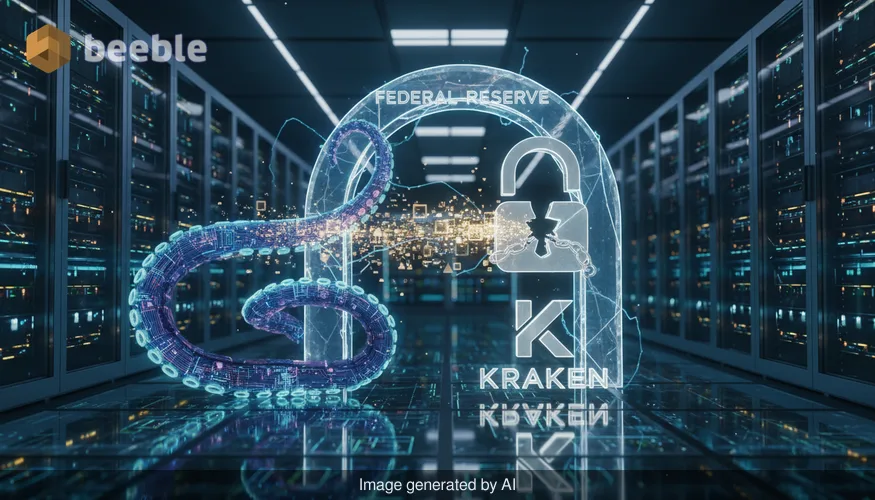
The long-standing wall between the traditional financial system and the cryptocurrency industry has just seen its most significant breach to date. In a landmark development reported by the Wall Street Journal, Kraken Financial—the Wyoming-chartered banking arm of the crypto exchange Kraken—has been granted a master account at the Federal Reserve.
This move marks the first time a digital asset-focused firm has gained direct access to the Federal Reserve’s core payment systems. For years, the crypto industry has operated on the fringes of the global financial plumbing, often relying on a dwindling number of intermediary banks to bridge the gap between digital tokens and the U.S. dollar. With this approval, Kraken moves from being a customer of the banking system to a peer within it.
Understanding the Fed Master Account
To understand why this is a watershed moment, one must understand the "plumbing" of the American economy. A Federal Reserve master account is essentially a bank account for banks. It provides direct access to the Fed’s payment rails, including Fedwire and the Automated Clearing House (ACH) network.
Think of the global financial system as a massive highway network. Most companies are like drivers who must pay a toll and follow a specific route dictated by a transport company (a traditional bank). Having a master account is like owning your own lane on that highway. Kraken no longer needs to ask a third-party bank to move money on its behalf; it can now initiate and settle transactions directly with the central bank.
The Wyoming SPDI Framework
Kraken’s path to the Fed was paved by Wyoming’s pioneering legislation. In 2019, the state created the Special Purpose Depository Institution (SPDI) charter. This framework was designed specifically for companies that want to bridge the gap between digital assets and traditional fiat currency without engaging in the risky lending practices that led to the 2008 financial crisis.
Unlike traditional commercial banks, an SPDI is required to maintain 100% reserves of its customers' fiat deposits. They do not lend out customer money to earn interest. This "narrow bank" model was a key selling point in Kraken’s application, as it theoretically reduces the systemic risk to the Federal Reserve. While other firms like Custodia Bank faced legal hurdles and denials in their pursuit of similar access, Kraken’s approval suggests a shift in how regulators view the safety and soundness of the SPDI model.
Direct Access vs. Intermediary Banking
For the average crypto user, the benefits of this development may seem invisible at first, but the underlying impact is profound. Historically, crypto firms have been victims of "de-banking," where traditional banks abruptly close accounts due to perceived regulatory risks. By holding its own master account, Kraken Financial eliminates this "middleman risk."
| Feature | Traditional Crypto Banking | Kraken Financial (with Master Account) |
|---|---|---|
| Settlement Speed | Dependent on intermediary bank processing | Near-instant via direct Fedwire access |
| Counterparty Risk | High (risk of intermediary bank failure) | Low (direct relationship with the Fed) |
| Operating Costs | High (fees paid to partner banks) | Lower (direct transaction costs) |
| Service Stability | Vulnerable to "de-banking" | Highly stable and independent |
By removing the intermediary, Kraken can potentially offer faster deposit and withdrawal times, lower transaction fees, and a more resilient platform that isn't subject to the whims of a partner bank’s compliance department.
The Fine Print: Limitations of the Approval
While this is a historic victory, it is not a total integration into the traditional banking suite. The Federal Reserve has granted Kraken access to payment rails, but with notable caveats. Most significantly, Kraken Financial will not receive the full suite of services that a member bank like JPMorgan Chase or a local credit union enjoys.
Specifically, Kraken will not earn interest on the reserves it holds at the central bank—a primary revenue driver for most banks. Furthermore, it does not gain access to the Fed’s "discount window," the emergency lending facility used by banks during liquidity crunches. These limitations underscore the Fed’s cautious approach: they are opening the door to the payments system while keeping a firm barrier around the central bank’s balance sheet and safety net.
The Ripple Effect on the Crypto Industry
Kraken’s success is likely to trigger a wave of similar applications and a renewed interest in the Wyoming SPDI charter. For years, the narrative from Washington D.C. was one of "Operation Choke Point 2.0," a perceived effort to isolate the crypto industry from the banking system. This approval signals a potential thaw in that relationship.
It also sets a high bar for compliance. To win this access, Kraken had to undergo rigorous vetting of its anti-money laundering (AML) and know-your-customer (KYC) protocols. Other firms looking to follow in Kraken’s footsteps will need to prove that their internal controls are as robust as those of the nation’s largest financial institutions.
Practical Takeaways for the Ecosystem
For businesses and high-net-worth investors operating in the digital asset space, this news changes the calculus of risk management. Here is what to consider moving forward:
- Reduced Platform Risk: Using an exchange with direct Fed access reduces the risk that your fiat funds will be frozen due to a third-party banking failure.
- Expect New Standards: This approval likely comes with intense regulatory oversight. Users should expect continued, and perhaps more stringent, identity verification requirements.
- Watch the Competition: Keep an eye on other Wyoming SPDIs. If more firms gain master accounts, we could see a competitive race to lower fiat-to-crypto on-ramp fees.
- Institutional Adoption: This move provides a "stamp of approval" that may encourage institutional investors—who were previously wary of the industry’s shaky banking connections—to enter the market.
Kraken’s entry into the Federal Reserve’s core system is more than just a corporate win; it is a structural shift in the global financial architecture. By successfully navigating the path from a startup exchange to a Fed-connected financial institution, Kraken has provided a blueprint for the future of digital finance.
Sources
- The Wall Street Journal - Kraken Financial Wins Fed Master Account
- Wyoming Division of Banking - SPDI Framework and Regulations
- Federal Reserve Board - About Master Accounts and Payment Services
- Kraken Blog - Kraken Financial Official Announcements



See you on the other side.
Our end-to-end encrypted email and cloud storage solution provides the most powerful means of secure data exchange, ensuring the safety and privacy of your data.
/ Create a free account
