


The Pandora Paradox: Why $1.5 Billion Might Not Be Enough for James Cameron’s Epic

The Fading Glow of the Bioluminescent Forest
You settle into the plush theater seat, adjust the 3D glasses that still feel slightly heavy on the bridge of your nose, and wait for the familiar rush. The screen ignites with the neon blues and deep purples of Pandora; the soaring ikran flight sequences are as fluid as ever, and the motion-capture technology has reached a point where the line between digital and biological is virtually invisible. Behind the scenes, thousands of artists have spent years perfecting the way light refracts through Pandoran flora. But as the credits roll three hours later, a curious sensation sets in—not the breathless awe of 2009, but a polite, slightly exhausted sense of completion.
This is the reality of Avatar: Fire and Ash. While it remains a technical marvel, the cultural conversation surrounding it has shifted. We are no longer looking at a revolutionary event; we are looking at a franchise. Paradoxically, in the world of modern blockbusters, being a 'franchise' is often where the magic starts to feel like a formula.
The Billion-Dollar 'Disappointment'
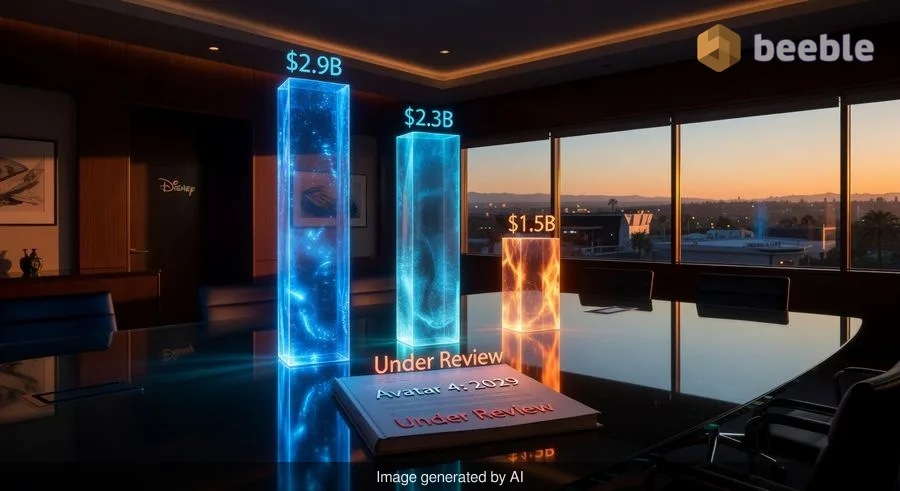
To any other studio, a $1.5 billion global box office return would be cause for a champagne-soaked gala. For Disney and James Cameron, however, that number carries a weight of quiet concern. Historically, the Avatar brand has been synonymous with breaking the world. The original 2009 film didn’t just lead the box office; it redefined the theatrical experience, eventually raking in $2.9 billion. Its 2022 successor, The Way of Water, defied skeptics to earn $2.3 billion, proving that the appetite for Pandora was resilient.
But Fire and Ash has hit a different ceiling. At $1.5 billion, it is undeniably a hit, yet it represents a significant downward trend. Zooming out to the industry level, this isn't just about one movie; it’s about the changing physics of the 'event film.' When a movie costs $350 million to produce and another $150 million to market, 'doing okay' is a precarious position. The sheer scale of the investment requires a level of ubiquitous cultural dominance that is increasingly hard to maintain in a fragmented media landscape.
World-Building as an Architectural Foundation
Narratively speaking, Cameron has always treated world-building as an architectural foundation. Every creature, plant, and linguistic quirk is a pillar designed to support the weight of his grand ecological metaphors. In the first film, this felt like exploring a new city. By the third, it can start to feel like a commute.
Through this audience lens, we see the emergence of 'lore creep.' When a story becomes so dense and its production cycles so long, the casual viewer begins to lose the thread. In everyday terms, it’s like trying to jump back into a complex role-playing game after a three-year hiatus—you remember you loved the world, but you’ve forgotten the controls and the stakes. As a result, the emotional resonance that once felt profound can start to feel derivative of the franchise's own past successes.
The Pragmatic Pivot: Shorter, Cheaper, Faster?
Reports are now circulating that Disney is weighing the future of Avatar 4 and 5. Most strikingly, James Cameron—a director famous for his 'blank check' approach to filmmaking—is reportedly discussing ways to make the final two installments shorter and more cost-effective.
Behind the scenes, this suggests a pragmatic shift in strategy. Cameron is currently 71 years old. By the time Avatar 5 is scheduled to hit theaters in 2031, he will be nearly 80. The 'marathon' style of production that defined the first three films may no longer be sustainable, either for the creator or the studio’s balance sheet. To put it another way, Disney is looking to turn a sprawling, expensive estate into a more streamlined, manageable property.
The Content Walled Garden and the Theme Park Factor
Perhaps the most telling sign of this cultural cooling is the rumored hesitation regarding the expansion of Avatar in Disney’s theme parks. Historically, the 'World of Pandora' at Animal Kingdom has been a massive success, but theme parks require a multi-decade commitment to a brand’s relevance. If the films are no longer generating the same level of 'must-see' fervor, the massive capital expenditure required for new attractions becomes a harder sell to shareholders.
In practice, we are seeing the limits of the 'Content Walled Garden.' Disney has spent the last decade building ecosystems around its biggest IPs, but as the digital buffet of streaming services grows more crowded, even the biggest walls can’t keep out franchise fatigue. When every month brings a new 'epic' series or a 'cinematic' game, the unique luster of a trip to Pandora begins to dim. It becomes just another overplayed pop song on the cultural radio.
Reclaiming the Spectacle
Ultimately, the story of Avatar’s diminishing returns is a mirror of our own media consumption habits. We have become a 'spectacle-saturated' society. When we can access breathtaking visual effects on our phones, the bar for what constitutes a 'theatrical event' moves higher every year.
From a creator's standpoint, Cameron is facing the ultimate challenge: how to conclude a saga that was built on being 'bigger' when the audience is starting to crave something 'deeper' or perhaps just 'different.' For us, the viewers, it’s an opportunity to reflect on what we actually want from our blockbusters. Do we want more of the same immersive beauty, or are we ready for the industry to take the creative risks that built these worlds in the first place?
Food for Thought:
- The Value of Finality: Does every successful film need to be a five-part saga, or are we losing the art of the standalone masterpiece?
- The Spectacle Threshold: At what point do high-end visual effects stop being a draw and start being 'white noise' in our daily media diet?
- Conscious Consumption: Next time you choose a blockbuster, ask yourself: am I going because it’s an 'event,' or because the story actually resonates with me?
Sources
- Variety: Box office data and production budget reports for Avatar: Fire and Ash.
- The Hollywood Reporter: Analysis of Disney’s theatrical release schedule and franchise management.
- Box Office Mojo: Historical earnings for Avatar (2009) and The Way of Water (2022).
- Industry Insider Reports: Rumors regarding Avatar 4 and 5 production adjustments and theme park expansion pauses.



See you on the other side.
Our end-to-end encrypted email and cloud storage solution provides the most powerful means of secure data exchange, ensuring the safety and privacy of your data.
/ Create a free account
