


The quiet death of the movie star and the rise of the internet auteur

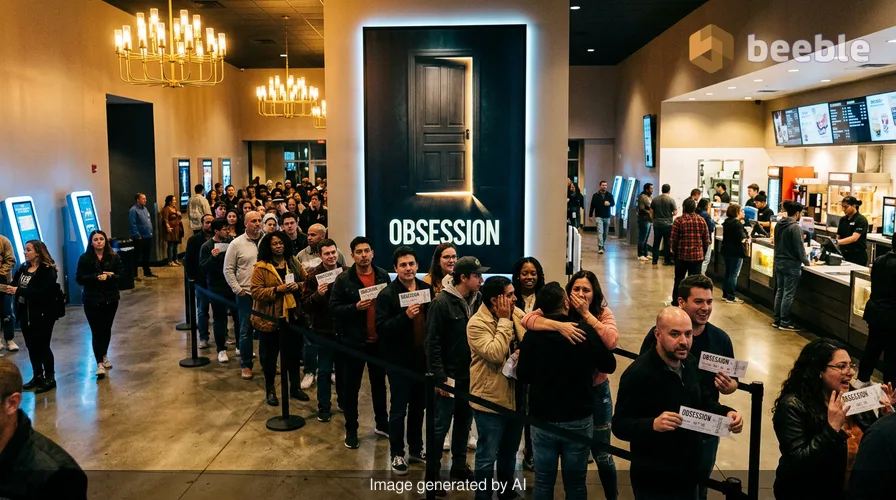
You are sitting in a darkened theater and the person next to you is hyperventilating. It is the third weekend of a mid-budget horror movie called Obsession. On the screen, a character makes a choice so fundamentally wrong that the entire row of seats collectively gasps. This is not the reaction people usually have to a corporate product. This is a visceral, physical response to a story that feels like it was whispered from a friend. During the second half of the film, I spent several minutes with my fingers over my eyes. I heard actual screams from the back of the room. This emotional intensity explains why the movie is doing something nearly impossible in modern cinema.
Most movies arrive with a loud marketing campaign and then disappear. They usually lose more than half of their audience by the second week. Obsession is doing the opposite. It made more money in its second weekend than its first. Now, in its third weekend, the revenue is up another 10 percent. This growth is the first time a film has achieved this feat since 1982. The director, Curry Barker, did not come from a prestigious film school. He came from YouTube. This weekend, he and another creator named Kane Parsons occupy the top two spots at the box office. They are currently outperforming a new Star Wars movie.
The numbers that broke the industry
The financial reality of this weekend is a shock to the traditional studio system. Backrooms, the feature film expansion of a viral YouTube series, earned an estimated $81 million. This is the largest opening in the history of A24. For a studio that built its reputation on elevated horror and indie darlings, this result is a tectonic shift. Their previous record holder was Civil War, which opened at less than a third of this total. Kane Parsons is 20 years old. He created the original Backrooms videos in his bedroom when he was a teenager. Now he is the director of the biggest movie in the country.
Behind these numbers is a change in how audiences value entertainment. The Mandalorian and Grogu is the first Star Wars film in seven years. It is a massive intellectual property with decades of history. Yet, it is on track for $24 million this weekend. That is less than the third weekend of a low-budget horror film and a fraction of the debut for a movie about a yellow office space. The box office has stopped rewarding the familiar. It is rewarding the creators who have spent years building a direct relationship with their viewers.
The decade of invisible practice
There is a common misconception that YouTube success is an accident of the algorithm. Critics often describe these creators as overnight sensations. This narrative ignores the reality of their work. Curry Barker gained his following through years of sketches and short films. His 2024 found footage movie, Milk & Serial, was an hour-long proof of concept that proved he understood tension. Mark Fischbach, known as Markiplier, released Iron Lung earlier this year and earned $41 million. These individuals have spent a decade in a 24/7 focus group. They see exactly when a viewer clicks away and they learn to fix the pacing.
This process is a form of longevity that traditional Hollywood struggles to replicate. A typical director might make a film every three to five years. A YouTuber makes content every week. They have thousands of hours of experience in visual storytelling before they ever step onto a professional set. They understand the mechanics of a jump scare or a narrative twist because they have tested those ideas on millions of people in real time. When they finally transition to the big screen, they are not beginners. They are veterans of a different kind of war.
Why word of mouth still matters in a digital age
The success of Obsession is a lesson in audience trust. In an era of algorithmic curation, we are often told what to watch by a piece of software. We scroll through streaming libraries for 40 minutes and find nothing because the options feel hollow. Paradoxically, the more content we have, the less we feel connected to it. These YouTuber-led films break through that noise because they carry a human signature. When I went to see Obsession, the theater was full of people who felt like they were part of a secret club. They were there because they trusted Barker's taste.
This trust creates a unique financial trajectory. Most blockbusters are front-loaded. They rely on a massive opening weekend because the interest drops off quickly once the mystery is gone. Obsession is a slow burn. It relies on the human scale of recommendation. One person tells a friend that they screamed in the theater. That friend goes the next weekend. This is the definition of a cultural phenomenon. It is not something a marketing department can manufacture with a $100 million ad spend. It requires a story that people actually want to talk about on Monday morning.
The submarine in the room
Earlier this year, Iron Lung provided the blueprint for this movement. Markiplier adapted a niche indie game about a blood-filled ocean and turned it into a $41 million success. He did this by respecting the source material and the intelligence of his audience. He did not try to make a generic action movie. He made a claustrophobic, experimental horror film. He understood that his fans wanted the specific atmosphere of the game, not a watered-down version of it.
This trend is the end of the traditional gatekeeper. For decades, a small group of executives decided who received the budget to make a movie. They prioritized established actors and safe scripts. Now, the audience is the gatekeeper. They have already decided that they like the work of Parsons and Barker. The transition to the cinema is simply a change in the size of the screen. The industry is beginning to realize that a loyal subscriber base is more valuable than a famous name on a poster. The movie star is not dead, but the definition of a star has changed.
Reclaiming the cinema from the franchise machine
We are currently witnessing a shift in the architectural foundation of the film industry. The sprawling city of cinematic universes is becoming harder to navigate. Audiences are tired of homework. They do not want to watch three seasons of a television show just to understand a movie. The success of Backrooms and Obsession proves that there is a hunger for standalone experiences. These films offer a clear entry point. You do not need a map to enjoy them. You only need a ticket.
As you leave the theater after a film like Obsession, you might notice your own habits. You might realize that you are more excited for a 20-year-old's debut than a multi-billion dollar space opera. This is a moment to observe how we choose our leisure. We have the power to reward creativity over corporate strategy. The YouTube-to-prestige-horror pipeline is a reminder that the best stories often come from the places we least expect. It is time to stop looking at the top of the mountain and start looking at the people who are actually building something new.
Sources: The Hollywood Reporter, The New York Times, Box Office Mojo.



See you on the other side.
Our end-to-end encrypted email and cloud storage solution provides the most powerful means of secure data exchange, ensuring the safety and privacy of your data.
/ Create a free account
