


Why your digital gold failed the grocery store test

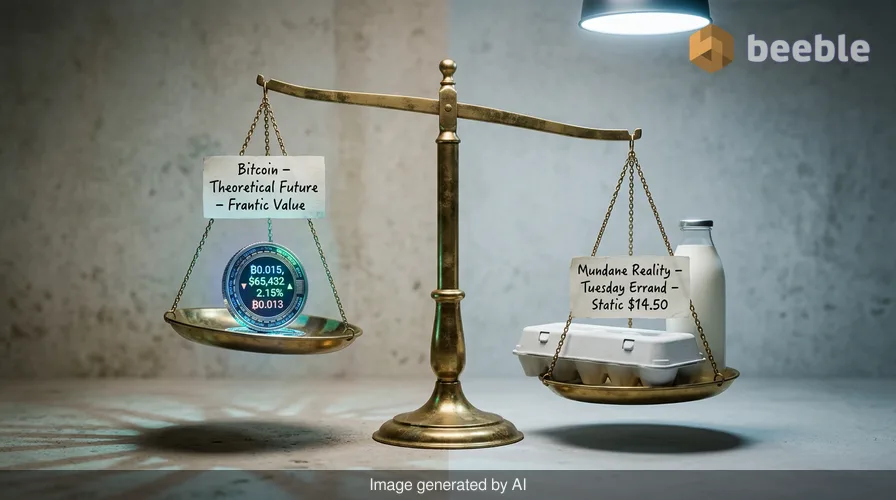
You stand in the checkout line with a carton of eggs and a gallon of milk. The total on the screen is $14.50. You open your digital wallet app to check your balance. Ten minutes ago, your Bitcoin holdings were worth exactly three weeks of rent. By the time you reach the card reader, that same balance is worth two weeks of rent and a modest dinner. The price of the milk remains static. The number in your app is a frantic, shifting ghost. This is the friction of the modern digital asset. It is the gap between a theoretical future and the mundane reality of a Tuesday afternoon errand.
Zooming out, this individual anxiety reflects a systemic skepticism voiced by Jeremy Grantham. The billionaire co-founder of GMO has managed money through decades of market cycles. He recently appeared on CNBC’s Squawk Box to share a grim outlook for the crypto industry. Grantham characterizes Bitcoin and its peers as useless speculative mechanisms. He predicts the entire asset class will not end with a dramatic crash. Instead, he expects it to dwindle away with a whimper over several decades.
The billionaire perspective on speculative mechanisms
Grantham is no stranger to identifying bubbles. He built his reputation by spotting the Japanese asset price bubble of the late 1980s and the dot-com crash of 2000. When he speaks about Bitcoin, he does so through the lens of history and asset valuation. He notes that Bitcoin fell 52% from its all-time high of $126,080 set in October 2025. This decline happened during a period of strong economic conditions. Usually, a store of value remains stable or gains value when the economy is active. Bitcoin did the opposite.
In everyday terms, a store of value is like a battery. You put energy into it today so you can draw that energy out next year. If the battery leaks half its charge while sitting on the shelf, it fails its primary purpose. Grantham argues that Bitcoin is a leaky battery. He points to the fact that people do not use it for serious trades. They do not use it to buy groceries or pay for their homes. For Grantham, the only area where Bitcoin is brilliant is in allowing anonymous money movement. He views this as a tool for bad actors rather than a foundation for a new economy.
Gold as the traditional mood ring
Historically, investors turned to gold when they felt uncertain about the future. The metal acts as a global mood ring for the financial markets. When people are scared of inflation or war, they buy gold. Earlier this year, gold reached a record high above $5,500 per ounce. It has since retracted to $4,096. While gold also experiences price shifts, its role in the traditional financial system is deeply rooted. Central banks hold it in massive vaults. It has no counterparty risk. It is a physical, tangible substance.
Bitcoin was marketed as digital gold. The theory suggested it would have a low correlation with stocks and bonds. Proponents believed it would protect wealth when fiat currencies lost purchasing power. Practically speaking, the data from the last twelve months contradicts this theory. Bitcoin moved in lockstep with high-risk tech stocks. When the Federal Reserve adjusted its tone, Bitcoin reacted with extreme volatility. It behaved like a speculative tech bet rather than a stable refuge for capital. This behavior prompted other high-profile investors to exit the market.
The institutional exit and the retail reality
Mark Cuban recently joined the ranks of the skeptics. The billionaire investor stated that Bitcoin was not the hedge he expected it to be. He sold the majority of his holdings as a result. This shift in sentiment is symptomatic of a broader realization in the market. Many retail investors entered the crypto space during the 2024 and 2025 rallies. They were driven by the fear of missing out. They saw a digital asset that only went up. Consequently, they treated their crypto wallets like high-yield savings accounts.
Through this economic lens, we see a psychological trap. When an asset has no underlying cash flow or industrial use, its price depends entirely on the next buyer. This is the definition of a speculative bubble. If there are no new buyers, the price stagnates. If the existing buyers lose faith, the price collapses. Grantham’s prediction of a whimper suggests that the pool of new buyers is drying up. The excitement is fading into a realization that the asset lacks utility in daily life.
Blockchain as a glass bank vault
Paradoxically, Grantham does not dismiss the technology behind the coins. He concedes that blockchain rails could play a transformative role in the future of finance. It is helpful to think of the blockchain as a glass bank vault. Everyone can see the transactions happening inside, but only the person with the private key can move the funds. This transparency is a profound shift from the opaque ledgers of traditional banks. It allows for instant settlement and reduces the need for middleman fees.
However, the technology is distinct from the currency. A company can use blockchain to track shipping containers or settle interbank payments without using Bitcoin. The underlying infrastructure is resilient and useful. The speculative tokens built on top of that infrastructure are what Grantham finds transient. We are seeing a divergence between the plumbing of the financial system and the digital chips people use to gamble on price movements. The plumbing remains necessary, but the gambling chips are losing their luster.
The invisible leak in the digital wallet
Inflation acts as an invisible leak in your wallet. It slowly erodes what your dollars can buy at the supermarket. Many people turned to crypto to stop this leak. They wanted a decentralized alternative to government-issued fiat currency. They viewed central banks as the source of the problem. Ironically, the volatility of Bitcoin has proven to be a much larger leak for many households than standard inflation. A 2% annual increase in grocery prices is frustrating, but a 17% drop in your primary savings over a single month is devastating.
On an individual level, the dream of financial freedom through crypto is meeting the hard reality of market mechanics. The stock market often acts like a forest fire. It clears out the dead wood and speculative excess so new growth can occur. Grantham believes we are currently in that clearing phase. The hype is burning off. What remains is a fragmented market where the average person is left holding assets that are difficult to spend and risky to keep.
Financial mindfulness in a shifting market
Ultimately, the lesson from Grantham and the recent market downturn is one of pragmatism. Money is a collective belief system. It only works when we all agree on its value and its utility. If an asset is too volatile to buy bread and too unpredictable to store wealth, its purpose becomes unclear. We are witnessing a transition from the wild west of digital speculation toward a more sober evaluation of what digital money actually is. The novelty has worn off, leaving behind a series of hard economic questions.
As you look at your own finances, it is worth questioning your own belief system. Are you holding an asset because you understand its utility, or are you hoping for a price spike to solve a financial problem? Real wealth is rarely built on the back of a whimper. It is built on tangible value and productive assets that generate income or provide a service. Observing these shifts in the macro market helps us reclaim control over our micro-economic futures. The glass bank vault is an interesting invention, but a vault is only as good as what you put inside it.
Sources
- CNBC Squawk Box: Interview with Jeremy Grantham on June 26, 2026.
- GMO Quarterly Letters: Historical analysis of market bubbles and asset valuation.
- Gold Price Index: Historical data for 2025-2026 spot prices.
- Bitcoin Market Data: Price records from October 2025 through June 2026.
- Public Statements: Mark Cuban's investment disclosures regarding Bitcoin and gold hedges.



See you on the other side.
Our end-to-end encrypted email and cloud storage solution provides the most powerful means of secure data exchange, ensuring the safety and privacy of your data.
/ Create a free account
