


The hidden consequences of hiding evidence in the OpenAI copyright battle

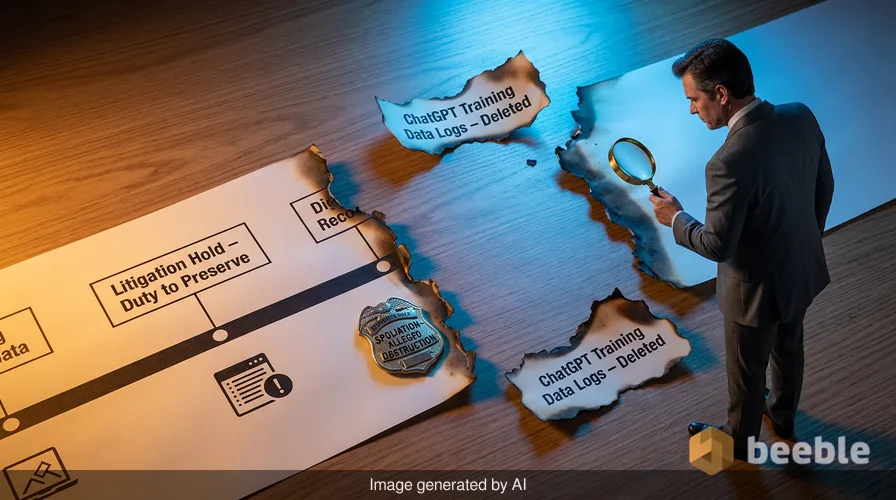
In our personal lives, we often treat digital data like junk mail. We clear our browser history, delete old text messages, and empty our trash folders without a second thought to save space. In the world of high-stakes litigation, this same habit is a massive legal liability. OpenAI currently faces allegations from major news organizations that it purposely hid and destroyed evidence. The New York Times and the Daily News claim the AI giant obstructed the legal process. They are now asking a federal judge in Manhattan to impose sanctions. This move signals a new level of aggression in a battle over who owns the information that feeds artificial intelligence.
The legal duty to preserve digital history
When a company knows a lawsuit is coming, it has a legal obligation to preserve all relevant data. This is known as a litigation hold. It is a mandatory pause on any automated deletion settings or manual cleaning of records. If a company fails to do this, it faces accusations of spoliation. Spoliation is the legal term for the destruction or significant alteration of evidence. When a party destroys evidence, it suggests they have something to hide.
In the current case, the news organizations allege that OpenAI chose obstruction over transparency. They claim the company failed to release datasets and ChatGPT logs that show how the AI system used copyrighted news content. These logs are the digital footprints of the AI. They show exactly what the machine read, when it read it, and how it incorporated that information into its responses. Without this data, the newspapers cannot prove the full extent of the alleged copyright infringement. Litigation is a marathon, and the plaintiffs argue OpenAI is trying to trip them at the starting line.
What sanctions mean in a federal court
A sanction is a penalty a judge imposes on a party that violates court rules. Think of it as a referee handing out a red card for unsportsmanlike conduct on the field. The news organizations are asking for sanctions because they believe OpenAI made misrepresentations about its ability to search for copyrighted content. Steven Lieberman, an attorney for the Daily News, states that OpenAI has been making these false claims for two years.
Sanctions can take several forms. A judge might order the offending party to pay the other side's attorney fees. In more severe cases, a judge can issue an adverse inference instruction. This is a powerful tool where the judge tells the jury to assume that the missing evidence would have been harmful to the party that destroyed it. For a company like OpenAI, such a ruling would be a heavy backpack to carry through the rest of the trial. It changes the narrative from a technical dispute to a question of honesty.
The mystery of the missing training logs
The heart of the dispute involves the datasets used to train ChatGPT. OpenAI argues that training its AI on digitized books and online articles is protected by the fair use doctrine. To test this theory, the plaintiffs need to see the data. A recent deposition of an OpenAI employee allegedly contradicts the company's previous claims about what data is available. The news outlets argue that OpenAI has the technical ability to search its logs but refuses to do so.
This conflict illustrates a common problem in modern law. Large tech companies often claim their systems are too complex for traditional discovery. Discovery is the pre-trial phase where both sides must share evidence. When a company says it cannot find data that it uses every day for its business, judges often become skeptical. The law treats a corporation’s data as its responsibility. If you built the system, the court expects you to know how to search it.
The high price of protecting journalism
The financial stakes of this legal battle are staggering. The New York Times has already spent more than $28 million fighting AI companies in court. This figure includes its lawsuit against OpenAI and a separate case against Perplexity. This high cost is a barrier for smaller news outlets that lack the resources of a global media giant. The news industry is currently struggling with declining advertising revenue and a shift in how people find information.
Many media companies have chosen a different path by signing licensing deals. Companies like Meta, Google, and OpenAI pay these outlets a fee to use their news feeds. This provides a steady stream of income but gives the tech companies permission to use the content. The New York Times and its fellow plaintiffs are taking a riskier path. They want a court to establish a legal precedent that protects their work from being used without payment or permission. This case is about more than just money; it is about the future of the news industry itself.
| Approach | Benefits | Risks |
|---|---|---|
| Licensing Deal | Provides immediate revenue and avoids legal costs | Gives up control over how content is used by AI |
| Litigation | Potential for large damages and new legal protections | High legal fees and no guarantee of a win |
| Obstruction | Delays the trial and hides sensitive data | Risks severe court sanctions and loss of credibility |
How fair use works in the age of AI
OpenAI relies on the fair use doctrine as its primary shield. Fair use is a legal principle that allows people to use copyrighted material without permission for purposes like news reporting, teaching, or research. Courts look at how much of the original work was used and whether the new use harms the market for the original. OpenAI argues that its use of news articles is transformative. It claims ChatGPT creates something entirely new rather than just copying facts.
Copyrighted journalism is the foundation of many AI responses. The newspapers argue that if ChatGPT summarizes a news story, the reader has no reason to visit the original website. This drains web traffic and advertising dollars. When Google introduced AI-generated summaries at the top of its search results, this threat became even more immediate. The legal question is whether an AI that learns from the news is a student or a thief. The outcome of this trial will determine that distinction for years to come.
Practical steps for protecting your digital rights
While most of us are not involved in multi-million dollar copyright battles, the principles of this case apply to everyday life. Whether you are a small business owner, a freelance creator, or a tenant in a dispute, evidence is your most important asset. Legal precedent acts as a paved road, but you must provide the vehicle of evidence to travel on it.
- Document every interaction. If you have a dispute with a service provider or landlord, keep a log of dates, times, and summaries of conversations.
- Preserve original formats. Do not just take a screenshot of an email. Save the original file with its metadata. Metadata is the hidden data that shows when a file was created and modified.
- Understand the litigation hold. If you think you might end up in court, stop any auto-delete settings on your devices immediately.
- Use formal requests. If a company refuses to provide data that belongs to you, send a formal demand letter. This creates a paper trail that shows you attempted to resolve the issue before seeking court intervention.
Takeaways for creators and consumers
- Evidence is king. The current fight over OpenAI's logs shows that the party with the data holds the power.
- Fair use is not a blank check. Just because a technology is new does not mean it is exempt from existing copyright laws.
- Sanctions are a serious threat. Courts do not tolerate companies that hide evidence, and the penalties can change the outcome of a case.
- Licensing is an alternative. For many, the cost of litigation is too high, making licensing deals the only viable way to get paid for their work.
This legal battle is a marathon that will likely last for years. The current request for sanctions is just one turn in a very long race. Ultimately, the court must decide if the convenience of AI justifies the potential destruction of the news industry. Until then, the focus remains on the digital trail of evidence that OpenAI allegedly tried to erase.
Sources
- U.S. Copyright Act, 17 U.S.C. § 107 (Fair Use Doctrine)
- Federal Rules of Civil Procedure, Rule 37 (Failure to Make Disclosures or to Cooperate in Discovery; Sanctions)
- The New York Times Co. v. Microsoft Corp. et al., U.S. District Court, Southern District of New York
Disclaimer: This article is for informational and educational purposes only. It does not constitute formal legal advice. If you are facing a legal dispute regarding copyright or data preservation, please consult a qualified attorney in your jurisdiction.



See you on the other side.
Our end-to-end encrypted email and cloud storage solution provides the most powerful means of secure data exchange, ensuring the safety and privacy of your data.
/ Create a free account
