


Why a yellow hallway and Hideo Kojima explain the future of horror and the history of gaming

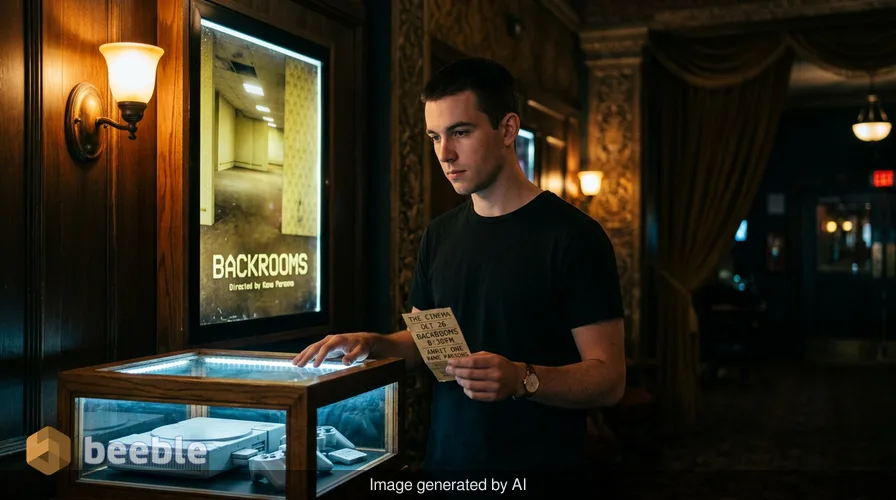
The stomach drops when the fluorescent lights hum just a bit too loud. It is a specific, hollow dread. This sensation is not the fear of a monster under the bed or a killer in the woods. It is the realization that the world has repeated itself one time too many. You turn a corner in a beige office building and find the same hallway you just left. The carpet is damp. The wallpaper is a sickly shade of mustard. This is the liminal space, a concept that Kane Parsons turned into a cultural phenomenon. At 21 years old, Parsons has transitioned from a YouTube creator to a record-breaking director with the release of Backrooms in May 2026.
Behind this success is a structural shift in how we process digital environments. Hideo Kojima, the creator of Metal Gear Solid and a man who treats cinema like a religion, recently shared his thoughts on the film. He said he was "blown away." Kojima described the movie as a world where nostalgia and novelty attack in the form of art. This reaction highlights a psychological bridge between the primitive days of game development and the high-fidelity horror of the modern era. The film is a clinical dissection of how repetition creates anxiety.
The graph paper map as a survival tool
Kojima’s praise focuses on a specific historical era of gaming. He mentioned the pseudo-3D games of the 2D era. Before polygons and textures became standard, developers created 3D spaces through trickery. Games like Wizardry or the early Shin Megami Tensei titles on the Famicom relied on fixed-perspective movements. You moved one square at a time. Each step revealed a new, yet identical, wall. To navigate these digital labyrinths, players had to draw maps on physical graph paper. One wrong turn meant you were lost in a loop of identical assets.
This experience is the foundation of the Backrooms appeal. The film replicates the feeling of being trapped inside a primitive game engine. Parsons uses looping, repetitive visuals to create a digital labyrinth that ignores the rules of architecture. In a modern open-world game, every tree and rock is unique. In the Backrooms, the environment is a series of copied and pasted assets. This repetition triggers a primitive fear of the infinite. Kojima recognizes this because he built those early labyrinths. The anxiety of the 1980s gamer, terrified of running out of graph paper, is the same anxiety Parsons captures in live action.
The death of the traditional gatekeeper
The journey of the Backrooms from a 4chan post to a theatrical hit reflects the collapse of traditional IP development. In the past, a studio executive identified a trend and hired a writer to produce a script. Now, the community is the incubator. The Backrooms started as a "creepypasta," a piece of internet folklore shared across message boards. It evolved into a collaborative project with thousands of contributors adding lore, levels, and monsters.
Kane Parsons did not wait for a green light from a production house. He used Blender, a free 3D creation suite, to build his own vision. His YouTube shorts gained millions of views before A24 ever entered the picture. This shift turns the audience into stakeholders. When A24 eventually signed Parsons, they did not just buy a script. They bought a built-in ecosystem. The industry is moving away from top-down storytelling. It is moving toward the curation of existing digital cultures.
The A24 model and community protection
Transitioning an internet legend to the big screen often results in a loss of soul. Fans worry that corporate ownership will stifle the creativity that made the project popular. A24 handled this transition with a rare level of transparency. Recently, fans reported that their fan art was receiving copyright strikes on platforms like RedBubble. This sparked immediate backlash. Parsons intervened, speaking directly with the studio to release the strikes.
A24 has remained insistent on keeping the community protected. This is a strategic move. By allowing fans to continue creating their own Backrooms content, the studio ensures the brand remains relevant long after the film leaves theaters. They are treated as partners rather than infringers. This approach is a necessary evolution for studios dealing with community-driven IP. The traditional method of aggressive litigation does not work when the IP exists because of the fans.
The rise of the creepypasta cinematic universe
The success of Backrooms has cleared a path for other internet-born horrors. Films based on Siren Head, Cartoon Cat, and the Mandela Catalogue are now in development. This is the birth of the Creepypasta Cinematic Universe. Unlike the Marvel Cinematic Universe, these films are not connected by characters or plot points. They are connected by an aesthetic. They all share a fascination with the "uncanny valley" of the internet.
Narratively speaking, these projects rely on a specific type of visual language. They use lo-fi textures, distorted audio, and VHS aesthetics. This style is a reaction to the polished, hyper-realistic visuals of AAA games and blockbuster movies. Audiences are tired of the seamless. They are looking for the clunky and the opaque. The Backrooms film feels like a found footage tape discovered in the back of a drawer. It feels dangerous because it looks unfinished. Paradoxically, the more technology advances, the more we crave the imperfections of the past.
Through the creator lens
Kojima’s reaction also hints at a future collaboration or influence. Fans have joked about Kojima "scanning" Kane Parsons for a future game. This is a reference to Kojima’s practice of putting his friends and inspirations into his digital worlds. Beyond the jokes, there is a deep professional respect between the 62-year-old veteran and the 21-year-old newcomer. They are both obsessed with the intersection of psychology and architecture.
In Death Stranding, Kojima explored the concept of isolation in vast, empty spaces. Parsons does the same in the Backrooms, but he swaps the green hills of Iceland for the yellow carpet of a suburban office. Both creators understand that the most effective horror is the fear of being alone in a space that should be full of people. They use the environment as the primary antagonist. This is a departure from the "jump scare" meta that has dominated horror for decades.
Reclaiming the digital labyrinth
The Backrooms movie is a reminder that our digital experiences have a long tail. The frustrations of an 8-bit RPG player in 1986 are the inspirations for a viral horror film in 2026. As the entertainment industry continues to mine the internet for the next big hit, the definition of "art" continues to expand. We are no longer just consumers of stories. We are the architects of the myths that eventually become movies.
When you next find yourself in a quiet, repetitive space, observe your reaction. The discomfort you feel is not a glitch. It is a connection to a shared history of digital exploration. The industry will continue to build these walls and loop these hallways as long as we are willing to get lost in them. We have transitioned from players drawing on graph paper to viewers watching the same mazes on a silver screen. The labyrinth remains the same. Only the resolution has changed.



See you on the other side.
Our end-to-end encrypted email and cloud storage solution provides the most powerful means of secure data exchange, ensuring the safety and privacy of your data.
/ Create a free account
