


Why your aluminum foil passport shield offers nothing but security theater

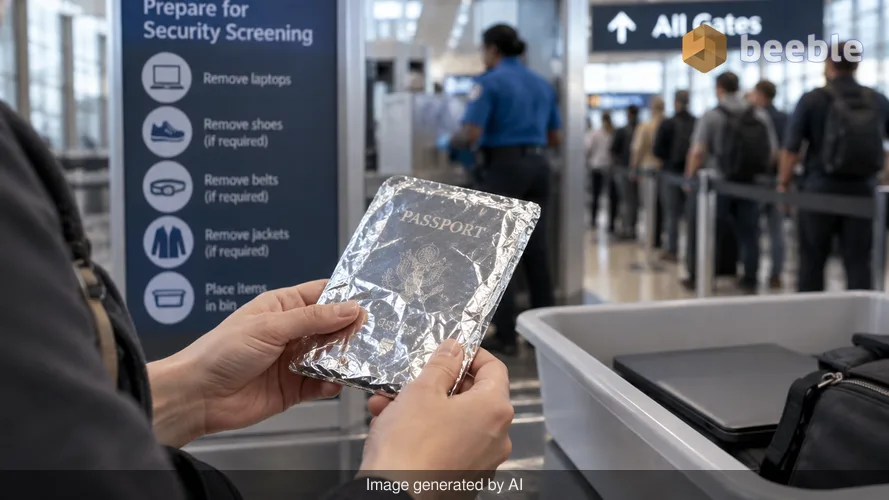
Does a layer of kitchen foil actually protect your identity, or are you just making the airport security line longer for everyone else? You might have seen the viral videos on social media platforms where travelers meticulously wrap their documents in metallic sheets. These users claim they are blocking malicious actors from skimming their personal data. From a risk perspective, this trend is a classic example of an improvised countermeasure that fails to address the actual threat model of modern travel documents.
I spent years testing RFID vulnerabilities in physical access control systems and enterprise badge readers. In my home lab, I have a drawer full of specialized antennas and Proxmark3 devices designed specifically to interrogate wireless chips. I know the technical limitations of these systems. The fear that a stranger can simply walk past you in a crowded terminal and siphon your fingerprints or home address is a misunderstanding of how passport security architecture works.
The architecture of a secure handshake
Modern German passports and most international travel documents use a specific wireless technology known as Radio Frequency Identification. The chip is not a passive beacon that broadcasts your life story to anyone within range. Instead, it functions more like a digital vault with a very strict bouncer.
Behind the scenes, the chip relies on a protocol called Basic Access Control or the newer Supplemental Access Control. To even begin a conversation with the chip, a reader must first prove it has physical access to the document. The reader does this by scanning the Machine Readable Zone, which are the two lines of text at the bottom of your passport photo page. The passport uses the information from these lines—your date of birth, document number, and expiry date—to generate a cryptographic key. Without this key, the chip remains silent.
By design, an attacker cannot skim your data from a distance because they cannot see the inside of your passport. If your passport is closed in your bag, the chip is functionally invisible to unauthorized readers. The threat of a stealthy walk-by attack is effectively zero in a real-world travel scenario.
Why foil is a redundant barrier
Aluminum foil acts as a Faraday cage, which is a physical enclosure that blocks electromagnetic fields. While it is true that metal interferes with radio waves, using it for a passport is a solution for a problem that does not exist. The range for a standard RFID reader is extremely short. Most readers require the document to be within a few centimeters to establish a stable connection.
Looking at the threat landscape, the primary risk to your data is not a physical skimmer at the boarding gate. The risk is the centralized databases where your information lives, or the phishing emails you receive claiming your flight is canceled. When you wrap your passport in foil, you are not stopping a sophisticated hacker. You are only confusing the border control officer who has to wait for you to unwrap your document.
Proactively speaking, this trend causes systemic friction. Border security is built on efficiency and clear observation. When a traveler presents a document covered in kitchen supplies, it triggers additional scrutiny and slows down the queue for hundreds of other people. The practice offers a feeling of security, but it lacks any forensic or technical necessity.
Data privacy laws and the German standard
In Germany, the Federal Office for Information Security sets incredibly stringent requirements for biometric documents. The data stored on the chip—your digitized photo, name, and fingerprints—is not part of a massive, decentralized cloud network that hackers can easily breach.
According to section 16 of the German Passport Act, the authorities must delete all fingerprint data used in the production of the document once the holder collects it. This ensures that the only copy of your biometric data exists on the chip itself and within the local registry. The chip is a resilient piece of hardware that utilizes encryption to prevent tampering.
In the event of a breach of a physical reader at a border crossing, the data remains protected by Extended Access Control. This is an additional layer of security that requires the reader to have a specific digital certificate issued by a government authority to access sensitive information like fingerprints. A random criminal with a handheld scanner simply does not have the cryptographic credentials to bypass this gatekeeper.
Real threats in the modern airport
If you are genuinely concerned about your digital footprint while traveling, there are far more malicious actors in other areas of the airport. Public Wi-Fi networks are a much larger attack surface than your passport chip. I never connect to an open airport network without a VPN, and I treat every public charging station as a potential vector for juice jacking.
Malicious actors target your smartphone and your laptop because those devices are constantly transmitting data and often have unpatched vulnerabilities. Your passport, by contrast, is a static, highly regulated piece of security hardware. Proactive security involves focusing on the most likely path an attacker will take.
Shadow IT and poor personal device hygiene are the dark matter of personal security—invisible but exerting massive risk. Wrapping your passport in foil while using an unsecured Wi-Fi network to check your bank balance is like putting a triple lock on your front door but leaving all the windows wide open.
Technical takeaways for the secure traveler
- Trust the built-in security of your document. The MRZ requirement ensures that a closed passport is a silent passport.
- Avoid security theater. Foil does not stop modern attackers; it only creates delays at checkpoints.
- Focus on MFA. Ensure all your travel and banking accounts use multi-factor authentication, as this is your most robust defense against compromised credentials.
- Secure your devices. Use a VPN on all public networks and keep your operating systems updated to the latest versions.
- Understand the law. German authorities do not store your fingerprints centrally, which limits the potential damage of a systemic data breach.
From an end-user perspective, the best way to stay safe is to remain skeptical of viral trends that offer simple physical solutions to complex digital problems. The bouncer inside your passport chip is already doing its job. You do not need to help it with a piece of foil.
Sources
- Federal Office for Information Security (BSI) Technical Guidelines for Biometric Passports
- International Civil Aviation Organization (ICAO) Document 9303 on Machine Readable Travel Documents
- German Passport Act (Paßgesetz), Section 16
- NIST Special Publication 800-116: Guidelines for the Use of PIV Middleware and Readers
Disclaimer: This article is for informational and educational purposes only and does not replace a professional cybersecurity audit or incident response service.



See you on the other side.
Our end-to-end encrypted email and cloud storage solution provides the most powerful means of secure data exchange, ensuring the safety and privacy of your data.
/ Create a free account
