


Can an Algorithm Legally Fire You for Taking Sick Leave?

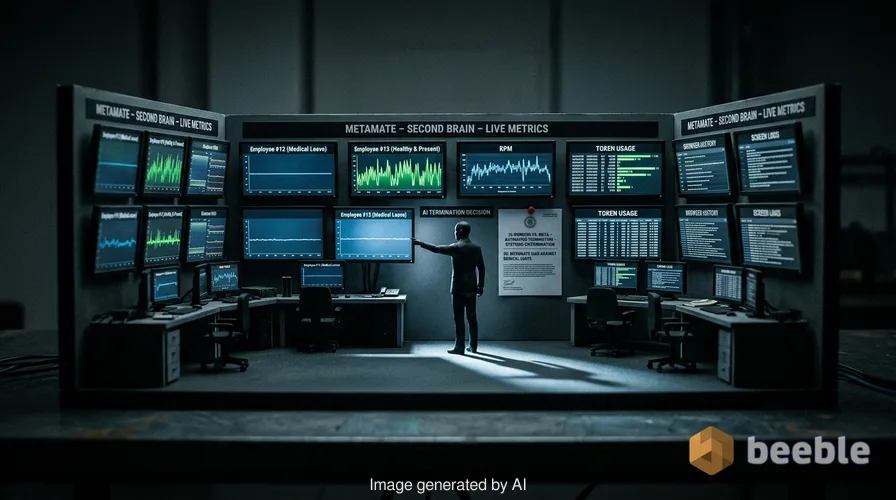
A group of twenty-six employees at Meta Platforms recently pulled back the curtain on a practice many workers have long feared. These workers filed a novel lawsuit in a California federal court, alleging the tech giant used artificial intelligence to decide who stayed and who left during recent mass layoffs. This case represents a significant moment in employment law because it is among the first to challenge the use of automated systems in termination decisions. The workers argue that the AI did more than just crunch numbers. They claim it specifically targeted individuals with disabilities and those who took legitimate medical leave.
Here is what every worker needs to know about the mechanism Meta allegedly used to score its workforce. The lawsuit describes a suite of tools including an assistant called Metamate and a tracking system described as a second brain. These systems monitored keystrokes, screen content, browser history, and even the frequency of AI token usage. For an employee who is healthy and present every day, these metrics might look like a simple measure of effort. However, for a worker recovery from surgery or a parent caring for a sick child, these metrics become a digital trap. If the algorithm only prizes constant activity, the law identifies this as a form of systemic discrimination.
The hidden mechanism behind the automated layoff
The core of the dispute involves how Meta translated human work into data points. According to the complaint, the company relied on productivity scores generated by scanning employee communications and documents. When a person takes a leave of absence under the Family and Medical Leave Act (FMLA), their digital footprint naturally vanishes for a period. A human manager understands that a missing week due to a medical emergency is not a sign of poor performance. An algorithm, however, often sees a flat line in data as a failure to contribute.
The plaintiffs argue that Meta failed to adjust its AI tools to account for these protected absences. In the eyes of the law, if a company uses a tool that produces a disparate impact on a protected group, the company bears responsibility. Disparate impact is a legal term that refers to a policy that seems neutral but hurts one group of people more than others. In this scenario, the neutral policy is productivity tracking. The group getting hurt is the one that legally requires time away from their desks for health reasons.
How algorithmic productivity scores clash with disability laws
The Americans with Disabilities Act (ADA) requires employers to provide reasonable accommodations to workers. A reasonable accommodation is a change in the work environment or the way things are usually done that helps a person with a disability apply for a job or perform job duties. When an employer uses an AI to rank employees, the AI itself must accommodate the reality of disability. If the software ranks a worker lower because they use voice-to-text software or take frequent breaks for physical therapy, the tool itself becomes a vehicle for discrimination.
Meta claims that people, not AI, made the final decisions. This is a common defense in the tech industry, but it faces a hurdle called the burden of proof. The burden of proof is the obligation to provide evidence to support a claim. In this case, the workers must prove that the AI influence was so strong that the human managers were essentially just rubber-stamping an automated list. If the AI generated the termination list and managers simply signed it, the algorithm is the de facto decision-maker. Litigation is a marathon, and this specific point will likely be the most contested part of the race.
The legal difference between a human manager and a second brain
The lawsuit highlights the use of an employee-trained second brain. This tool tracked worker documents and internal communications to assess value. This level of surveillance creates a precarious environment for anyone who needs to step away from their screen. The law provides protections for those who take leave, but those protections are only effective if the metrics for success also pause during that leave.
Consider a warehouse worker and a digital worker. If a warehouse uses a robot to track how many boxes a person moves, and that robot flags a worker for being slow during a week they had a doctor-approved back injury, most people would see the unfairness. The Meta lawsuit argues that keystrokes and AI tokens are just the digital version of moving boxes. When the algorithm fails to stop the clock during a medical leave, it effectively punishes the worker for exercising their legal rights. This is known as retaliation, which occurs when an employer takes a negative action against an employee for engaging in a legally protected activity.
Navigating the new landscape of AI bias regulations
This lawsuit does not just rely on old labor laws. It also points to new statutes in California and New York City that require companies to test their AI systems for bias. These laws reflect a growing concern that software can inherit the prejudices of its creators or the data it consumes. Meta allegedly failed to conduct these necessary audits.
| Law or Regulation | Requirement for Employers | Impact on AI Layoffs |
|---|---|---|
| NYC Local Law 144 | Mandatory annual bias audits for automated tools | Companies must prove AI does not discriminate |
| California Fair Employment Act | Prohibits discriminatory selection methods | AI filters must not exclude disabled workers |
| FMLA (Federal) | Protects job security during medical leave | Absence cannot be used as a negative metric |
| ADA (Federal) | Requires reasonable accommodations | AI must account for disability-related metrics |
If the court finds that Meta ignored these testing requirements, the company could face significant statutory penalties. A statutory penalty is a fine set by law rather than by a calculation of actual damages. For the workers, these laws are a shield against a future where a black box determines their career path without any transparency.
The strategic battle over the arbitration trapdoor
Meta, like many large corporations, includes arbitration clauses in its employment contracts. These clauses are like trapdoors that move a case from a public courtroom to a private hearing. An arbitration is a private process where a neutral third party, called an arbitrator, makes a binding decision about a dispute. Companies prefer this because it is quiet and often prevents workers from joining together in a class action.
However, the twenty-six plaintiffs found a potential loophole. Their contracts allow them to seek temporary relief in a public court while the main dispute moves to private arbitration. They are asking a federal judge to block the layoffs before they even start. This is a bold move. If the judge grants this preliminary ruling, it would force Meta to pause its entire workforce reduction plan for these individuals. It represents a paved road for other workers who want to challenge corporate giants without getting buried in the secrecy of private arbitration.
How to protect your rights in an AI managed workplace
As companies integrate more AI into their management styles, workers must stay vigilant. You do not need a law degree to protect your livelihood, but you do need to understand the digital trail you leave behind. If you are a worker who has taken medical leave or has a disability, consider these steps to safeguard your position:
- Document your leave approvals. Keep copies of every email or form that confirms your medical leave is authorized and protected.
- Request your personnel file. In many states, you have a legal right to see the data your employer keeps on you, including productivity scores.
- Monitor your metrics. If your company uses a dashboard to show your performance, take screenshots of your stats before and after you take leave.
- Ask about the tool. If you are placed on a performance plan, ask if an automated system or AI tool contributed to that decision.
- Consult a specialist. If you suspect an algorithm targeted you, find an attorney who understands both labor law and data privacy.
Ultimately, the law should work for the people, not just for expensive corporate lawyers. The Meta lawsuit is a reminder that while technology changes, our fundamental rights to fair treatment and medical privacy do not. Whether you work in a high-tech office or a retail store, the rules of the road remain the same. An employer cannot hide behind a computer program to do something that a human manager is legally forbidden from doing.
Sources
- Americans with Disabilities Act of 1990 (ADA)
- Family and Medical Leave Act of 1993 (FMLA)
- New York City Local Law 144 (Automated Employment Decision Tools)
- California Fair Employment and Housing Act (FEHA)
- Federal Arbitration Act (FAA)
Disclaimer: This article is for informational and educational purposes only and does not constitute formal legal advice. Laws regarding AI and employment are evolving rapidly. You should consult a qualified attorney in your jurisdiction for advice regarding specific legal issues or potential claims.



See you on the other side.
Our end-to-end encrypted email and cloud storage solution provides the most powerful means of secure data exchange, ensuring the safety and privacy of your data.
/ Create a free account
