


Why Nathan Drake Can Never Truly Retire and the Paradox of the Infinite Ending
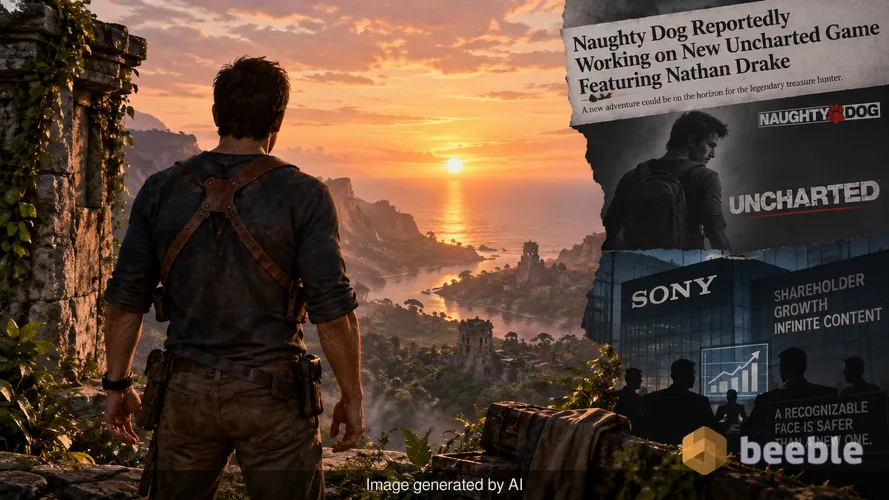
There is a specific, quiet grief in finishing a game that actually ends. You sit through the final credits, watch the protagonists walk into a sunset, and feel the weight of a story told in full. This was the collective experience of the gaming community in 2016 when Nathan Drake hung up his holster. Then, the corporate machine begins to turn. Reports now indicate that Naughty Dog is working on a new Uncharted entry featuring the legendary treasure hunter. This revelation is a clinical reality of modern media. Sony is a massive entity that prioritizes shareholder growth over narrative finality. The industry logic is simple: a recognizable face is safer than a new one. This is the friction between our emotional need for closure and the business need for infinite content.
The weight of a perfect ending
Ten years ago, Naughty Dog achieved a feat that is rare in the blockbuster space. They ended a billion-dollar franchise with dignity. The final moments of the fourth game gave us a domestic peace that felt earned. Nathan Drake was no longer a bullet-sponging adventurer; he was a husband and a father. The game even let us play as his daughter, Cassie, in a suburban epilogue that felt like a definitive handoff. It was a rare instance where the developers prioritized the integrity of the character arc over the potential for a sequel. We felt the finality in our bones because the mechanics of the game slowed down to a domestic crawl.
Behind the scenes, the industry was already shifting toward the model of the forever-franchise. The era of the standalone trilogy is a relic of the past. Today, a successful intellectual property is a sprawling city that requires constant expansion to stay relevant. When a studio creates a character as resonant as Nathan Drake, that character ceases to be a person in a story. He is an asset on a balance sheet. Paradoxically, the more we love a character for their journey, the more likely the industry is to interrupt their rest for another mission. This new report suggests that the peace Nathan found is temporary. The emotional autopsy of this news reveals a hollow sensation. It is the realization that in the age of the blockbuster, no one is ever truly allowed to say goodbye.
Research trips and the ghost of a cannon
Speculation regarding the series has circulated for years. The current reports center on Shaun Escayag, who previously directed the standalone expansion focused on Chloe Frazer and Nadine Ross. Escayag is a veteran of the studio who understands the balance between cinematic spectacle and character intimacy. His recent social media activity included a trip to Trinidad for research purposes. He posted an image of an old, weathered cannon, which is a visual staple of the series. This detail is a breadcrumb for a fandom that is hungry for information. It suggests a return to the historical mysteries that defined the early titles.
Naughty Dog is currently a studio with a crowded calendar. They are working on a new sci-fi project titled Intergalactic, which has a projected launch in the near future. The studio also confirmed a deeper look at their next major sci-fi endeavor in 2027. Amidst this, the Uncharted project represents a return to a comfortable foundation. While Intergalactic is a risky new venture, a new Uncharted is a guaranteed win for the PlayStation ecosystem. The project is reportedly not a remake, which means the narrative must find a way to justify Nathan Drake’s return without ruining the impact of his previous departure.
The mechanics of the legacy protagonist
The report remains vague on the extent of Nathan Drake's role. He might be the lead, or he might occupy a supporting position. There is a distinct possibility that the game focuses on Cassie Drake, with Nathan as a mentor figure. This is a common trope in modern reboots. We see it in film and games alike. The veteran character provides the nostalgic hook while the new character provides the longevity. From a creator's standpoint, this is a way to have your cake and eat it too. You keep the brand identity while attempting to build a new future.
In everyday terms, this is like a home renovation that preserves the exterior but guts the interior. The player recognizes the name on the box, but the experience is different. If Nathan is a side character, the game risks feeling like a hollow imitation of the past. If he is the lead, the studio risks undermining the emotional stakes of his previous retirement. This is the tightrope that Naughty Dog must walk. They are trying to recapture the magic of a series that was built on the idea of a hero who eventually learns to stop. Consequently, the very existence of a new game creates a narrative hurdle that the developers must clear.
The content walled garden and the last of us effect
Naughty Dog is no longer just a game developer. They are a primary architect for Sony’s transmedia strategy. The success of the HBO adaptation of The Last of Us changed the stakes for every project the studio touches. There are multiple projects in that universe currently in development. These could be games, films, or television shows. This suggests a studio that is leaning heavily into its established successes. The pressure to deliver high-quality, high-margin content is immense.
Through this audience lens, we see a studio that is becoming a victim of its own excellence. The bar for a Naughty Dog game is so high that they cannot afford a failure. This leads to a conservative approach to intellectual property. Paradoxically, the more a studio becomes known for innovation, the more the parent company wants them to stick to what works. A new Uncharted is the ultimate safety net. It is a game that millions of people will buy regardless of the reviews. This is the reality of the content walled garden. Once you have a hit, you are expected to tend to that garden forever.
The illusion of narrative finality
We often talk about video games as a conversation between the player and the developer. If that is true, then a sequel to a finished story feels like a conversation that won't end. We said our goodbyes, but the developer is still talking. This creates a sense of ludonarrative exhaustion. We want to see what else these talented creators can do, but we are repeatedly pulled back to the same familiar faces. The industry is currently obsessed with the idea of the reboot and the legacy sequel because they are easier to market in a fragmented media landscape.
Historically, franchises had clear life cycles. A series would run for a few years and then disappear to make room for something new. Now, characters are digital avatars that can be resurrected indefinitely. Nathan Drake is a man made of pixels and voice lines. He does not age unless the writers say he does. He does not stay retired unless the sales numbers say he should. This is the fundamental truth of the modern blockbuster. The ending is never the end; it is just a pause before the next announcement.
Reclaiming the value of the goodbye
As consumers, we have a role in this cycle. We complain about franchise fatigue, but we also buy the sequels in record numbers. We are nostalgic for the characters we grew up with, and the industry is happy to sell that nostalgia back to us. However, there is a cost to this constant revival. When we refuse to let stories end, we lose the impact that those endings provide. The finality of the fourth game was a gift to the fans. It was a promise that Nathan Drake’s struggle meant something because it had a conclusion.
We should look at this new Uncharted report with a healthy amount of skepticism. Not because the game will be bad—Naughty Dog rarely makes a bad game—but because of what it says about our culture. We are currently afraid of the unknown. We would rather spend another forty hours with a familiar friend than take a chance on a new stranger. If Nathan Drake returns, we should ask ourselves why we need him back. Perhaps the best way to honor a legendary character is to let them stay in the sunset we already gave them.



See you on the other side.
Our end-to-end encrypted email and cloud storage solution provides the most powerful means of secure data exchange, ensuring the safety and privacy of your data.
/ Create a free account
