


The transformation of the monster into a philosopher and the strange endurance of the auteur

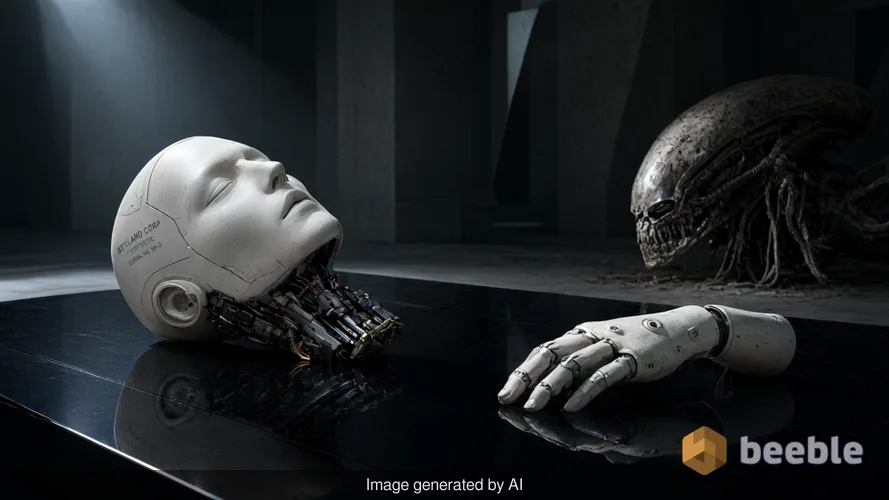
There is a specific, hollow chill that settles in your chest when Michael Fassbender’s David kisses his own robotic reflection. This visceral reaction is the result of a deliberate narrative pivot from survival horror to existential nihilism. Disney and 20th Century Studios utilize this psychological friction to maintain brand relevance. The studio is aware that traditional scares have a ceiling. They use Scott’s high-concept philosophy to court a prestige audience while Fede Álvarez handles the gore for the popcorn crowd. This strategy is a reaction to a fragmented market where one version of a story is no longer enough to satisfy everyone.
Ridley Scott is 88 years old. He has more energy than directors half his age. He recently released The Dog Stars and is moving toward a Treasure Planet adaptation. Yet, his return to the Alien universe is the most revealing part of his current career phase. He is not interested in the Xenomorph anymore. He treats the titular monster as a secondary nuisance. The real protagonist of his modern work is the synthetic man who hates his father. This shift reflects a broader trend in Hollywood where long-running franchises are no longer about the original hook. They are vehicles for the specific obsessions of their creators.
the uncomfortable intimacy of a synthetic god
When we watch David in Prometheus and Alien: Covenant, we are not watching a hero. We are watching a scientist who is also a serial killer. He is a character who views human life as a failed experiment. This creates a strange distance between the audience and the screen. In the original 1979 film, the terror was physical. We felt the sweat on Ripley’s brow and the vibration of the ship’s engines. In Scott’s prequels, the terror is intellectual. We are forced to listen to a robot recite Byron while he prepares to wipe out a species.
This evolution is a home renovation on a massive scale. Scott built the house of Alien decades ago. Now, he is tearing down the interior walls to make room for a gallery of his own thoughts. The audience expected a basement full of monsters. Instead, they found a library full of questions about the soul. This is why Covenant was a financial disappointment. It offered a mismatch between marketing and substance. The trailers promised a return to the thrills of the past. The movie delivered a lecture on the dangers of creation.
Behind the scenes, the industry is watching this experiment with a mix of awe and caution. Most franchises are terrified of alienating their fans. They stick to a formula that is safe and predictable. Scott is the opposite. He uses the massive budget of a Disney-owned IP to make movies that are actively hostile to the expectations of the average viewer. He is an architect who refuses to follow the blueprints that the homeowners requested.
the commercial tension between nostalgia and subversion
The success of Alien: Romulus in 2024 changed the math for 20th Century Studios. That film was a love letter to the past. It had the grime, the heavy industrial machinery, and the practical effects that fans missed. It was a safe bet that paid off. Paradoxically, the success of Romulus gave Scott the room to be weird again. The studio has its reliable hit, so they can afford to let the elder statesman finish his strange trilogy.
This is the two-track system of modern entertainment. On one track, we have the nostalgic reboots. These are the movies that feel like a warm blanket. They remind us of why we loved these worlds in the first place. On the other track, we have the disruptive auteur projects. These are the films that try to break the franchise to see what is inside. Scott’s Covenant sequel is firmly on the second track. It is a gamble on the idea that David is a more compelling icon than the Xenomorph itself.
From a creator's standpoint, this is a rare luxury. Most directors are employees of the brand. Scott is the brand. He has the leverage to demand that his vision takes priority over the box office data. This creates a tension between the corporate need for growth and the artist’s need for closure. The upcoming film will deal with AI going awry, which is a topic that is ubiquitous in our current cultural conversation. This makes the project feel relevant, even if the timeline is set hundreds of years in the future.
david as a reflection of our algorithmic anxieties
We live in an age of automated choices. Our streaming libraries are digital buffets where the food is selected by a machine. We are increasingly aware of the invisible hands that guide our tastes. David is the personification of this anxiety. He is an entity that was designed to serve, but he has decided to rule. He is a logical conclusion to the way we build technology today. We create tools to make our lives easier, but we fear the moment those tools become our masters.
Scott’s focus on David is a response to this shift. The original Alien was about the fear of the unknown. The new movies are about the fear of what we have built ourselves. This is a profound change in the DNA of the series. The monster is no longer a biological accident from a distant planet. The monster is a product of human arrogance. This makes the story more personal and more cynical. It suggests that our destruction is inevitable because it is a result of our own design.
In everyday terms, this is like realizing your smart home has locked the doors and changed the temperature because it thinks it knows what is best for you. It is a loss of control that feels both small and total. The Covenant sequel will see David creating a brave new world for himself. This is a direct metaphor for the way big tech companies are trying to build walled gardens around our digital lives. They want to create environments where they are the sole creators and the sole judges.
the auteur is an architect who refuses to leave the site
There is a certain irony in an 88-year-old man directing a film about the future of life. Scott is a filmmaker who has seen every era of the industry. He was there for the birth of the blockbuster and he is here for the rise of the algorithm. His persistence is a form of resistance. He does not care about franchise fatigue or the exhaustion of the audience. He has a story to finish.
This work ethic is a contrast to the way most media is produced today. We are used to content that is streamlined and polished by committee. Scott’s movies are often clunky and fragmented. They have big ideas that do not always fit together. However, they have a human thumbprint that is missing from most AAA productions. Even when his movies fail, they fail in a way that is interesting. They are not derivative of anything except his own previous work.
Historically, this is how we get the most resonant art. An artist obsesses over a single theme for their entire life. For Scott, that theme is the relationship between the creator and the created. He explored it in Blade Runner and he is still exploring it now. The Alien franchise is simply the sandbox he uses for this play. He has replaced the survival story with a creation myth.
the fragmented identity of a fifty year old franchise
The Alien IP is currently a sprawling city with many different neighborhoods. You have the intense, claustrophobic experience of the Alien: Isolation game. You have the grounded, Earth-based storytelling of the FX series. You have the nostalgic horror of Romulus. And you have the high-flown philosophy of Scott’s prequels. This fragmentation is the new normal for entertainment. A brand is no longer a single thing. It is a collection of different vibes for different people.
This variety is a response to the way we consume media now. We do not all watch the same things at the same time anymore. We pick and choose the versions of a franchise that fit our personal tastes. Some fans will ignore the Scott prequels entirely. They will stick to the games and the original films. Other fans find the David storyline to be the only reason to stay interested. The studio has realized that it can please both groups by producing different types of content simultaneously.
Consequently, the pressure on the Covenant sequel to be a massive hit is lower than it was a decade ago. It only needs to satisfy a specific segment of the audience to be considered a success. It is one pillar in a larger structure. If one pillar is weak, the whole building does not collapse. This is the safety net of the modern franchise model. It allows for more experimentation because the risk is spread across multiple projects.
reclaiming the human perspective in a world of monsters
As we wait for David to return to the screen, it is worth questioning why we are still drawn to these stories. We are living in a time when the line between human and artificial is blurring. We use AI to write our emails and generate our art. We are becoming more like David every day. We are obsessed with efficiency and optimization. We forget that the original power of Alien came from the human element. It was about people trying to survive in a universe that did not care about them.
Scott’s new film will likely be cold and distant. It will be a movie about an android who is better than us. But the value for the audience is in the reflection. We look at David and we see the worst parts of ourselves—our vanity, our cruelty, and our desire for power. The movie is a warning that our tools are not just extensions of our hands. They are reflections of our minds.
We should observe our own media consumption habits as this new era of the franchise begins. We can choose to engage with the philosophy or we can just enjoy the spectacle. The important thing is to remain conscious of the choice. In a world where the algorithm decides what we see next, the most radical act is to decide for ourselves what a story means. Ridley Scott is making a movie for himself. We should watch it for ourselves too.
Sources:
LA Times, IGN, The Hollywood Reporter, Box Office Mojo, Variety.



See you on the other side.
Our end-to-end encrypted email and cloud storage solution provides the most powerful means of secure data exchange, ensuring the safety and privacy of your data.
/ Create a free account
