


The growing legal map for tech rivals to reclaim millions from Google

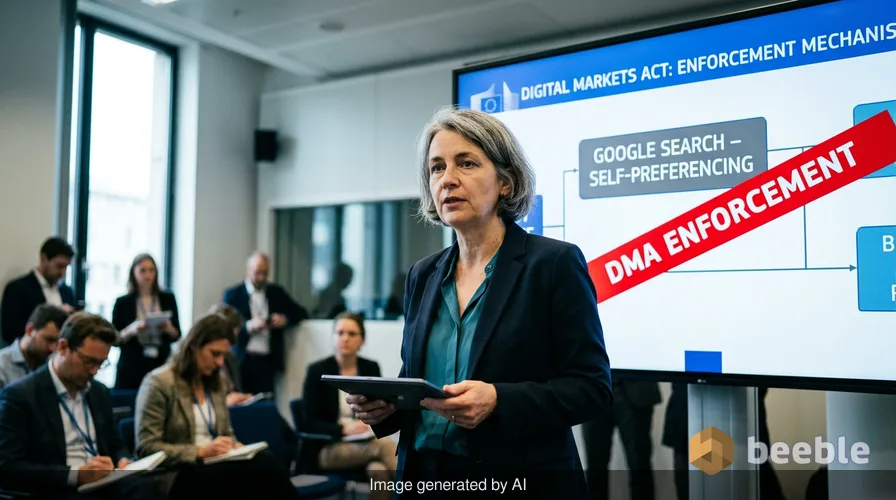
A small office in Berlin or a startup in Stockholm might seem like an unlikely place to start a fight with a trillion-dollar company. Yet, these European firms are currently winning battles that reshape how the internet works for everyone. The catalyst is a recent €890 million penalty handed down by the European Union. This fine is the first major enforcement under the Digital Markets Act, a set of rules designed to keep big tech companies from acting like gatekeepers who block their own exits.
For years, Google has faced accusations of tipping the scales in its own favor. The European Commission found that the company used its search engine to push its own shopping, hotel, and travel services to the top, while burying rivals. In a separate finding, the Commission determined that Google restricted app developers from showing users cheaper ways to pay outside the Google Play Store. These findings are not just headlines. They are the foundation for a massive wave of private lawsuits across the continent.
Why a government fine acts as a master key for lawsuits
When a regulator like the European Commission issues a fine, it does more than just take money from a corporate treasury. It creates a legal shortcut for any company that suffered because of the bad behavior. In the legal world, this is a follow-on damages claim. Normally, a company suing a giant would have to spend years and millions of dollars to prove that an abuse of power happened. Because the EU has already done that work, the claimant starts with the violation as an established fact.
Think of the law as a master key. The Commission has already unlocked the door by proving Google was liable for unfair competition. Now, the smaller companies only need to show the court a receipt of their losses. They must demonstrate how much traffic they lost and how many customers went elsewhere because Google hid their links. This shift in the burden of proof makes litigation much less risky for smaller players.
The mounting victories across the continent
Courts in Germany, Italy, and Sweden are already processing these claims, and the numbers are staggering. These cases often involve comparison-shopping sites that claim Google’s self-preferencing tactics nearly wiped them out.
| Country | Claimant | Outcome or Claim Amount | Status |
|---|---|---|---|
| Germany | Idealo | €465 million awarded | On appeal |
| Germany | Producto GmbH | €107 million awarded | On appeal |
| Italy | 7Pixel | €2.97 billion claim | Pending |
| Sweden | PriceRunner | €1.7 billion awarded | Final judgment |
In Germany, the Berlin court's decision to award Idealo €465 million sent a shockwave through the industry. While Idealo originally sought over €3 billion, the award confirms that European judges are willing to hold search engines financially responsible for how they sort results. Albrecht von Sonntag, the co-founder of Idealo, stated that market abuse must have consequences to prevent it from becoming a standard business strategy.
The collapse of the fixed it defense
Google has historically argued that it resolved these issues years ago. After a 2017 EU decision regarding Google Shopping, the company introduced a system where it auctions off slots in the search results to other shopping services. Google argued that this change leveled the playing field and that any harm to competitors was a thing of the past.
The new €890 million fine destroys that narrative. By penalizing Google for conduct that continued well past the 2017 changes, the EU has provided evidence that the problem was not solved. This is a systemic issue rather than a one-time mistake. For companies currently in court, this means they can now expand their claims to cover the years between 2018 and 2026. A lawsuit that was previously worth five years of damages might now be worth ten.
How steering affects your wallet
One of the most significant parts of the new fine involves the Google Play Store. For a long time, if you bought a subscription in an app, Google took a cut of up to 30 percent. Developers were often forbidden from telling you that the subscription was cheaper if you bought it directly on their website. The EU calls this anti-steering.
By stopping these anti-steering practices, the law allows for a more transparent market. If a music streaming service can tell you that a subscription is €9.99 on the web but €12.99 in the app, you have the power to choose the cheaper option. The recent fine validates the complaints of developers who were forced to hide these savings. Consequently, we are likely to see a new wave of lawsuits from app developers who want to reclaim the fees they were forced to pay under these restrictive rules.
The defense from the search giant
Google maintains a different perspective on these regulations. Global affairs president Kent Walker argues that these legal mandates force the company to degrade its own products. He suggests that features users enjoy, such as seeing hotel prices or flight times directly in search results, are now at risk. From Google's viewpoint, providing a direct answer to a user's question is a service, not a way to block competition.
However, the European Commission, led by Executive Vice-President Teresa Ribera, argues that merit is what matters. A product should be at the top of the search results because it is the best, not because it belongs to the company that owns the search bar. This tension between user convenience and fair competition is the central theme of every trial currently active in Europe.
What this means for the average internet user
While these billion-euro lawsuits involve corporate giants and large startups, the outcome affects every person who uses a smartphone. When competition is suppressed, prices remain high and innovation slows down. If a better travel site or a cheaper shopping tool cannot get found, you lose out on the best deals.
These court rulings are paving a road for a more diverse digital economy. As Google rivals win damages, they gain the capital to improve their services and compete more effectively. The litigation is a marathon, and we are currently seeing the mid-race surge where the leaders are being challenged. The Digital Markets Act has provided the rules, and the national courts are now providing the enforcement.
Your path forward as a consumer or business owner
If you operate a business that relies on digital traffic, these rulings suggest that the era of uncontested search dominance is ending. You have more leverage now than you did five years ago. For consumers, the message is one of empowerment. You should look beyond the first few boxes on a search page and check for direct pricing on developer websites.
To protect your interests in this changing environment, consider these steps:
- Check for external payment options: Before subscribing to a service through an app store, visit the provider's official website to see if a direct price is lower.
- Support diverse platforms: Use independent comparison-shopping sites to ensure you see the full range of market prices, not just those favored by a single search engine.
- Document unfair practices: If you are a business owner and notice your services are being unfairly demoted in favor of a platform's own tools, keep records of your traffic and search rankings.
- Consult specialized counsel: If your business has suffered significant losses due to self-preferencing, speak to a competition lawyer about the feasibility of a follow-on damages claim.
Sources
- European Union Digital Markets Act (Regulation 2022/1925)
- TFEU Article 102 (Abuse of Dominant Position)
- European Commission Decision on Google Search (Shopping)
- German Act against Restraints of Competition (GWB)
- Stockholm District Court Ruling on PriceRunner v. Google
Disclaimer: This article is for informational and educational purposes only and does not constitute formal legal advice. The legal landscape regarding digital competition is complex and varies by jurisdiction. Readers should consult a qualified attorney in their specific region for issues related to antitrust or competition law.



See you on the other side.
Our end-to-end encrypted email and cloud storage solution provides the most powerful means of secure data exchange, ensuring the safety and privacy of your data.
/ Create a free account
