


The regulation that might make your stablecoin less stable

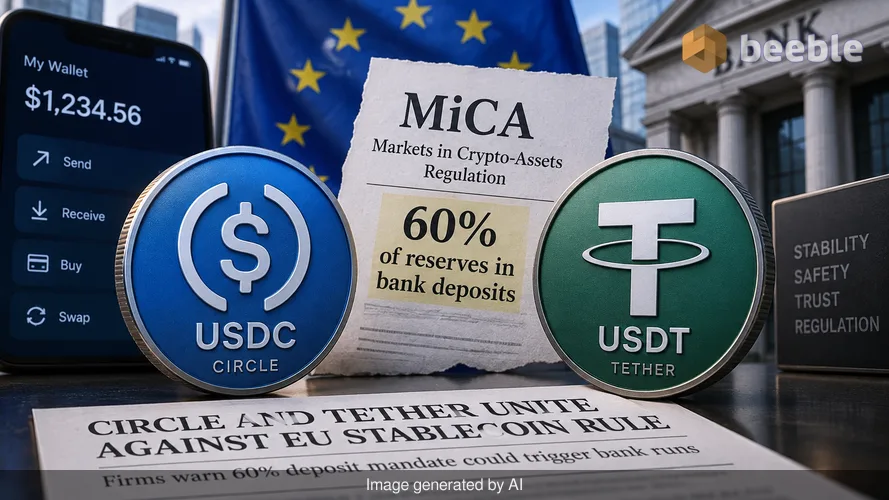
For decades, the physical wallet was a simple barometer of personal wealth. A thick stack of bills meant liquidity and immediate purchasing power, while a thin one signaled a need for thrift. Today, that wallet is an application on a screen, and the bills are digital tokens known as stablecoins. These assets are pervasive in the modern financial system, acting as a bridge between the volatile world of crypto and the familiar value of the U.S. dollar. We treat them like cash, we use them to buy groceries in some parts of the world, and we store them for safety during market storms. Paradoxically, the very rules designed to make these digital dollars safer in Europe now face fierce resistance from the companies that issue them.
Circle and Tether are the two largest players in this space. Historically, they have been bitter rivals, competing for market share and user trust. Circle, the issuer of USDC, prides itself on transparency and regulatory compliance. Tether, the issuer of USDT, is the veteran of the industry, often criticized for its opaque reserve management. Consequently, when these two giants find common ground, the financial world notices. They are currently united against a specific provision in the European Union’s Markets in Crypto-Assets Regulation, better known as MiCA. This rule requires stablecoin issuers to keep 60% of their reserves in bank deposits. While this sounds like a protective measure, Circle and Tether argue it creates a systemic risk that could lead to the exact type of bank run the regulation aims to prevent.
The bank deposit trap
To understand the frustration of these issuers, one must look at how a stablecoin works under the hood. At its core, a stablecoin is a digital IOU. For every token in circulation, the issuer is supposed to hold one dollar in reserve. Traditionally, issuers prefer to hold these reserves in short-term U.S. Treasury bills. These government-backed assets are liquid and safe. They are the financial equivalent of a glass bank vault: everyone can see the assets, and their value does not disappear if a single bank fails.
Europe’s MiCA framework changes this math. By forcing issuers to put 60% of their cash into traditional bank accounts, the regulation ties the fate of digital money to the health of the banking sector. In everyday terms, this is like being told you can only protect your savings by giving them to a neighbor who has a history of losing money. Banks are not vaults; they are businesses that lend out the money they receive. If a bank fails, the deposits over a certain limit are often at risk. Consequently, a stablecoin that is 60% backed by bank deposits is only as stable as the banks themselves.
Financially speaking, this requirement introduces a single point of failure. If a major European bank collapses, the stablecoin issuer might lose access to the funds needed to redeem tokens. This creates a domino effect. Users see the news, they panic, and they try to sell their tokens all at once. Through this economic lens, the regulation intended to provide security actually builds a bridge for contagion to travel from traditional finance into the crypto market.
Lessons from the recent past
This anxiety is not theoretical. In early 2023, the collapse of Silicon Valley Bank sent shockwaves through the digital asset market. Circle had a portion of its USDC reserves at that bank. As the bank failed, USDC lost its one-dollar peg, dropping to roughly 88 cents. The market panicked because the "safe" cash was stuck in a failing institution. While the U.S. government eventually moved to protect all depositors, the event left a deep scar on the industry's collective psyche.
Circle is now using this history to argue that MiCA is flawed. The company claims that only three of the world’s 25 largest stablecoins—USDC, USDG, and EURC—are currently compliant with MiCA. The rest of the market remains outside the bloc’s regulatory perimeter. Circle suggests that the current rules are too rigid for global players. They propose a recognition regime instead. This would allow the European Commission to recognize foreign-regulated stablecoins if their home country has equivalent standards. This approach would let issuers remain primarily supervised in their home countries while still serving European users through licensed local institutions.
The threat of fragmented markets
On a macro level, the pushback from Circle and Tether reflects a fear of market fragmentation. If Europe makes it too difficult or risky for global issuers to operate, those issuers will simply focus elsewhere. This would leave European consumers with fewer choices and potentially push them toward offshore platforms that offer no protection at all. Circle argues that the current MiCA structure discourages multi-issuance. This is a practice where a European entity and a foreign entity co-issue a token. Restricting this model makes it harder for a stablecoin to circulate globally while remaining compliant with local laws.
Zooming out, we see a broader tension between innovation and institutional control. Regulators want to bring crypto under the umbrella of the existing banking system. They view banks as stable, regulated anchors. However, the crypto industry views banks as volatile and prone to systemic crises. This is a fundamental disagreement about the nature of safety. For a retail investor, this debate matters because it dictates where their money actually sits. If your digital dollar is just a proxy for a deposit at a mid-sized European bank, you are exposed to that bank's credit risk.
Why everyday users should care
Practically speaking, most people use stablecoins because they want to avoid the friction of traditional banking. Moving money across borders is often slow and expensive. A stablecoin transaction is almost instantaneous and costs pennies. It is a tangible improvement in financial utility. However, if MiCA forces these tokens to behave exactly like bank deposits, the unique benefits of the technology begin to erode. The fees might rise, and the speed might decrease to accommodate the slow-moving plumbing of the legacy financial world.
On an individual level, this regulatory fight highlights the importance of understanding what backs your assets. Many people assume that "regulated" always means "safer." In this specific case, the regulation might actually concentrate risk. It is a symptomatic example of how well-intentioned policy can have unintended consequences in a complex, interconnected economy. The stablecoin issuers are essentially asking for the right to stay away from the banks, arguing that the safest place for digital money is in government debt, not in a commercial bank's ledger.
Navigating a changing landscape
Ultimately, the standoff between issuers and European regulators is a test for the future of digital finance. If Circle and Tether succeed in loosening the reserve rules, it could set a global precedent for how stablecoins are managed. It would validate the idea that digital money is a distinct asset class that requires its own set of safety standards, rather than a mere digital extension of the banking system.
Behind the scenes of this trend, there is a clear shift in how we define financial stability. We are moving away from a system based on institutional trust and toward one based on transparent, verifiable reserves. The blockchain acts as a glass bank vault, but only if the assets inside are truly liquid and accessible. Tying those assets to the traditional banking system clouds that transparency and introduces risks that the technology was designed to bypass.
As we look toward the end of 2026, the resolution of this dispute will determine the shape of the European digital economy. For the average person, it is a reminder to look past the marketing and the regulatory stamps. Understanding the mechanics of your money is the first step toward financial resilience. Whether you hold cash in a wallet, a bank, or a digital app, the ultimate responsibility for risk assessment lies with you. Questioning the safety of the systems we take for granted is not just an academic exercise; it is a necessary habit for navigating a shifting economic world.
Key takeaways for the mindful investor
- Question the reserve: Research what actually backs the stablecoin you use. If the majority is in bank deposits, consider the health of those banks.
- Regulation is not a shield: A regulated asset can still carry systemic risks. Understand the specific rules that govern your digital assets.
- Diversity is safety: Do not keep all your digital cash in a single token or on a single exchange. Fragmentation in the market requires a diversified approach to personal liquidity.
- Watch the global trends: Changes in European law often influence regulators in the U.S. and Asia. Staying informed on international shifts helps you anticipate changes in your local market.
Sources: European Banking Authority (EBA) MiCA guidelines, Circle Internet Financial transparency reports, Tether Limited consolidated reserves report, European Commission regulatory equivalence framework documentation.



See you on the other side.
Our end-to-end encrypted email and cloud storage solution provides the most powerful means of secure data exchange, ensuring the safety and privacy of your data.
/ Create a free account
